Turkish
  English
  Arabic
  German
  French
  Indonesian
  Russian
  Italian
  Czech
Czech  Dutch
Dutch  Finnish
  Greek
Greek  Spanish
  Portuguese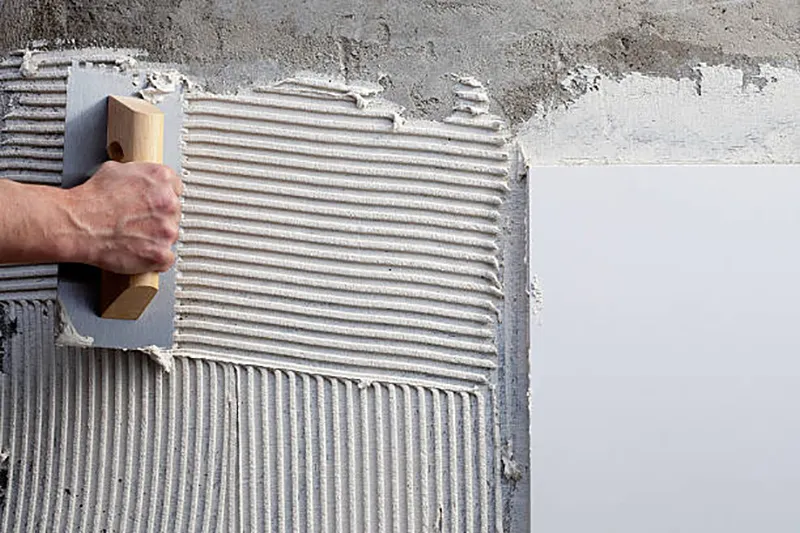
Ⅰ.Giriş
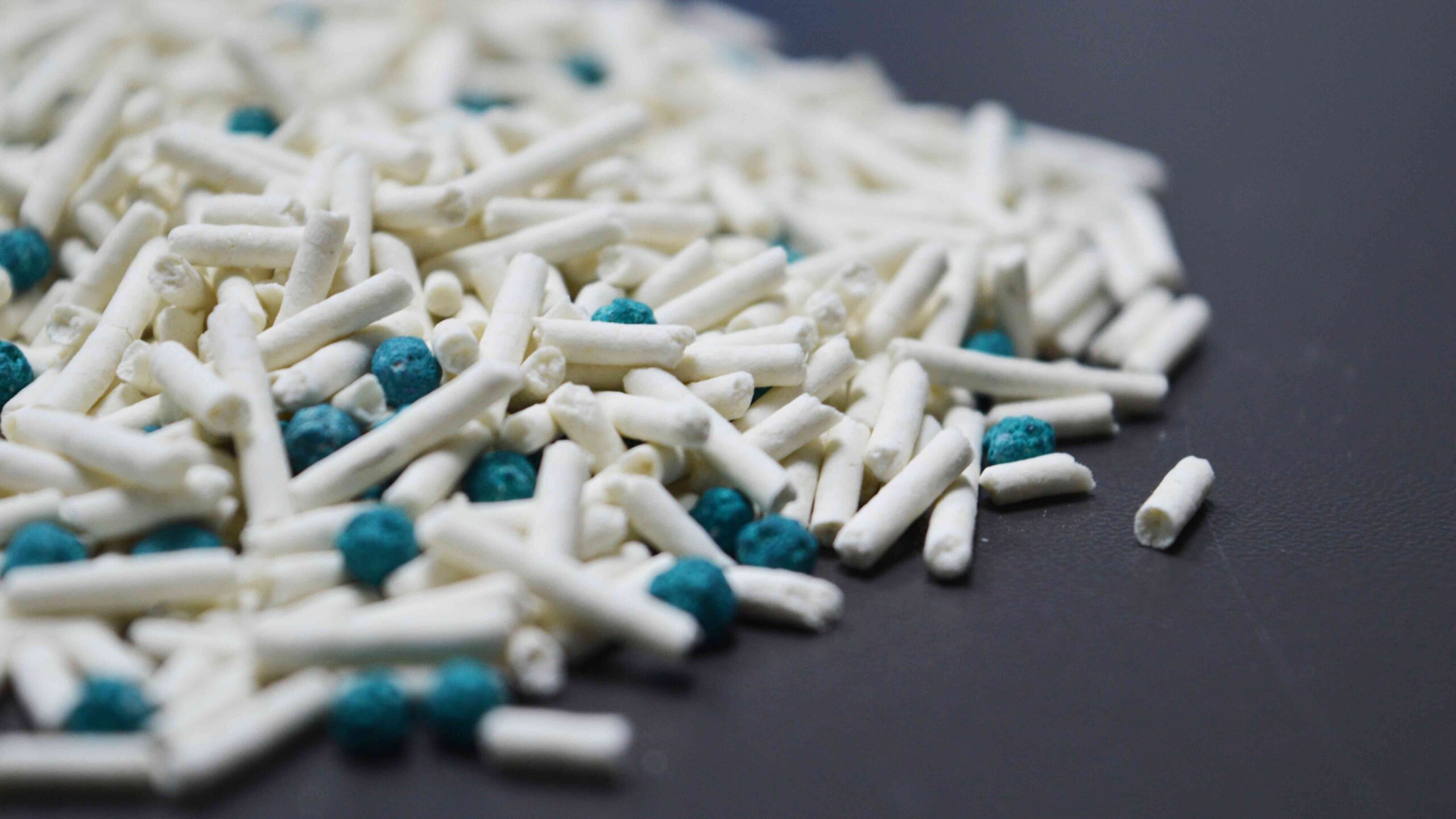
Hidroksipropil Metilselüloz (HPMC) is an indispensable core functional additive in tile adhesive formulations. It is a non-ionic water-soluble selüloz eter produced from refined cotton through alkalization and etherification. HPMC offers excellent water retention, thickening ability, film-forming properties, and rheology modification.
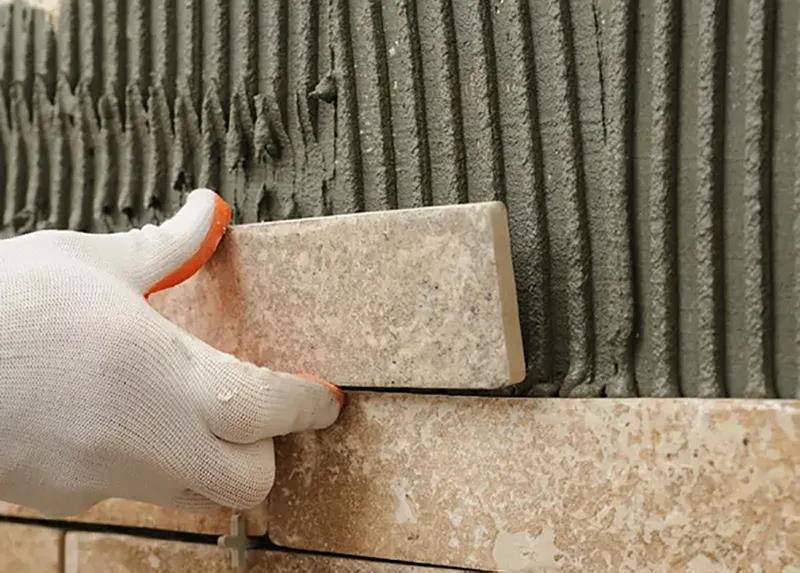
The primary function of tile adhesive is to firmly bond ceramic tiles to substrates. Its bonding strength, durability, and workability directly determine installation quality. Although HPMC does not directly participate in the chemical bonding reaction, it optimizes the tile adhesive system through multiple mechanisms—supporting cement hydration, improving workability, and strengthening interfacial bonding—thereby fundamentally enhancing adhesion strength and effectively preventing hollowing and tile detachment.
This article analyzes the bonding mechanism of tile adhesives and systematically explains how HPMC enhances bonding performance, supported by comparative data and tables, providing theoretical guidance for formulation optimization and practical application.
Ⅱ.Fundamental Principles of Tile Adhesive Bonding
The bonding mechanism of tile adhesives relies on a dual effect: interfacial adhesion + cohesive strength. It primarily depends on cement hydration and effective substrate wetting.
Fayans yapıştırıcısı typically consists of cement, quartz sand, functional additives (mainly HPMC), and water. Bond strength depends on three critical factors:
- Sufficient cement hydration, forming adequate cohesive strength.
- Effective wetting of tile backs and substrates, minimizing interfacial voids.
- System stability during drying, ensuring uniform shrinkage without cracking or debonding.
Without HPMC, rapid moisture loss negatively affects cement hydration, leading to poor workability, excessive shrinkage, insufficient interfacial contact, and reduced cohesive strength. HPMC systematically addresses these issues through coordinated multi-dimensional effects.
Ⅲ. Core Mechanisms by Which HPMC Enhances Bond Strength
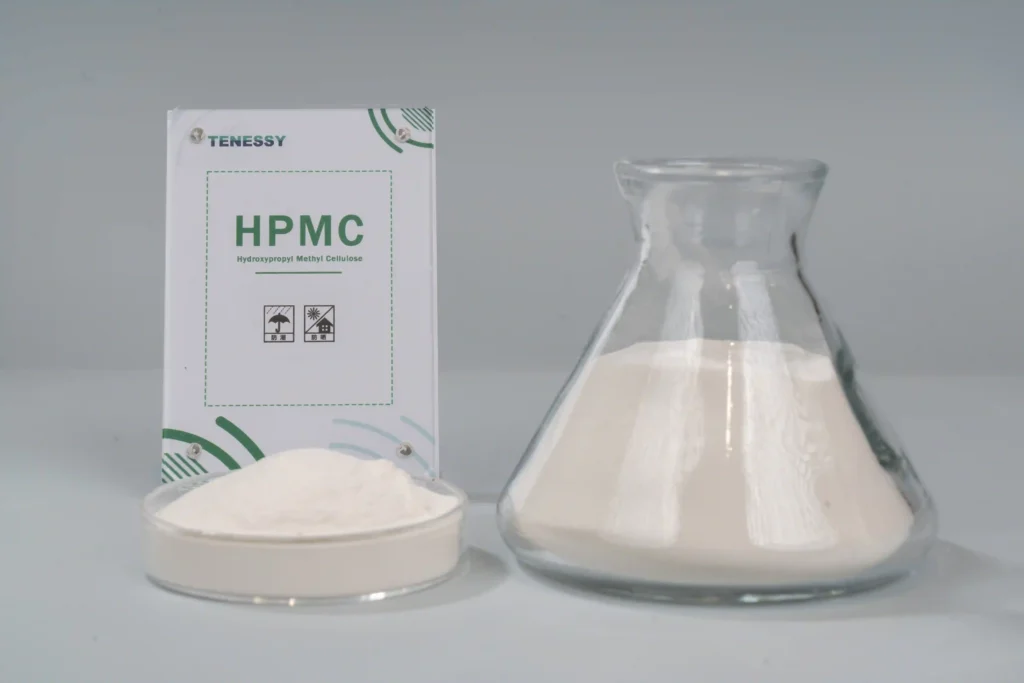
1. Water Retention: Ensuring Complete Cement Hydration
Cement hydration requires sufficient and sustained moisture. During tile installation, substrates and low-absorption tiles (e.g., porcelain tiles) rapidly absorb water, while evaporation accelerates moisture loss. This can cause premature hydration interruption (“false setting”), reducing hydration product formation (e.g., C-S-H gel), and lowering bond strength.
HPMC contains numerous hydrophilic hydroxyl and ether groups. Once dissolved, it forms a protective water-retaining film around cement and sand particles. Its three-dimensional molecular network effectively traps free water, slowing evaporation and substrate absorption.
Experimental results show that adding 0.3%–0.5% HPMC increases water retention to above 85%, ensuring continuous hydration for 24–48 hours, enabling full development of cement hydration products and significantly improving adhesive strength.
2. Rheology Modification: Improving Workability and Effective Contact Area
Poor workability leads to uneven spreading, tile slippage, and incomplete substrate contact.
HPMC improves rheology in three ways:
- Thickening effect: Prevents sagging on vertical surfaces.
- Thixotropy improvement: Low viscosity during mixing and application; rapid viscosity recovery at rest to prevent tile slippage.
- Lubrication effect: Reduces internal friction, improves smoothness, and enhances filling of surface micro-pores.
Increased effective contact area directly enhances bonding strength.
3. Cohesion Enhancement: Reducing Shrinkage and Cracking
HPMC forms a three-dimensional network that integrates cement hydration products and aggregates into a dense structure, improving cohesion and flexibility.
- Reduces drying shrinkage from 0.3–0.5% to below 0.1%.
- Improves flexural and compressive strength.
- Disperses shrinkage stress, minimizing crack formation.
4. Improved Interfacial Wetting: Strengthening Adhesion
HPMC reduces surface tension and enhances wetting performance, enabling full mortar coverage (“full bedding”).
- Enhances adhesion to low-absorption porcelain tiles.
- Improves mechanical interlocking with rough concrete substrates.
- Promotes hydration product deposition at the interface.
This reduces hollowing and debonding risks.
5. System Stabilization: Ensuring Long-Term Durability
HPMC provides chemical stability and compatibility with cement and additives.
- Resistant to alkali and microbial degradation.
- Maintains long-term mechanical performance.
- Film-forming property reduces external moisture and contaminant penetration.
Ⅳ. Performance Comparison: With and Without HPMC
| Performans Göstergesi | Without HPMC | With 0.4% HPMC | Improvement | Impact on Bond Strength |
|---|---|---|---|---|
| Water Retention (24h) | 62% | 88% | +41.9% | Ensures full hydration |
| Tensile Bond Strength | 0.65 MPa | 1.32 MPa | +103.1% | Direct strength increase |
| Drying Shrinkage | 0.42% | 0.09% | -78.6% | Reduced cracking |
| Flexural Strength | 2.1 MPa | 3.8 MPa | +81.0% | Higher cohesion |
| Interface Wetting Area | 75% | 98% | +30.7% | Fuller bonding |
| Hollowing Rate (72h) | 18% | 2% | -88.9% | Improved installation quality |
Ⅴ.Application Considerations
1. Grade Selection
Medium to high viscosity grades (10,000–100,000 mPa·s, 2% solution at 20°C) are recommended.
Methoxy: 28–30%; Hydroxypropoxy: 7–12%.
2. Dosage
Recommended dosage: 0.3%–0.5% of total dry mix weight.
3. Mixing Procedure
Pre-mix with dry materials before adding water to prevent lump formation and ensure uniform dispersion.
Sonuç
HPMC enhances tile adhesive bonding performance through five key mechanisms:
- Su tutma
- Reoloji kontrolü
- Cohesion enhancement
- Interfacial wetting improvement
- System stabilization
Although it does not directly participate in chemical bonding, HPMC ensures complete cement hydration, improves workability, reduces shrinkage cracking, and strengthens interfacial bonding—effectively preventing hollowing and tile detachment.
Experimental data confirm that HPMC significantly increases water retention, tensile bond strength, and cohesive strength while reducing shrinkage and hollowing rates.
With rising construction quality standards, HPMC will continue to play a crucial role in developing high-performance, durable, and easy-to-apply tile adhesives, providing reliable bonding solutions for modern building applications.



-scaled.jpg)