English
  Arabic
  German
  French
  Indonesian
  Russian
  Italian
  Czech
Czech  Dutch
Dutch  Finnish
  Turkish
  Greek
Greek  Spanish
  Portuguese
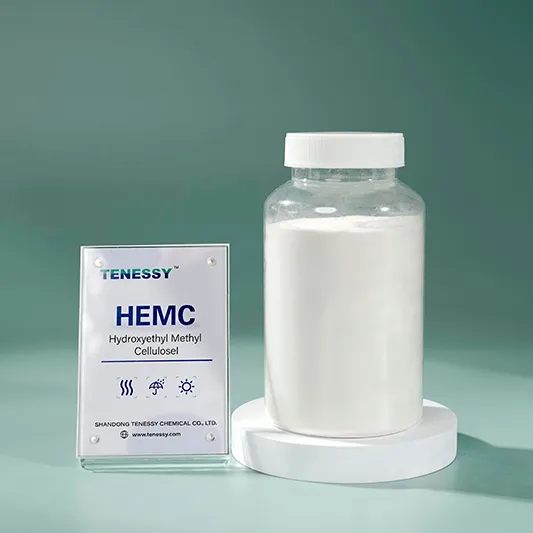
 Hydroxyethyl Methyl Cellulose
It is suitable for construction applications such as coatings, tile adhesives, dry-mix mortars, etc.

| Item | Specifications |
|---|---|
| Appearance | White powder |
| Viscosity | 5-80,000 mPa.s ( 2%, 20℃, Brookfield RV) |
| 5-200,000 mPa.s ( 2%, 20℃, NDJ-1) | |
| Particle Size | 95% pass 100 mesh |
| pH Value | 6.0-8.0 |
| Moisture content(%) | ≤5.0 |
| Ash(%) | ≤5.0 |
| Hydroxyethoxy content(%) | 4.0-12.0 |
| Methoxy content(%) | 21.0-31.0 |
What Is Hydroxyethyl Methyl Cellulose (HEMC)?
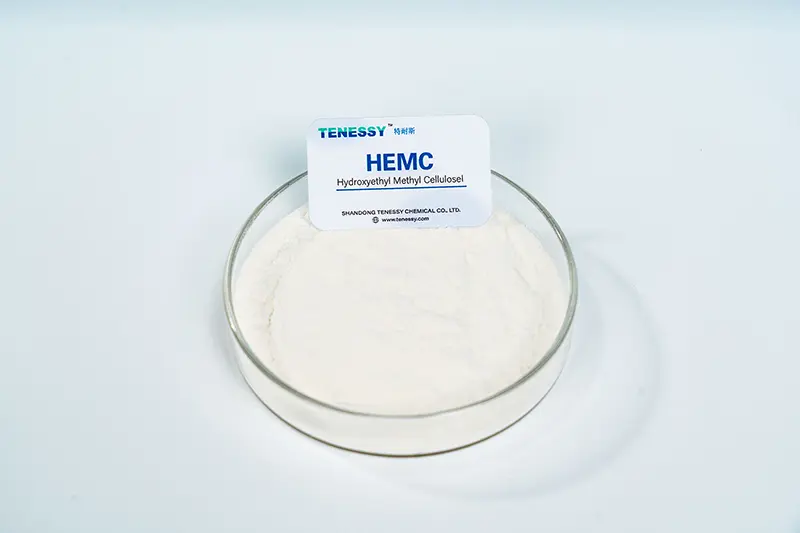
Hydroxyethyl Methyl Cellulose (HEMC), also known as Methyl Hydroxyethyl Cellulose (MHEC), is a non-ionic cellulose ether produced from natural polymer cellulose through etherification with methyl and hydroxyethyl groups. It appears as a white powder that dissolves in cold water to form a stable, viscous solution.
HEMC shares many properties with HPMC — thickening, water retention, film formation, and workability enhancement — but offers a critical advantage: superior thermal stability. While HPMC begins to gel at 54–64°C, HEMC maintains its viscosity at elevated temperatures, making it the preferred choice for applications exposed to heat, such as summer construction, tropical climates, and high-temperature coatings.
HEMC vs HPMC: What Are the Key Differences?
HEMC and HPMC are both methyl cellulose ethers widely used in construction and coatings. While they share many properties, understanding their differences is essential for selecting the right product.
| Property | HEMC (MHEC) | HPMC |
|---|---|---|
| Thermal stability | Excellent — maintains viscosity at high temperatures | Moderate — gels at 54–64°C / 70–90°C |
| Water retention | Superior | Good |
| Open time | Longer | Standard |
| Early strength | Higher | Standard |
| Mildew resistance | Better | Good |
| Dispersibility | Excellent | Good |
| Best for | Coatings, summer construction, tropical climates | General construction, daily chemicals, pharmaceuticals |
| CAS Number | 9032-42-2 | 9004-65-3 |
When to choose HEMC over HPMC: Select HEMC when your application involves elevated temperatures (summer pours, tropical climates, heat-cured products), requires maximum water retention (gypsum plaster, thin-bed mortars), or demands extended open time for large-area tiling. HEMC’s better mildew resistance also makes it preferable for water-based coatings stored for long periods.
When HPMC is sufficient: For standard-temperature construction mortars, daily chemical formulations, and cost-sensitive applications where HPMC’s performance profile meets requirements.
> Learn more in our detailed comparison: HPMC vs HEMC: 5 Key Differences & How to Choose

Benefits of HEMC / MHEC
- Excellent water retention and adhesive strength
- Resists high temperatures
- Effective dispersant and suspension agent
- Ideal thickener and film-forming agent
Try our FREE HEMC / MHEC sample and experience the difference!
HEMC powder, derived from natural polymer cellulose, offers similar benefits to other methyl cellulose derivatives. It excels in water retention, enhances adhesion, and provides excellent film formation for construction projects. Tenessy HEMC powder is a reliable, strong, and safe choice.
At Tenessy, experience our HEMC/MHEC product firsthand with a FREE sample!
– Sample Size: 200g or 400g.
– Shipping: Fast via FedEx or DHL.
– Service: Expert formula adjustment support.

Explore More Grades of Hydroxypropyl Methyl Cellulose


HEMC - NE5000

HEMC - NE2000

HEMC - NE1000

HEMC - NE500K

HEMC - NE200K
Uses of Hydroxyethyl Methyl Cellulose
Compared with HPMC, HEMC has stronger water retention, viscosity stability, mildew resistance and dispersibility. It features good anti-sagging effect, long open time, high early strength, strong high-temperature adaptability, easy stirring and convenient operation, and is more suitable for coatings and building materials.
Waterproof Mortar
Waterproof Mortar is essential to provides effective waterproofing protection, ensuring the durability and stability of buildings.
Painting & Coatings Solutions
MHEC improves leveling and water retention in coatings and improves painting effects.
Gypsum Based Plaster
MHEC improves the water retention and workability of gypsum plaster and reduces shrinkage cracking.
Skim Coat/Wall Putty
MHEC improves the water retention and construction performance of wall putty and prevents cracking.
Oil Drilling Solutions
MHEC enhances the viscosity and stability of mud and improves lubrication performance in oil drilling.
Tile Adhesive
MHEC improves the water retention and bonding properties of tile adhesive, ensuring construction quality.
HEMC Packaging and Size
We package HEMC in paper bags with a plastic liner for added protection. Keep it sealed, dry, and stored in a cool place away from moisture, sunlight, and fire sources.
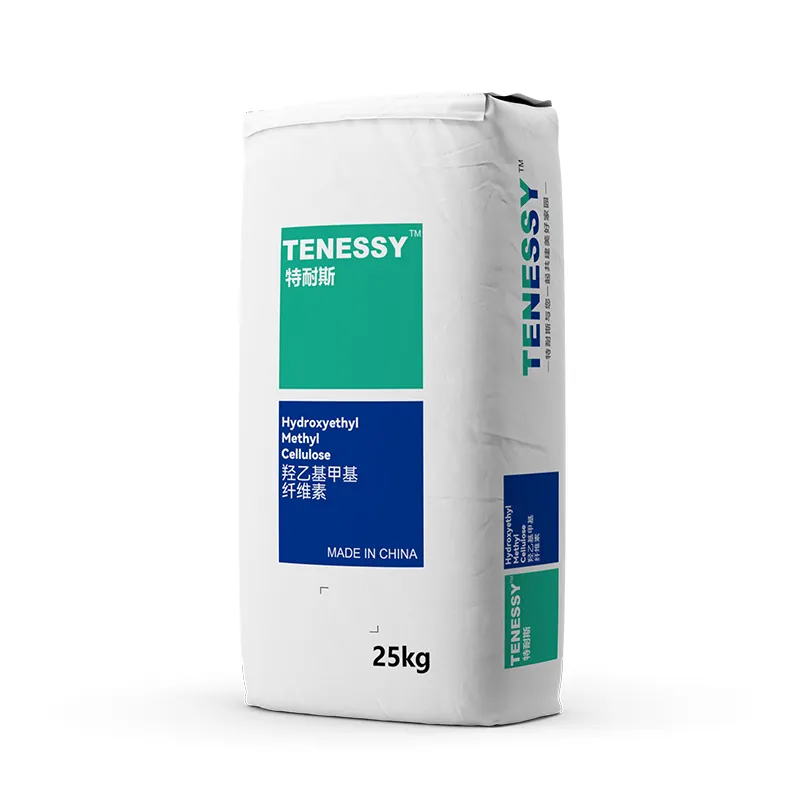
25kg Bag
TENESSY HEMC is packed in polypropylene woven bags with polyethylene inner liners , Each bag has a net weight of 25 kilograms.
600kg Pallet
TENESSY HEMC is available in 600 kilograms per pallet. Volume can be customized and delivered as per your request.
Customized Packaging
You can click the button below to reach us. We’ll promptly offer professional solutions tailored to your needs.
HEMC Supplier with Good Reputation
TENESSY has been a trusted HEMC supplier for years, with proven quality recognized globally. We’re committed to providing high quality products and services. Our investment in advanced facilities and manufacturing techniques supports this. We focus on meeting your needs with high-quality standards and personalized service. Share your requirements, and we’ll handle the rest.
Storage And Use
Storgae: The product should be kept in its original packaging during transportation and protected from rain. Storage conditions should be cool, dry, and well-ventilated indoors. Moisture should be avoided.
Use:This product has a shelf life of 12 months. Upon opening, it is recommended to consume the product promptly to preserve its optimal quality. If not completely used, please reseal the package tightly to prevent moisture contamination.
Flexible Payment and Sufficient HEMC Supply
Payment Terms: Flexible options, including L/C, T/T, OA, etc.
Minimum Order Quantity: 1 MT
Packaging: 25kg/bag, 600kg/pallet
Annual Capacity: 6,000 MTs
Lead Time: 7-20 working days, depending on order volume and requirements
Handling Large Volume Orders
TENESSY has a large demand for HEMC production every year, using advanced techniques and flexible scheduling for large orders.
Global Shipping and Delivery Solutions
Standard HEMC products are in stock, delivered directly from the factory with pre-shipment inspection and on-time shipping via CFR, CIF, or FOB within 7-14 days, depending on location.