Greek
Greek  English
  Arabic
  German
  French
  Indonesian
  Russian
  Italian
  Czech
Czech  Dutch
Dutch  Finnish
  Turkish
  Spanish
  Portuguese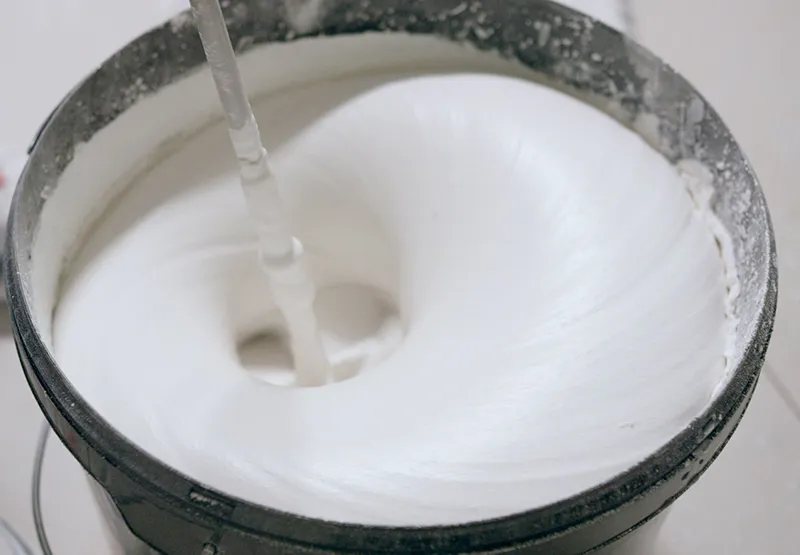
Ⅰ.Εισαγωγή
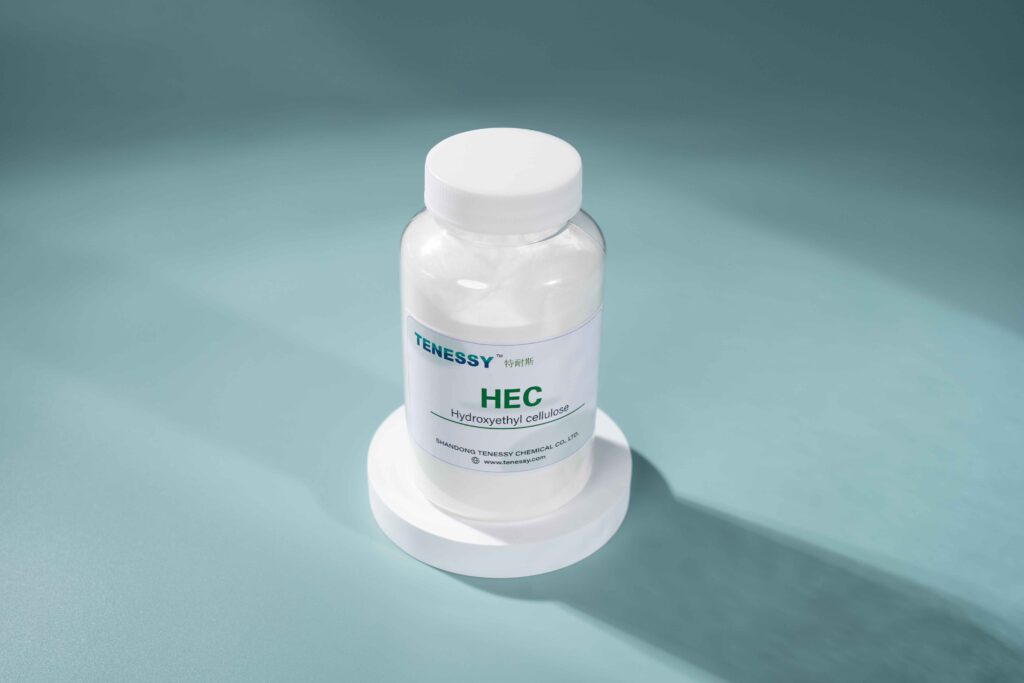
Στο βιομηχανία επιχρισμάτων, the primary functions of HEC include: providing excellent rheological properties for application, preventing pigment settling, improving storage stability, extending open time, and controlling splashing and sagging. With the rapid global growth in demand for environmentally friendly water-based coatings, HEC has become one of the preferred alternatives to traditional solvent-based coating additives due to its non-toxic, odorless, good biocompatibility, and outstanding performance. This article will systematically explain the basic properties and working mechanisms of HEC, provide detailed technical parameter tables and formulation guidelines, and delve into its practical application solutions in various types of coatings, offering comprehensive technical reference for R&D personnel and engineers.
Ⅱ.In-depth Analysis of HEC – From Molecular Structure to Basic Properties
2.1 Molecular Structure and Synthesis
The synthesis of Υδροξυαιθυλοκυτταρίνη begins with high-purity α-cellulose (typically derived from wood pulp or cotton linters). In the presence of an alkaline catalyst (such as NaOH), the hydroxyl groups of the cellulose are activated, followed by an etherification reaction with ethylene oxide, which introduces hydroxyethyl side chains.
Key Structural Parameters
Degree of Substitution (DS): Refers to the average number of hydroxyl groups substituted per anhydroglucose unit. Commercial HEC typically has a DS between 1.5 and 2.5. DS affects dissolution speed, solution clarity, and electrolyte tolerance.
Molar Substitution (MS): Refers to the average number of moles of ethylene oxide combined per anhydroglucose unit. Since the hydroxyethyl group itself contains a hydroxyl group that can further react, MS can be greater than DS. MS significantly influences the water retention and viscosity characteristics of HEC.
2.2 Basic Physicochemical Properties of HEC
Ακίνητα | Description and Typical Values |
Εμφάνιση | White to off-white powder or granules |
Διαλυτότητα | Easily soluble in cold and hot water, forming transparent to translucent viscous solutions; insoluble in most organic solvents. |
Ionic Character | Μη ιονικό, exhibits good compatibility with most ionic additives. |
Εύρος ιξώδους | Very broad (1% aqueous solution, Brookfield, 25°C), can range from tens to tens of thousands of millipascal-seconds (mPa·s). |
pH Stability | Stable within pH range of 2-12, optimal performance range is pH 6-9. Long-term storage under strong acid or alkali conditions leads to degradation. |
Θερμική σταθερότητα | Solutions can withstand ~100°C for short periods; prolonged exposure above 80°C causes viscosity loss due to oxidation and degradation. |
Film-Forming Ability | Can form transparent, flexible films, but pure HEC films have limited strength and are typically used as additives rather than the primary film-forming substance. |
Biodegradability | Susceptible to microbial degradation; therefore, its aqueous solutions must contain appropriate preservatives. |
2.3 Core Functional Mechanisms
Thickening Mechanism: The numerous hydroxyl and ether groups on the HEC molecular chains form strong hydrogen bond networks with water molecules. The molecular chains extend and entangle in water through hydration, greatly increasing the internal friction resistance to fluid flow, thereby achieving efficient thickening.
Rheology Control (Pseudoplasticity): At rest, the hydrogen bond network is intact, and the system exhibits high viscosity, suspending pigments and resisting sagging. Under shear (e.g., brushing, rolling), the hydrogen bond network is reversibly disrupted, the molecular chains align in the shear direction, and viscosity instantly decreases, making application effortless and the film smooth. Once shear ceases, the network rapidly recovers.
Water Retention Mechanism: The highly hydrophilic molecular structure can “lock” a significant amount of free water through hydrogen bonding, delaying water penetration into porous substrates and evaporation into the air, providing longer “open time” for coating leveling, pigment alignment, and film formation.
Ⅲ. The Core Roles and Performance Advantages of HEC in Coatings
3.1 Comprehensive Process and Performance Enhancement
Excellent Rheological Control and Application Properties: HEC imparts the ideal pseudoplastic rheological curve of “low viscosity at high shear, high viscosity at low shear” to coatings. This makes coatings easy to disperse, pump, and apply (no drag during rolling or brushing), while viscosity recovers immediately after application, effectively preventing sagging και dripping on vertical surfaces and corners.
Superior Water Retention, Extending Open Time: Especially in interior/exterior latex paints, putties, και mortars, HEC significantly slows water loss, avoiding issues like film cracking, powdering, and lap marks caused by rapid substrate water absorption and surface drying, thereby enhancing the integrity and aesthetics of the final film.
Enhanced Pigment Suspension and Storage Stability: The three-dimensional network structure established by HEC effectively prevents the settling and caking of pigments (e.g., titanium dioxide) and fillers (e.g., calcium carbonate, kaolin), ensuring the coating remains homogeneous throughout its shelf life, with good can stability and consistent color.
Effective Control of Application Splatter: During roller application, HEC increases the cohesion of the coating, reducing misting and splatter generated by the high-speed rotation of the roller, improving the application environment and reducing material waste.
Improved Film Properties: By promoting uniform pigment distribution and extending wet film leveling time, HEC contributes to the formation of a denser, smoother, more hiding film.
3.2 Synergistic Effects with Other Cellulose Ethers
HEC + MC/HPMC: MC/HPMC exhibits stronger thixotropy. Combined with the pseudoplasticity of HEC, a steeper rheological curve can be achieved, realizing the ideal state of “extremely smooth application, immediate setting when stopped.”
HEC + CMC: In low-cost putties and grouts, CMC provides rapid initial viscosity build-up, while HEC provides lasting viscosity maintenance, improving trowelability and anti-sag properties.
Ⅳ. Key Technical Parameters and Selection Guide for HEC
Table 1: HEC Types Classified by Viscosity Grade and Their Applications
Βαθμός ιξώδους | Typical Viscosity Value (2% aqueous solution, 25°C, mPa·s) | Key Characteristics | Recommended Application Fields |
Low Viscosity Type | 100 – 3,000 | Fast dissolution, high solution transparency, good fluidity | Low-viscosity interior/exterior paints, clear topcoats, water-based inks, systems requiring high leveling |
Medium Viscosity Type | 3,000 – 10,000 | General-purpose, balanced thickening, water retention, and application properties | Standard interior latex paints, project paints, mid-range architectural coatings, adhesives |
High Viscosity Type | 10,000 – 30,000 | High thickening efficiency, excellent water retention, strong anti-sag performance | Exterior textured coatings, elastic coatings, relief paints, putty pastes, waterproof slurries |
Ultra-High Viscosity Type | > 30,000 | Extremely high thickening efficiency and water retention, strong film-forming tendency | High-solid-content putties, masonry/plastering mortars, κόλλες πλακιδίων, specialty sealants |
Table 2: Influence of Typical HEC Dosage on Coating Performance
Application System | Recommended HEC Dosage (Based on total formulation weight %) | Primary Efficacy | Precautions |
Interior Latex Paint | 0.15% – 0.40% | Provides base viscosity, improves water retention, anti-splatter | Often compounded with HEUR to optimize high-shear rheology |
Exterior Elastic Coating | 0.25% – 0.50% | Anti-sag, extends open time, suspends pigments | Select grades with good water and weather resistance |
Putty/Plaster Gypsum | 0.3% – 0.8% | Excellent water retention, improves trowelability and anti-sag | High dosage may affect final strength and water resistance |
Water-based Industrial Paint | 0.1% – 0.3% | Prevents settling, improves flow and leveling | Note compatibility with system solvents and resins |
Κόλλα πλακιδίων | 0.2% – 0.6% | Retains water to promote cement hydration, improves anti-slip properties | Using high-viscosity grades yields more pronounced effects |
Ⅴ. Practical Application Solutions
Dissolution and Dispersion Process (Key to Avoiding Lumping)
Recommended Method (Direct Powder Addition):
Under vigorous agitation, slowly sprinkle the HEC powder into the vortex of water.
Continue stirring until the particles are completely dispersed and wetted; the solution may still appear cloudy at this stage.
Adjust the pH to 8-9 (can accelerate dissolution), or allow to mature for 1-2 hours until the solution becomes clear and uniform.
Alternative Method (Pre-mixing Method):
Pre-mix the HEC powder evenly with other powder materials in the formulation (e.g., titanium dioxide, fillers) or with non-water-soluble liquids (e.g., ethylene glycol), then add this mixture to the water under agitation. This method effectively prevents agglomeration.
Ⅵ. Συμπέρασμα
As a high-tech enterprise specializing in the research, development, and production of αιθέρες κυτταρίνης, ΔΕΝΤΕΣ deeply understands that the development of modern high-performance coatings has moved beyond simply adding the properties of a single raw material. Whether it is the “bulk-interface” dual water retention network built by HEC and HPMC, or the multi-dimensional performance matrix formed by HEC with various thickeners and additives, the core lies in precise matching and maximizing efficiency.
Relying on precise control over the molecular structure, degree of substitution, viscosity grades, and rheological behavior of cellulose ethers, TENESSY can not only supply high-performance individual products (such as HEC and HPMC of different viscosities) but also, based on deep insight into coating formulation systems, provide customers with “Cellulose Ether Synergistic Solutions”. We are committed to helping customers:
Precisely Design Rheological Curves: Achieve ideal rheological control throughout the entire process from storage and application to film formation through the scientific compounding of products like HEC and HPMC.
Overcome Specific Application Challenges: Provide customized formulation support based on the synergistic effects of cellulose ethers to address challenges such as cracking on fast-drying substrates, sagging on vertical thick coatings, and application in high-temperature environments.
Optimize Comprehensive Cost-Effectiveness: Achieve the optimal balance between raw material costs and production efficiency while ensuring or even enhancing the final coating performance through scientific synergistic formulations.