French
  English
  Arabic
  German
  Indonesian
  Russian
  Italian
  Czech
Czech  Dutch
Dutch  Finnish
  Turkish
  Greek
Greek  Spanish
  Portuguese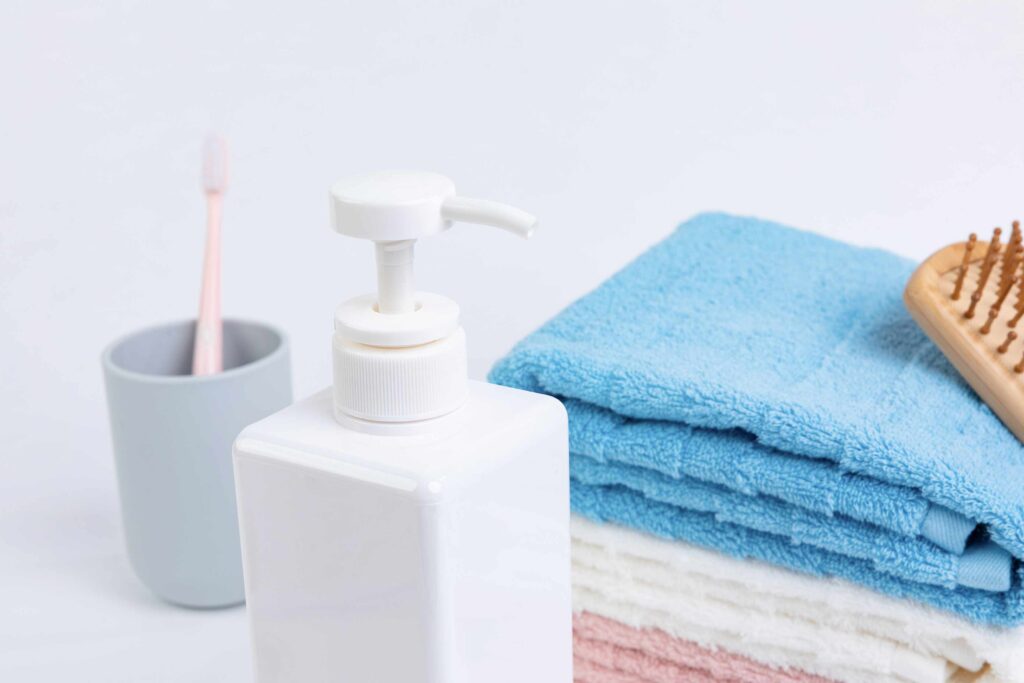
In the world of daily chemical formulations, achieving the perfect balance of texture, stability, and performance is an ongoing challenge for formulators. Whether you’re developing a liquid laundry detergent, a premium shampoo, or a household surface cleaner, the choice of rheology modifier and functional additive can make or break your product’s success.
Enter Hydroxypropylméthylcellulose (HPMC) – a versatile, non-ionic éther de cellulose that has emerged as a game-changing ingredient in the daily chemical industry. Derived from natural cellulose, HPMC offers a unique combination of thickening, stabilizing, and film-forming properties that address multiple formulation challenges simultaneously.
Au TENSITE, we specialize in providing high-quality HPMC solutions tailored to the specific needs of daily chemical manufacturers. With years of expertise in cellulose ether production, we help formulators achieve superior product performance while maintaining cost-effectiveness.
I. What is Hydroxypropyl Methylcellulose?
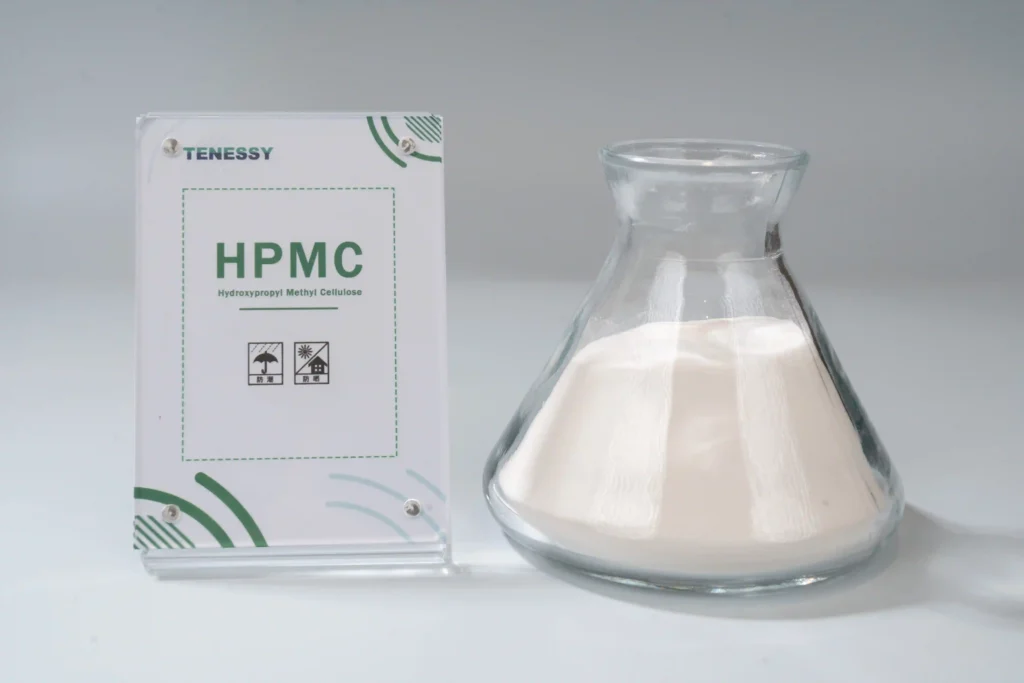
Hydroxypropylméthylcellulose (HPMC) is a semi-synthetic polymer derived from natural cellulose. It is produced by treating cellulose with alkali and then reacting it with methyl chloride and propylene oxide, resulting in a white to off-white powder that is odorless, tasteless, and non-toxic.
Key Properties of HPMC:
| Propriété | Description |
|---|---|
| Apparence | Poudre blanche à blanc cassé |
| Solubilité | Soluble in cold water, insoluble in hot water |
| Stabilité du pH | Stable from pH 2 to 13 |
| Thermal Gelation | Forms gel upon heating (75-90°C) |
| Surface Activity | Reduces surface tension in aqueous solutions |
| Formation des films | Forms flexible, transparent films |
The unique chemical structure of HPMC – containing both hydrophobic methoxyl groups and hydrophilic hydroxypropyl groups – gives it exceptional versatility across a wide range of formulations.
II. The Three Core Functions of HPMC in Daily Chemicals
1. Thickening Agent (Rheology Control)
One of the primary reasons formulators turn to HPMC is its exceptional thickening capability. As a non-ionic polymer, HPMC increases the viscosity of aqueous systems without interacting with other charged ingredients in the formulation.
Why Thickening Matters in Daily Chemicals:
For Liquid Detergents: Proper viscosity ensures that the product pours smoothly, clings to surfaces for extended contact time, and provides a satisfying user experience. Too thin, and consumers perceive it as weak; too thick, and it becomes difficult to dispense.
For Personal Care Products: In shampoos, body washes, and facial cleansers, HPMC creates the luxurious, creamy texture that consumers associate with quality. It enhances sensory appeal without leaving a sticky or heavy residue.
For Surface Cleaners: When applied to vertical or angled surfaces (like shower walls or kitchen backsplashes), properly thickened cleaners have extended “dwell time,” allowing the active ingredients more time to work before the solution drips away.
The Pseudoplastic Advantage:
HPMC exhibits pseudoplastic (shear-thinning) rheology – meaning it flows easily when stress is applied (such as during pouring or spraying) but thickens again when at rest. This property is particularly valuable for:
Sprayable cleaners that don’t drip excessively
Products that need to cling to surfaces
Easy-pour bottles that still deliver thick, luxurious product
2. Stabilizing Agent (Emulsion & Suspension Stabilizer)
HPMC functions as an exceptional stabilizer in produit chimique quotidien formulations, addressing several stability-related challenges that formulators commonly face.
Emulsion Stabilization:
In creams, lotions, and liquid detergents that contain both water and oil phases, HPMC acts as a protective colloid. It adsorbs to the interface between oil and water droplets, preventing coalescence and maintaining a stable emulsion over time. This means:
No phase separation during storage
Consistent product performance from first use to last
Durée de conservation prolongée without preservative overload
Suspension of Insoluble Particles:
Many daily chemical products contain insoluble ingredients that need to remain uniformly dispersed:
Abrasives in scrubs and cleansers
Pearlescent agents in shampoos and body washes
Solid active ingredients in detergent formulations
HPMC’s ability to form a weak gel network in solution effectively suspends these particles, preventing sedimentation and ensuring uniform product delivery.
Wide pH Compatibility:
Unlike some natural thickeners like xanthan gum (which can be limited in certain formulations), HPMC maintains stable viscosity across an exceptionally wide pH range – from pH 2 to 13. This makes it ideal for:
Acidic formulations (toilet cleaners, descaling products)
Alkaline formulations (laundry detergents, heavy-duty degreasers)
Neutral formulations (gentle skin cleansers, baby products)
3. Film-Forming Agent (Protective Barrier)
The third major function of HPMC in daily chemicals is its ability to form transparent, flexible films on surfaces. This property delivers multiple benefits depending on the application.
Protective Barrier on Skin:
In personal care products, HPMC forms a thin, breathable film on the skin or hair that:
Locks in moisture – reducing transepidermal water loss
Provides a smooth, elegant feel – without tackiness or greasiness
Protects against environmental aggressors – creating a gentle barrier
Improves product spreadability – for even application
Anti-Redeposition in Cleaning:
In laundry and surface cleaning applications, the film-forming property of HPMC contributes to soil anti-redeposition. HPMC adsorbs to suspended soil particles in the wash water, preventing them from settling back onto cleaned surfaces. The result:
Whiter whites and brighter colors
Less soil build-up over multiple washes
Cleaner surfaces with less residue
Controlled Release Applications:
While more common in pharmaceutical formulations, the film-forming ability of HPMC is increasingly being leveraged in daily chemical products for controlled release of active ingredients – such as encapsulated fragrances that release over time or actives that need sustained delivery.
III. HPMC Grades for Daily Chemical Applications
Different daily chemical applications require different viscosity grades of HPMC. At TENESSY, we offer a range of HPMC products specifically formulated for the daily chemical industry.
Recommended HPMC Grades by Application:
| Application | Recommended Viscosity | Key Benefits |
|---|---|---|
| Liquid Laundry Detergent | Low to Medium (e.g., 10,000-40,000 cP) | Compatible with surfactants, stable in alkaline pH |
| Dish Soap | Low (e.g., 4,000-10,000 cP) | Clear solutions, foam-friendly |
| Shampoo & Body Wash | Medium (e.g., 10,000-40,000 cP) | Luxury feel, suspends pearlescent agents |
| Surface Cleaners | Low to Medium (e.g., 4,000-15,000 cP) | Pseudoplastic rheology for sprayability |
| Toilet Cleaners | Medium to High (e.g., 40,000-120,000 cP) | Cling to vertical surfaces, acid-stable |
Note: Viscosity specifications may vary by manufacturer. Contact TENESSY for grade recommendations tailored to your specific formulation.
IV. HPMC vs. Other Common Thickeners in Daily Chemicals
When selecting a rheology modifier, formulators have several options. Here’s how HPMC compares to alternatives:
| Fonctionnalité | HPMC | Gomme xanthane | Carbomère | HEC |
|---|---|---|---|---|
| Stabilité du pH | 2-13 | 2-12 | 5-10 | 2-12 |
| Electrolyte Tolerance | Excellent | Bon | Pauvre | Bon |
| Surfactant Compatibility | Excellent (non-ionic) | Fair (anionic) | Pauvre | Excellent |
| Solvent Compatibility | Bon | Pauvre | Pauvre | Juste |
| Formation des films | Excellent | Pauvre | Bon | Bon |
| Temperature Stability | Good (gels on heating) | Juste | Bon | Bon |
| Cost-Effectiveness | Haut | Moyen | Faible | Moyen |
Key advantage of HPMC: Unlike xanthan gum, which is anionic and incompatible with cationic ingredients common in personal care, HPMC’s non-ionic nature makes it universally compatible. Unlike carbomers, HPMC maintains viscosity in the presence of electrolytes and across extreme pH ranges.
V. How to Incorporate HPMC into Your Formulations
Proper dispersion is critical for achieving optimal performance from HPMC. The polymer must be fully dispersed before hydration begins; otherwise, insoluble lumps (fish eyes) may form.
Method 1: Hot/Cold Dispersion Technique
This is the most common method for aqueous systems:
Disperse HPMC in one-third of the total required water heated to approximately 85-90°C (HPMC is insoluble in hot water)
Stir until particles are fully wetted and dispersed
Add the remaining two-thirds of water as cold water
Continue stirring as the solution cools – hydration and thickening will occur
Method 2: Dry Blending
For powder formulations (e.g., detergent powders, dry mixes):
Pre-mix HPMC with other dry ingredients before adding water
Ratio recommandé : 3-7 parts other dry ingredients to 1 part HPMC
Add water gradually with continuous mixing
Method 3: Non-Aqueous Solvent Dispersion
For formulations containing water-miscible organic solvents:
Disperse HPMC in the organic solvent first (use 5-8 parts solvent per 1 part HPMC)
Add water to initiate hydration and thickening
Pro Tip from TENESSY: Always conduct small-scale trials before full production to optimize dispersion parameters for your specific equipment and formulation.
Ⅵ. Environmental and Safety Profile
As consumer demand for durable and safe ingredients grows, HPMC stands out as an excellent choice:
Eco-Friendly Characteristics:
Derived from renewable resources (wood pulp or cotton linters)
Biodegradable under appropriate conditions
Non-toxic – safe for use in products that contact skin and even food
Safety Profile:
- Non-irritating to skin at typical usage levels
- Non-sensitizing – suitable for sensitive skin formulations
- No known endocrine disruption concerns
- GMP compliant for pharmaceutical and cosmetic grades
Conclusion: Why HPMC is the Smart Choice for Daily Chemical Formulators
Hydroxypropyl Methylcellulose offers an unparalleled combination of three essential functions – thickening, stabilizing, and film-forming – making it an invaluable tool for daily chemical formulators. Its compatibility across extreme pH ranges, tolerance of electrolytes and surfactants, and natural origin position it as a versatile, sustainable solution for modern formulations.
Whether you’re developing:
High-performance laundry detergents
Premium personal care products
Effective household cleaners
Industrial cleaning formulations
TENSITE has the expertise and product range to support your success. Our technical team is ready to help you select the right HPMC grade, optimize your formulation, and scale production efficiently.




-scaled.jpg)