Spanish
  English
  Arabic
  German
  French
  Indonesian
  Russian
  Italian
  Czech
Czech  Dutch
Dutch  Finnish
  Turkish
  Greek
Greek  Portuguese
In modern, intensive livestock farming, gut health directly determines the success or failure of production efficiency. Rising feed costs, restrictions on antibiotic use, and frequent diarrhea in young animals – these challenges are driving producers to seek safe, efficient, and multifunctional feed additives. Among many options, one product stands out for its unique dual identity: it serves as both a high-quality calcium source and an effective gut regulator. It is not a drug, yet it plays the role of “intestinal guardian” in the post-antibiotic era. This product is feed grade calcium formate.
I. The Myth of Traditional Calcium Supplementation: Calcium Source Is Not Just About "Calcium Content"
For a long time, when it came to calcium supplementation, the immediate association for many farmers was “limestone” (calcium carbonate) or oyster shell powder. These inorganic calcium sources indeed have high calcium content and low cost. However, against the backdrop of antibiotic bans and intensive farming practices, the logic of simply adding calcium has become outdated.
Firstly, traditional inorganic calcium sources (such as limestone) are salts of strong bases and weak acids, possessing a high acid-binding capacity. When mixed with feed and entering the animal’s gastrointestinal tract, they neutralize a significant amount of gastric acid, raising the gastric pH. For young animals (like weaned piglets) whose digestive systems are not yet fully developed, insufficient gastric acid secretion is already a problem – adding inorganic calcium only makes it worse. Neutralized gastric acid cannot activate pepsinogen, leading to poor digestion of protein macromolecules, and more importantly, it destroys the first line of defense against foreign bacteria in the stomach.
The emergence of feed grade calcium formate precisely addresses this contradiction.
II. Dual Identity Part One: An Efficient and Gentle Organic Calcium Source
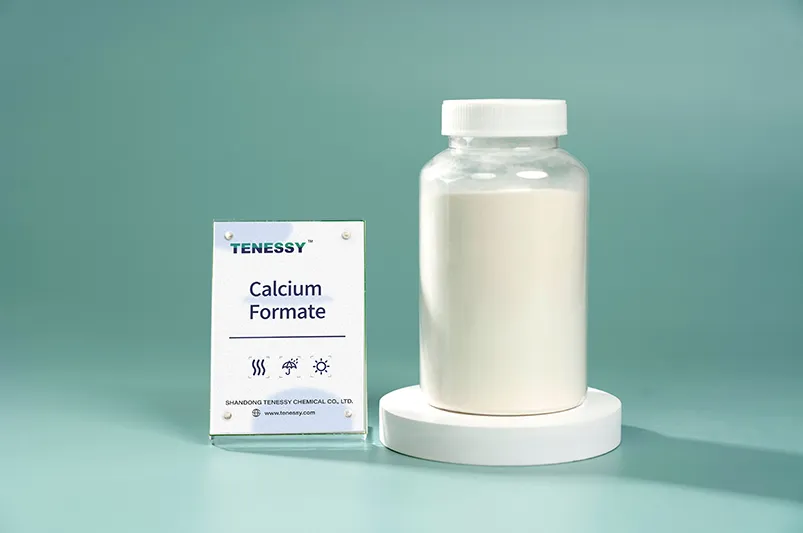
Feed grade calcium formate (Ca(HCOO)₂) is a small-molecule organic calcium. Its calcium content exceeds 30.4%, which is just its basic qualification as a calcium supplement. Its core advantages lie in its gentleness and efficiency.
Unlike the “harshness” of limestone, calcium formate is chemically neutral, non-corrosive to feed equipment, and offers excellent flowability and stability. During premix preparation and pelleting, it does not destroy active nutrients like vitamins and amino acids in the feed. More importantly, the absorption pathway of calcium from formate is different. It has good solubility, and through the chelating effect of formic acid, it prevents calcium ions from forming insoluble phosphate precipitates in the intestine, thereby significantly improving calcium absorption and utilization.
This is particularly crucial for laying hens, especially older ones in the late laying period whose calcium absorption capacity declines. Studies have shown that adding calcium formate to the diet effectively increases eggshell thickness and strength, improving eggshell quality. This is not just calcium supplementation; it’s precision nutrition achieved through improved bioavailability.
III. Dual Identity Part Two: A Gentle Yet Powerful "Intestinal Cleaner"
If calcium supplementation is calcium formate’s “primary job,” then regulating gut health is its “hidden skill” – and this is precisely the most valuable attribute in today’s antibiotic-free farming environment.
The gut health mechanism of feed grade calcium formate is not direct sterilization, but rather “inhibition through regulation”.
3.1 Lowering Gastrointestinal pH, Activating Digestive Enzymes
When calcium formate enters the animal’s acidic stomach environment, it releases free formic acid. This slow-release formic acid effectively compensates for the insufficient gastric acid secretion in young animals, maintaining a low gastric pH. This low pH environment is essential for converting pepsinogen into active pepsin. Improved digestibility means fewer undigested nutrients (the “food” for pathogens) enter the intestine, cutting off the breeding ground for harmful bacteria at the source.
3.2 Building an "Acidic Intestinal Barrier" – Inhibiting Pathogens, Promoting Beneficial Bacteria
This is the core mechanism of calcium formate as a gut guardian. Pathogenic bacteria like E. coli y Salmonella are highly sensitive to acidic environments, thriving best at neutral or slightly alkaline pH. In contrast, beneficial bacteria like Lactobacillus are acid-tolerant. Through the release of formic acid, calcium formate achieves selective inhibition: it lowers the pH of the intestinal contents, creating a natural “acidic barrier” that prevents the colonization and proliferation of pathogens like E. coli.
Simultaneously, the acidic environment promotes the growth of acid-producing bacteria like Lactobacillus. These beneficial bacteria adhere to the intestinal mucosa, forming a biological barrier that prevents toxin invasion, thereby controlling and reducing diarrhea and dysentery.
3.3 The "Special Function" of Formic Acid: Penetration and Killing
Unlike the physical precipitation effect of copper sulfate or high levels of zinc, formic acid, as a small-molecule organic acid, possesses a unique penetration ability. Undissociated formic acid molecules can cross the cell wall of pathogens (like E. coli) and enter the bacterial interior. Inside the bacterial cell, where the pH is near neutral, formic acid forcibly dissociates, releasing hydrogen ions (H⁺). To maintain internal pH balance, the bacterium must consume large amounts of ATP (energy) to pump out the H⁺, eventually leading to bacterial death from energy depletion. This “Trojan Horse” bactericidal mechanism makes calcium formate precise and highly effective in inhibiting harmful intestinal bacteria.
IV. Empirical Evidence: From "Fast Growth" to "Healthy Living"
The effectiveness of calcium formate holds up under scrutiny, both in academic research and on production farms.
Application in Piglets: The biggest challenge for weaned piglets is diarrhea and weight loss. German research data shows that adding 1.3% calcium formate to piglet diets improves feed conversion ratio by 7-8%; adding 0.9% significantly reduces the incidence of diarrhea. Numerous domestic trials also indicate that adding 1%-1.5% feed grade calcium formate to piglet diets can increase feed conversion efficiency by 7%-10%, increase daily gain by 9%-13%, and reduce feed consumption by nearly 4%.
Application in Poultry: For layers, calcium formate provides an organic calcium source, directly improving eggshell quality. For broilers, it regulates gut microbiota, reducing the risk of common necrotic enteritis and improving fecal consistency.
V. How to Choose a True "Gut Guardian"
The market for calcium formate varies in quality. To leverage its gut-protecting effects, careful selection is key.
Check the Raw Material Source: High-quality feed grade calcium formate is synthesized using pure acid (≥85% purity formic acid) and high-quality heavy calcium carbonate, resulting in high purity and low impurities. Inferior products often use industrial waste acids (e.g., from leather tanning), which may contain heavy metals, chloride ions, and other harmful substances, along with pungent odors that affect palatability or even cause poisoning.
Sensory Evaluation: Genuine feed grade calcium formate appears as white, free-flowing crystals with uniform particles and a luster under sunlight. If the color is grayish or yellowish, or if there is a distinct ammonia or sour smell, do not use it.
Focus on Content: Content is not necessarily better when excessively high (above 99% often involves unnecessary cost from over-purification). However, products with content below 98% and excessive impurities should be strictly avoided.
Conclusión
In the post-antibiotic era, where feed antibiotics are increasingly restricted, the demand for feed inputs has shifted from single-function products to systemic health regulation. Feed grade calcium formate perfectly aligns with this trend: it is not only a nutrient providing calcium for bone growth but also a regulator that establishes a balanced gastrointestinal microecology.
It resolves the issue of high acid-binding capacity calcium sources neutralizing gastric acid, and through its sustained-release formic acid mechanism, it delivers comprehensive benefits throughout the intestine: inhibiting pathogens, promoting digestion, and maintaining mucosal health. For feed formulators and farmers, incorporating calcium formate into diets means more than just supplementing a mineral – it is investing in an “invisible insurance policy” for the gut health of their animals.
Choose high-quality feed grade calcium formate. Combine calcium supplementation with gut protection. Start from the fundamental logic of gut health to unlock new heights in farming efficiency.




-escala.jpg)