Finnish
  English
  Arabic
  German
  French
  Indonesian
  Russian
  Italian
  Czech
Czech  Dutch
Dutch  Turkish
  Greek
Greek  Spanish
  Portuguese
Ⅰ.Johdanto
In modern construction, kipsipohjaiset materiaalit have become indispensable due to their efficiency, smooth finish, and sustainability. From interior wall plasters to itsetasaava compounds and joint fillers, gypsum products are widely used for both residential and commercial projects. However, achieving consistent workability, extended open time, and high-quality surface finishes often requires advanced additives. Among these, Hydroksipropyylimetyyliselluloosa (HPMC) ja gypsum retarders play critical roles.
Ammattilaisena selluloosa eetterin valmistaja, we combine technical expertise with practical application insights to show how these additives optimize gypsum formulations and provide real-world value.
Ⅱ.Challenges in Gypsum-Based Materials
Although gypsum offers many advantages, plain gypsum formulations often face several challenges:
Rapid setting that limits workability
Insufficient water retention, leading to surface defects and uneven hydration
Sagging on vertical or overhead surfaces
Difficult mixing and spreading in large-area applications
Surface cracking due to rapid crystal growth and shrinkage
Inconsistent finish quality, especially in multi-layer applications
Addressing these issues requires careful formulation and the strategic use of additives such as HPMC and retarders.
Ⅲ. HPMC: Enhancing Water Retention, Workability, and Surface Quality
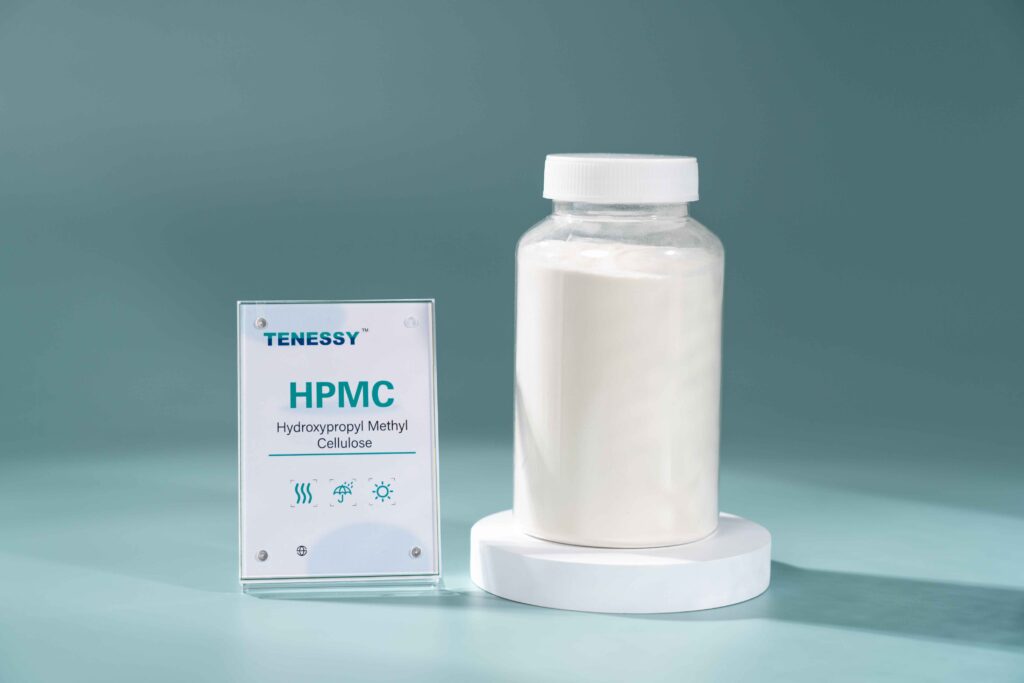
Hydroksipropyylimetyyliselluloosa (HPMC) is a non-ionic cellulose ether derived from natural cellulose. Its key properties—water solubility, thickening ability, water retention, and film-forming capacity—make it indispensable in gypsum systems.
Key Benefits of HPMC:
1.Superior Water Retention
HPMC forms a hydration barrier around gypsum crystals, reducing water loss and allowing complete hydration. This ensures:
Stronger mechanical properties
Uniform surface finish
Reduced risk of early surface cracking
2.Improved Workability and Open Time
HPMC allows gypsum mixtures to retain their plasticity for a longer period by controlling viscosity. Benefits include:
Easier mixing, pumping, and spreading
Smooth leveling on floors and walls
Reduced labor intensity and material wastage
3.Anti-Sagging and Shape Stability
In vertical and overhead applications, HPMC helps maintain dimensional stability, preventing sagging even at higher application thicknesses.
4.Enhanced Surface Finish
The lubricating and film-forming properties of HPMC contribute to:
Smooth, fine-textured surfaces
Better paint adhesion
High-quality aesthetics for interiors
Ⅳ. Gypsum Retarders: Controlling Setting Time and Reducing Cracks
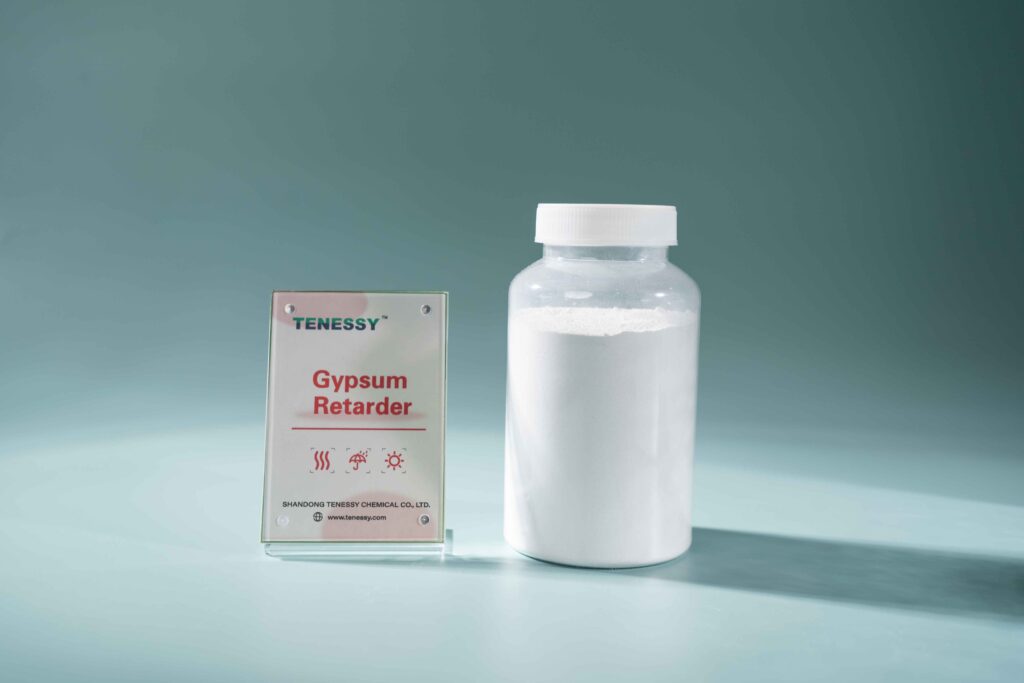
While HPMC enhances water retention and workability, gypsum retarders directly regulate the hydration reaction of gypsum. Retarders are especially important in large-area applications or warm climates, where rapid setting can be problematic.
Key Benefits of Retarders:
1.Extended Setting Time
Allows for sufficient working time on large surfaces
Supports complex or multi-layer construction processes
2.Better Construction Adaptability
Works synergistically with HPMC to maintain plasticity
Prevents early hardening that could compromise leveling or adhesion
3.Reduced Shrinkage and Cracking
Slower crystal growth minimizes internal stress
Ensures durable, crack-free surfaces
Common retarders include citric acid, tartaric acid, phosphates, and organic salts, and their dosage must be carefully controlled for consistent performance.
Ⅴ. Synergy Between HPMC and Retarders
Combining HPMC with retarders delivers optimized gypsum performance:
Toiminto | HPMC | Hidastin | Combined Effect |
Vedenpidätys | ✅ | — | Maintains hydration and workability |
Open time | ✅ | ✅ | Extended working window |
Anti-sagging | ✅ | — | Stable vertical/overhead application |
Surface quality | ✅ | ✅ | Smooth, crack-free finishes |
Shrinkage control | — | ✅ | Minimized early cracking |
This synergy allows manufacturers to produce gypsum materials that are easy to apply, dimensionally stable, and high-quality, even under challenging conditions.
Ⅵ. Optimizing Additive Selection for Gypsum Systems
Not all HPMC grades or retarders are created equal. Optimizing formulations involves:
Selecting HPMC with the right viscosity, substitution degree, and particle size for your specific gypsum product
Choosing retarders suitable for the ambient temperature and application type
Ensuring compatibility with other additives for stable, predictable performance
As an experienced cellulose ether manufacturer, we provide:
Tailored HPMC grades for plaster, machine-applied gypsum, self-leveling compounds, and joint fillers
Guidance on optimal retarder selection and dosage
Consistent batch quality and technical support for real-world construction applications
Ⅶ. Real-World Applications and Benefits
Incorporating HPMC and retarders offers tangible advantages for gypsum manufacturers:
Improved product competitiveness: Better workability, extended open time, and premium surface finish
Reduced labor and material costs: Easier mixing, spreading, and less rework
Higher customer satisfaction: Smooth, crack-free surfaces with reliable performance
Enhanced sustainability: Reduced waste and efficient use of materials
Example scenarios include:
Large-area wall plastering: HPMC prevents sagging, retarders extend working time
Self-leveling floor compounds: HPMC ensures flow and leveling; retarders prevent rapid setting
Decorative gypsum moldings: Retarders allow detailed shaping, HPMC maintains dimensional stability
Ⅷ. conclusion
Osoitteessa TENESSY, we are committed to delivering high-performance HPMC solutions and formulation expertise for gypsum systems. Our products and tekninen tuki help manufacturers achieve:
Optimized workability and consistency
Extended open time for challenging applications
Superior surface quality and crack-free finishes
Choosing the right HPMC and retarder combination is not just about additives—it’s about unlocking the full potential of gypsum materials.
Contact us today to explore our tailored HPMC grades and retarder solutions, and elevate your gypsum products to the next level.