

 Finnish
  English
  Arabic
  German
  French
  Indonesian
  Russian
  Italian
  Czech
Czech  Dutch
Dutch  Turkish
  Greek
Greek  Spanish
  Portuguese
 Kipsisäiliön hidastin betonielementtejä varten
- Etusivu
- "
- Toimialat ja sovellukset
- "
- Kipsisäiliön hidastin betonielementtejä varten
Kipsin hidastin for Precast Elements: Better Control, Higher Quality, and Stable Production
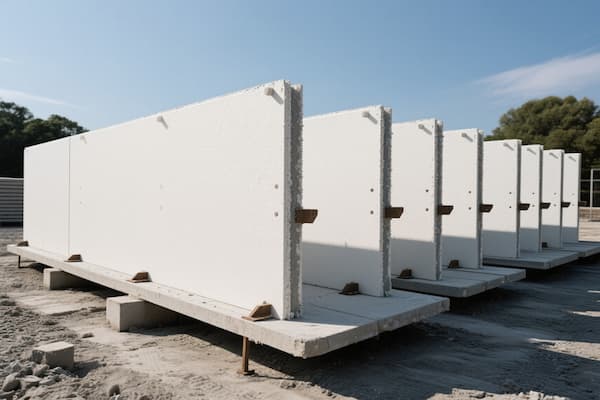
Precast gypsum elements are widely used in modern construction because they offer consistent quality, fast installation, and excellent surface finish. Typical products include gypsum boards, decorative panels, ceiling elements, partition components, and other factory-made gypsum parts.
One of the key challenges in producing precast gypsum elements is controlling the setting time. Gypsum naturally hydrates and hardens very quickly, which can cause problems during mixing, molding, and casting. To achieve stable production and high-quality finished products, a kipsin hidastin plays a critical role.
What Is a Gypsum Retarder for Precast Elements?
Kipsin hidastin on kemiallinen lisäaine, jonka tarkoituksena on slow down the hydration and setting reaction of gypsum. When used in precast element production, it provides better control over the hardening process without negatively affecting final strength or surface quality.
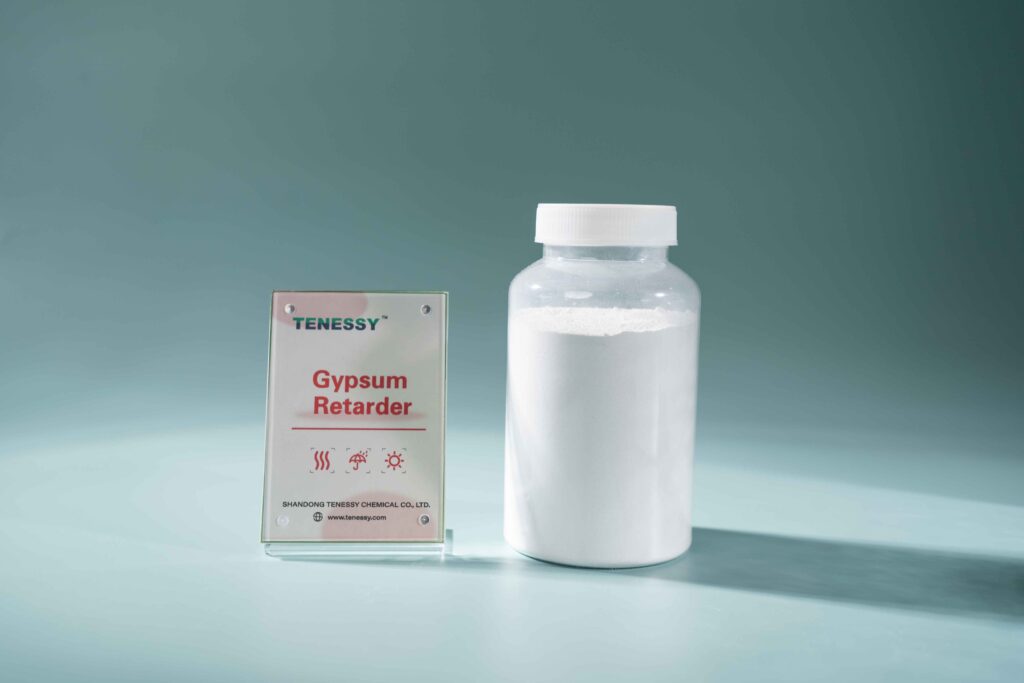
Our gypsum retarder is supplied as a vaaleankeltainen jauhe, with stable physical properties and high retardation efficiency. It works effectively at very low dosage levels, making it suitable for continuous industrial production.
Key Benefits of Gypsum Retarder in Precast Elements

1. Improved Workability and Casting Time
The most important advantage of using a gypsum retarder is extended workability. This gives manufacturers enough time for:
- Mixing large batches
- Transporting slurry to molds
- Filling complex or detailed molds
- Performing vibration or leveling
Better workability leads directly to better mold filling and fewer defects.
2. Enhanced Surface Quality and Detail Accuracy
Precast gypsum elements often require smooth surfaces and sharp edges, especially for decorative or architectural components. When gypsum sets too quickly, surface defects such as pinholes, rough texture, or incomplete edges can occur.
By slowing the setting process, the retarder helps:
- Achieve smooth and uniform surfaces
- Improve reproduction of fine mold details
- Reduce air bubbles and surface flaws
This results in higher aesthetic quality and reduced need for post-processing.
3. Stable and Predictable Production
In continuous precast production lines, consistency is essential. A gypsum retarder provides stable and repeatable setting behavior, helping manufacturers maintain:
- Uniform production cycles
- Consistent demolding time
- Reliable product quality across batches
This stability improves production efficiency and reduces downtime caused by setting-related issues.
4. Reduced Hydration Heat and Internal Stress
Our gypsum retarder reduces hydration speed and hydration heat, which is particularly important for thicker or larger precast elements. Lower hydration heat helps:
- Minimize internal stress
- Reduce the risk of micro-cracks
- Improve dimensional stability
This contributes to stronger and more durable precast gypsum products.
5. Maintained Strength and Mechanical Performance
Vaikka kovettumisaika on viivästynyt, hidastin antaa seuraavat ominaisuudet luja hidastus. This means that after hardening, the precast elements maintain their required mechanical properties.
When used at the recommended dosage, there is no negative impact on compressive strength or long-term performance.
Why Setting Time Control Is Critical in Precast Gypsum Production
Unlike on-site plastering, precast gypsum elements are manufactured in a controlled factory environment. However, fast and uncontrolled setting can still lead to serious production issues, such as:
- Insufficient time for mixing and degassing
- Poor mold filling and incomplete detail reproduction
- Surface defects caused by premature stiffening
- Inconsistent quality between batches
- Increased waste and rejected products
In precast production lines, gypsum slurry must remain workable long enough to allow accurate dosing, mixing, pouring, vibration, and mold filling. A gypsum retarder helps extend the workable time, ensuring smooth and stable manufacturing.
How Gypsum Retarder Works in Precast Gypsum Systems
When gypsum is mixed with water, calcium sulfate crystals form and grow rapidly, causing the material to harden. In precast applications, this process must be carefully controlled.
The gypsum retarder works by:
- Slowing the dissolution rate of gypsum particles
- Delaying crystal nucleation and growth
- Reducing hydration speed and hydration heat
- Extending the initial and final setting time
This controlled hydration allows the gypsum slurry to remain fluid long enough for proper processing, while still achieving full strength after demolding and curing.

Suositeltu käyttö ja testaus
The optimal dosage depends on factors such as gypsum type, water–gypsum ratio, temperature, and production speed. For best results, we recommend:
-
Conducting trial mixes before full-scale production
-
Adjusting dosage to match desired setting and demolding time
-
Tasaisen sekoituksen varmistaminen tasaisen suorituskyvyn varmistamiseksi
Free samples are available so manufacturers can test the gypsum retarder under real production conditions and fine-tune their formulations.
Typical Applications in Precast Gypsum Elements
This gypsum retarder is suitable for a wide range of precast gypsum products, including: gypsum boards and panels, decorative gypsum elements, ceiling tiles and ceiling components, gypsum partition and wall systems, and customized architectural gypsum parts.
It can be used in both manual and automated production lines.



Why Choose Our Gypsum Retarder for Precast Elements?
As a professional construction additives manufacturer, we focus on providing reliable and production-friendly solutions. Our gypsum retarder offers:
- Precise control over setting time
- Korkea hyötysuhde pienellä annostuksella
- Stable performance in industrial production
- Improved surface quality and reduced waste
It helps precast manufacturers improve productivity while delivering consistent, high-quality gypsum elements.

