Italian
  English
  Arabic
  German
  French
  Indonesian
  Russian
  Czech
Czech  Dutch
Dutch  Finnish
  Turkish
  Greek
Greek  Spanish
  Portuguese
 Sodium Lauryl Sulfate (SLS, also known as K12), one of the most widely used anionic surfactants, holds an irreplaceable position in personal care products, household detergents, industrial cleaners, and polymer emulsion polymerization. With its excellent detergency, foaming power, and emulsifying properties, this surfactant serves as a core functional component in numerous formulations.
However, during the procurement and selection process, a common yet critical technical decision point emerges: What differences do the two primary physical forms of K12—needle-like crystals and powdered crystals—actually make in downstream applications? The hidden costs beyond the purchase price, such as process compatibility, material loss, and formulation stability, often depend on this choice.
This article systematically compares the application differences between needle-like K12 and powdered K12 from four dimensions: crystallization principles, powder engineering characteristics, dissolution kinetics, and typical process compatibility, providing formulators and procurement decision-makers with a scientific and quantifiable selection basis.
I. Same Chemistry, Different Morphology
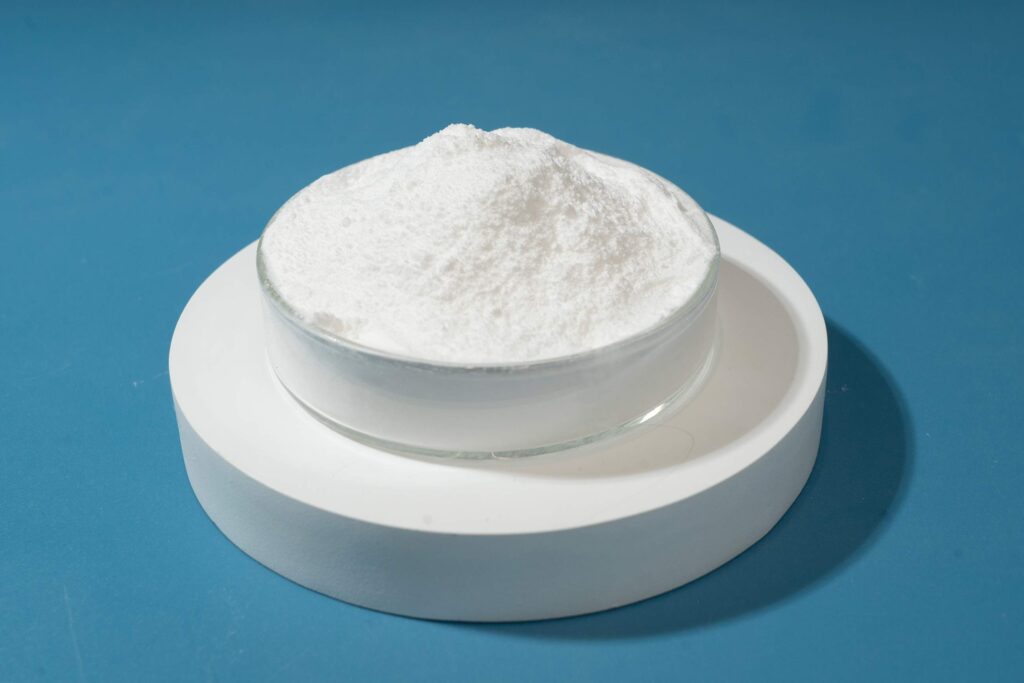
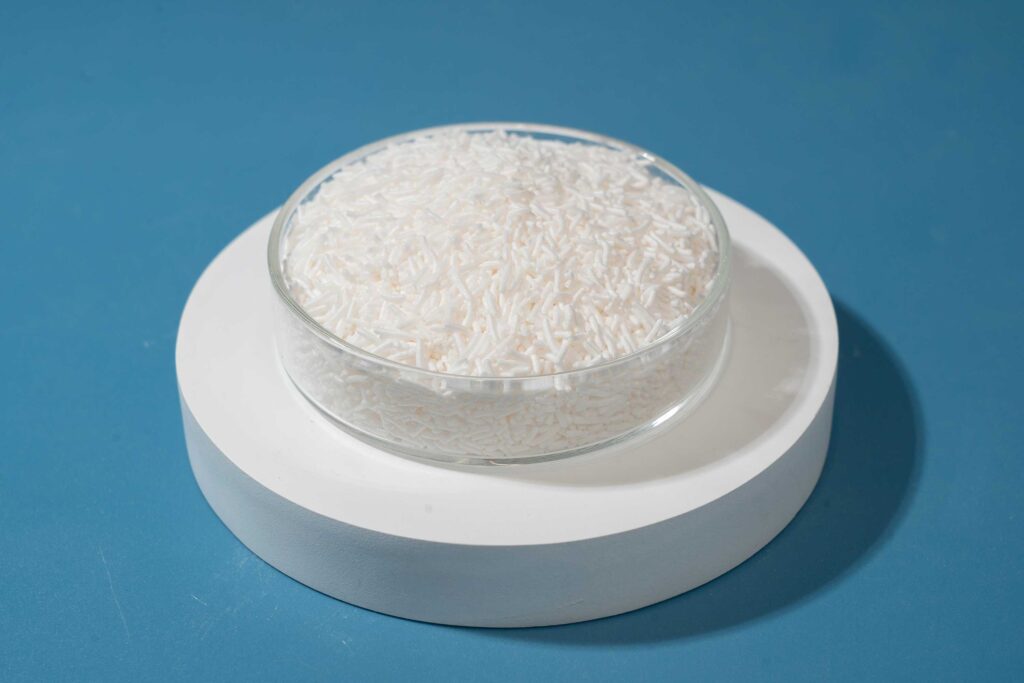
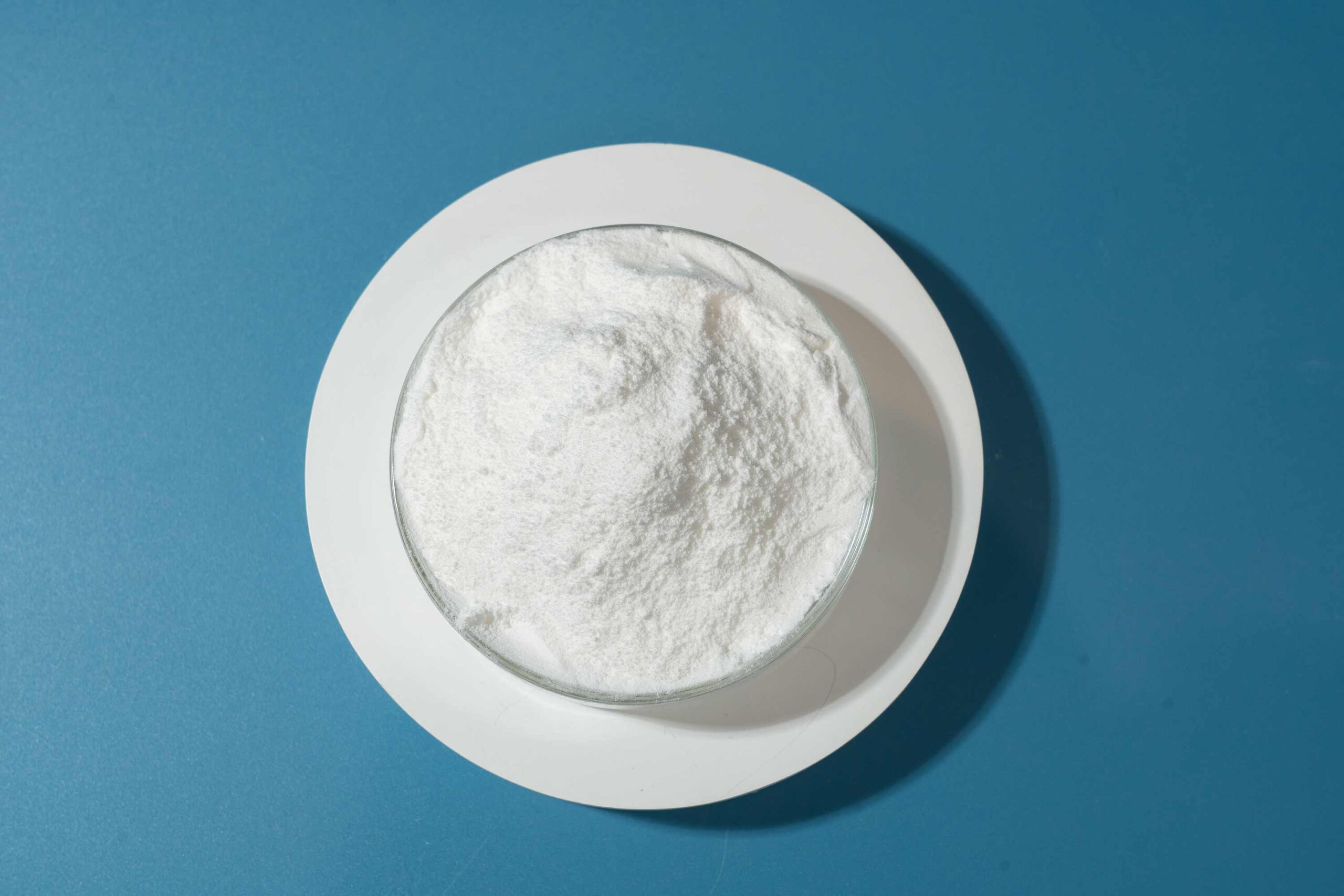
At the molecular level, needle-like and powdered K12 share an identical chemical structure (CH₃(CH₂)₁₀CH₂OSO₃Na), and both achieve an active matter content of over 90% (typically 92%–94%). The fundamental difference lies in crystal morphology and particle shape, which is determined by the choice of post-treatment process.
1. Powdered Crystals: Spray Drying Process
Powdered K12 is typically produced via essiccazione a spruzzo. Liquid K12 is atomized under high pressure and sprayed into a high-temperature drying tower, where surface moisture evaporates rapidly, forming hollow, porous amorphous particles. The microscopic morphology is irregular with a rough surface, resulting in a significantly increased specific surface area.
This process offers high efficiency and large production capacity. However, the disorderly particle morphology leads to higher surface free energy, making the product highly hygroscopic under ambient humidity conditions.
2. Needle-like Crystals: Crystallization Process
Needle-like K12 is produced via cooling crystallization o solvent crystallization. Under controlled temperature gradients and supersaturation conditions, K12 molecules stack in an orderly manner along specific crystal planes, growing into needle-like crystals with a dominant one-dimensional orientation. These crystals are dense, have smooth surfaces, and exhibit superior thermodynamic stability.
Compared to amorphous powder, the regular lattice arrangement of needle-like crystals macroscopically manifests as lower surface free energy and stronger resistance to moisture absorption. This structural feature profoundly influences downstream processing behavior.
II. Dissolution Behavior and Process Compatibility
For manufacturers of liquid formulations, the dissolution rate e dispersibility of K12 in aqueous systems directly determine batch uniformity, production cycle time, and energy consumption. This represents the most significant application divergence between needle-like and powdered K12.
1. Agglomeration Tendency of Powdered K12: Formation of "Fish Eyes"
Due to its fine particle size, rough surface, and large specific surface area, powdered K12 undergoes preferential surface wetting when introduced into an aqueous medium, forming a high-viscosity gel layer. This gel layer prevents water from penetrating into the particle interior, trapping undissolved cores and forming translucent colloidal agglomerates—commonly known as “fish eyes” in the industry.
The formation of fish eyes brings three negative consequences:
Extended dissolution time: Requires high-shear mixing and heating (typically above 40°C) to break down the gel layer, significantly increasing energy consumption.
Batch non-uniformity: Residual undissolved particles can compromise product clarity and cause fluctuations in effective concentration.
Filter clogging: During filtration prior to filling, fish eyes tend to clog filter cartridges, interrupting production.
2. Rapid Dispersion of Needle-like K12: A Particle Engineering Advantage
The elongated crystal structure of needle-like K12 imparts excellent aqueous dispersibility. The mechanisms are as follows:
Low bulk density and high porosity: Needle-like particles form a loosely packed layer, allowing water to rapidly penetrate through inter-particle voids, avoiding the instantaneous formation of a surface gel layer.
Anisotropic wetting: Needle-like crystals exhibit different surface energies along their long axis versus transverse directions, leading to preferential alignment in the liquid phase and reduced tendency to form three-dimensional agglomerate networks.
Experimental data indicate that at the same temperature (25°C) and agitation rate, the complete dissolution time of needle-like K12 is typically 40%–60% shorter than that of powdered K12, achieving homogeneous dispersion without heating. This characteristic holds significant value for heat-sensitive formulations (e.g., shampoos containing botanical extracts) and energy-efficient production.
III. Powder Engineering Characteristics: Storage, Conveying, and Material Loss
Beyond dissolution behavior, the powder properties of K12 also affect raw material warehousing, in-plant conveying, and dosing accuracy. Comparison is made below from three engineering dimensions: flowability, hygroscopicity/caking tendency, and dust control.
| Proprietà | Needle-like K12 | Powdered K12 | Impact on Production |
|---|---|---|---|
| Bulk density (loose) | Approx. 0.30–0.40 g/cm³ | Approx. 0.15–0.25 g/cm³ | Needle-like crystals reduce packaging and transport costs; smaller volumetric dosing deviation |
| Angle of repose (flowability indicator) | 30°–35° (excellent) | 40°–50° (poor) | Needle-like crystals discharge smoothly from hoppers with minimal bridging or wall adhesion |
| Hygroscopicity (80% RH, 30°C) | Weight gain < 2%/24h | Weight gain 5%–8%/24h | Powdered form readily absorbs moisture and cakes, leading to material loss and dosing errors |
| Dust generation | Low (coarse particles) | High (high fine content) | Dust increases operator exposure risk; requires dust extraction system |
1. Flowability and Suitability for Automated Dosing
The regular morphology and smooth crystal faces of needle-like K12 provide excellent flowability, with an angle of repose typically below 35°, making it suitable for automated loss-in-weight feeding systems e pneumatic conveying systems. In contrast, powdered K12, due to high inter-particle friction and a tendency to bridge, often requires vibratory devices or bin breakers, increasing capital equipment and maintenance costs.
2. Storage Stability
Powdered K12 is a typical deliquescent powder. When stored under high-humidity conditions (e.g., summer months) for more than 30 days, absorbed surface moisture causes partial dissolution at particle surfaces, leading to adhesion between adjacent particles and the formation of hard lumps, sometimes rendering entire bags unusable. Due to its crystal integrity and low surface energy, needle-like K12 exhibits significantly better anti-caking performance, maintaining a loose state even under high-humidity storage.
IV. Specific Selection Recommendations by Application Scenario
1. Typical Scenarios Where Needle-like K12 is Strongly Recommended
The following applications strongly favor the evaluation of needle-like K12:
Transparent liquid detergents (e.g., laundry liquids, dishwashing liquids): Require rapid dissolution, no residual particles, and high clarity.
Personal care products (shampoos, body washes, facial cleansers, toothpastes): Demand mildness, foaming power, and process stability.
High-active concentration formulations (e.g., >30% SLS systems): Needle-like crystals effectively avoid gelation at high concentrations.
Highly automated production lines: Where pneumatic conveying or gravity-fed dosing is employed.
High-humidity regions or long-term storage: Where raw material anti-caking performance is a clear requirement.
2. Typical Scenarios Where Powdered K12 May Be Appropriate
Powdered K12 may still be cost‑reasonable in the following scenarios:
Powdered detergents (laundry powders, automatic dishwasher powders): Requires dry blending with base powders (zeolite, soda ash, sodium sulfate), where powdered morphology facilitates particle size matching and mixing uniformity.
Emulsion polymerization emulsifier: Specific processes have established inertia regarding powder addition methods.
Batch production with no high demand for dissolution rate, and equipped with heating and high‑shear mixing capabilities on smaller lines.
V. TENESSY Quality Commitment
TENEREZZA supplies both needle‑like and powdered sodium lauryl sulfate with rigorous quality control. Key specifications include:
Active matter content: 92%–94% (on dry basis)
Sodium chloride (NaCl) content: ≤ 1.0%
Unreacted fatty alcohols: ≤ 1.5%
pH (1% aqueous solution): 7.5–9.5
We are committed to providing K12 products with batch traceability, stable crystal morphology, e packaging compliant with UN/international transport standards. For new formulation development or existing formulation replacement needs, the TENESSY technical team offers sample testing, comparative dissolution rate analysis, and process compatibility consulting.