Portuguese
  English
  Arabic
  German
  French
  Indonesian
  Russian
  Italian
  Czech
Czech  Dutch
Dutch  Finnish
  Turkish
  Greek
Greek  Spanish
Introduction
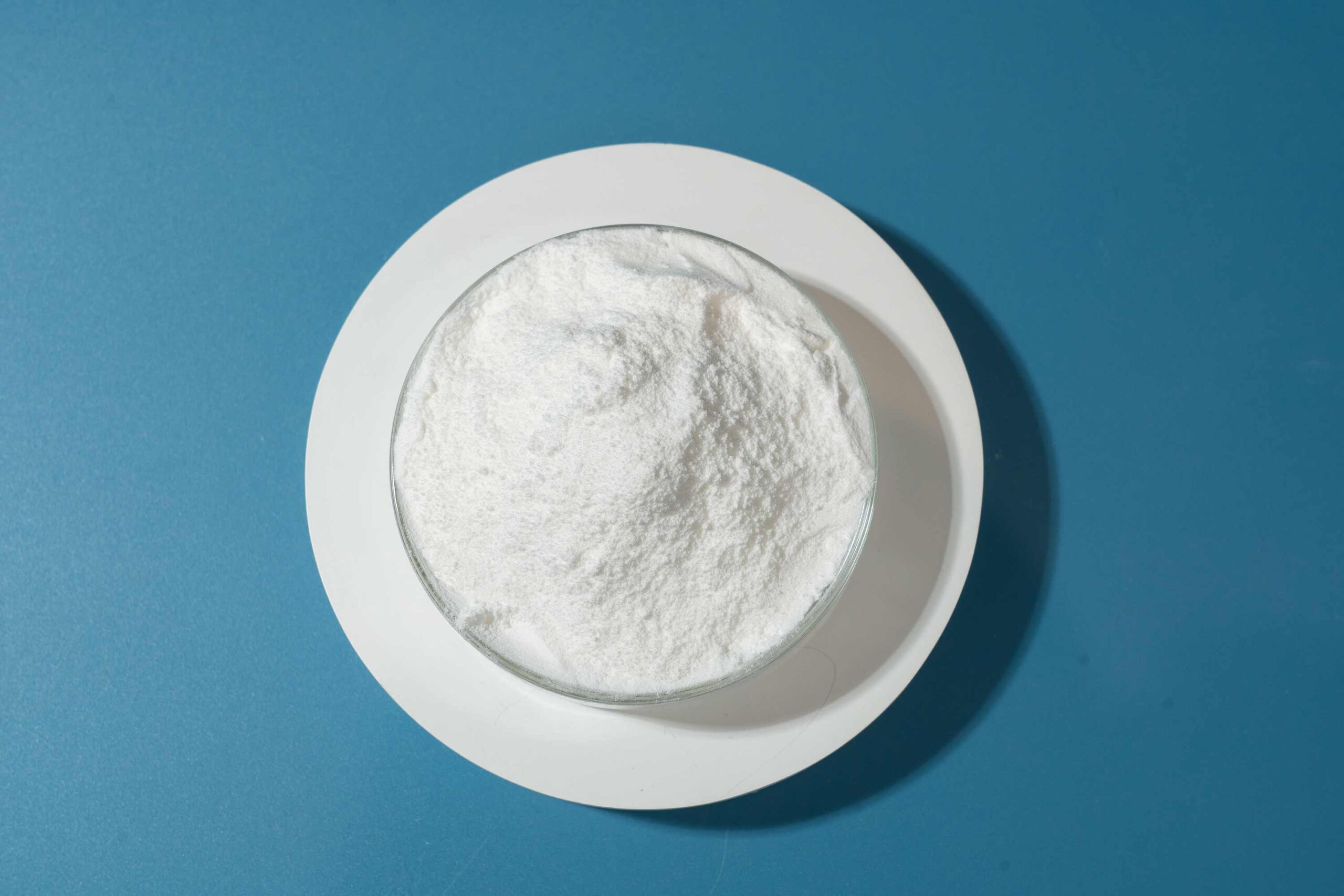
Em argamassa de mistura seca systems for gypsum-based building materials—such as plastering gypsum, joint fillers, and self-leveling gypsum compounds-hidroxipropilmetilcelulose (HPMC) accounts for only a few thousandths of the total dry mix weight (typically 0.1%–0.5%). Yet, it plays a decisive role in determining the material’s performance. With modern construction demanding higher efficiency and quality, not all HPMC grades are suitable for gypsum systems. Only specially modified, gypsum-dedicated HPMC can effectively resolve the three major pain points of gypsum products: “too-rapid drying,” “poor trowelability,” and “cracking tendency.”
This article provides an in-depth analysis, from the perspectives of fluid dynamics and water-structure chemistry, of how specialized HPMC enhances the workability of gypsum products through retarding water loss e optimizing rheology.
I. The Nature of Gypsum Hydration and Its Inherent Contradiction: Why a Specialized Additive Is Essential
To understand the role of specialized HPMC, one must first clarify the intrinsic characteristics of gypsum materials.
Building gypsum (hemihydrate gypsum, CaSO₄·0.5H₂O) undergoes a hydration reaction upon contact with water, re-forming dihydrate gypsum (CaSO₄·2H₂O) and developing a crystalline network—this is the source of its mechanical strength. However, this process presents an inherent construction contradiction:
Contradiction between rapid hydration and water demand: The theoretical water requirement for hemihydrate gypsum hydration is merely 18.6%, yet in actual practice, to achieve sufficient fluidity, the added water content often reaches 60%–80%. If the excess water is not effectively “locked in,” it will rapidly escape due to substrate absorption or environmental evaporation, leading to incomplete hydration and surface powdering.
Short open time: Plain gypsum paste sets and hardens extremely quickly (within minutes to slightly over ten minutes), leaving an extremely narrow window for spreading, leveling, and finishing.
Ordinary thickeners—such as conventional starches or generic cellulose—may increase viscosity but fail to regulate the interaction between water molecules and gypsum crystals. The introduction of specialized HPMC is precisely intended to establish a balance within this contradiction: retaining sufficient water during the application phase while ensuring timely and complete hydration.
II. The Micromechanism of Specialized HPMC: More Than Water Retention—A Regulation of "Water Structure"
1. Hydrogen Bonding: Retarding the Escape of "Free Water"
HPMC molecules bind with water molecules via hydrogen bonds, converting a portion of “free water” into bound water. The hydrophilic groups on the HPMC molecular chains form a hydrogen-bond network with water, significantly increasing the viscosity of the liquid phase.
Within the gypsum paste, this manifests as follows: when the gypsum-based material is applied onto an absorbent aerated concrete wall or a dry gypsum board, the polymer film network formed by HPMC effectively impedes the rapid migration of water molecules toward the substrate. This “retarded water loss” not only ensures that sufficient water remains available for gypsum particles to complete hydration but also prevents drying shrinkage and cracking caused by excessively rapid moisture loss.
2. The "Dual Effect": Precisely Modulating Setting Time
A common misconception among construction workers is that HPMC is added solely as a set retarder. In reality, specialized HPMC exerts a dual effect on the gypsum system:
Physical thickening (physical effect): After dissolution, HPMC increases paste viscosity and reduces ion diffusion rates, thereby slowing the dissolution of hemihydrate gypsum—exhibiting a retarding tendency.
Chemical promotion (potential effect): Research indicates that specialized HPMC, by stabilizing water-cluster structures, provides more nucleation sites for the crystallization of dihydrate gypsum. Once hydration is initiated, it actively promotes crystal interlocking.
This is the core distinction between specialized HPMC and generic cellulose: it ensures an adequate working-time window while avoiding excessive retardation that would compromise final strength, thereby preserving early-age strength performance.
III. Enhancing Construction Workability: From "Sticky Trowel" to "Smooth Glide"
For on-site applicators, mechanisms are theoretical—but “hand feel” is reality. Specialized HPMC enhances construction workability in the following tangible ways:
1. Thixotropy and Sag Resistance
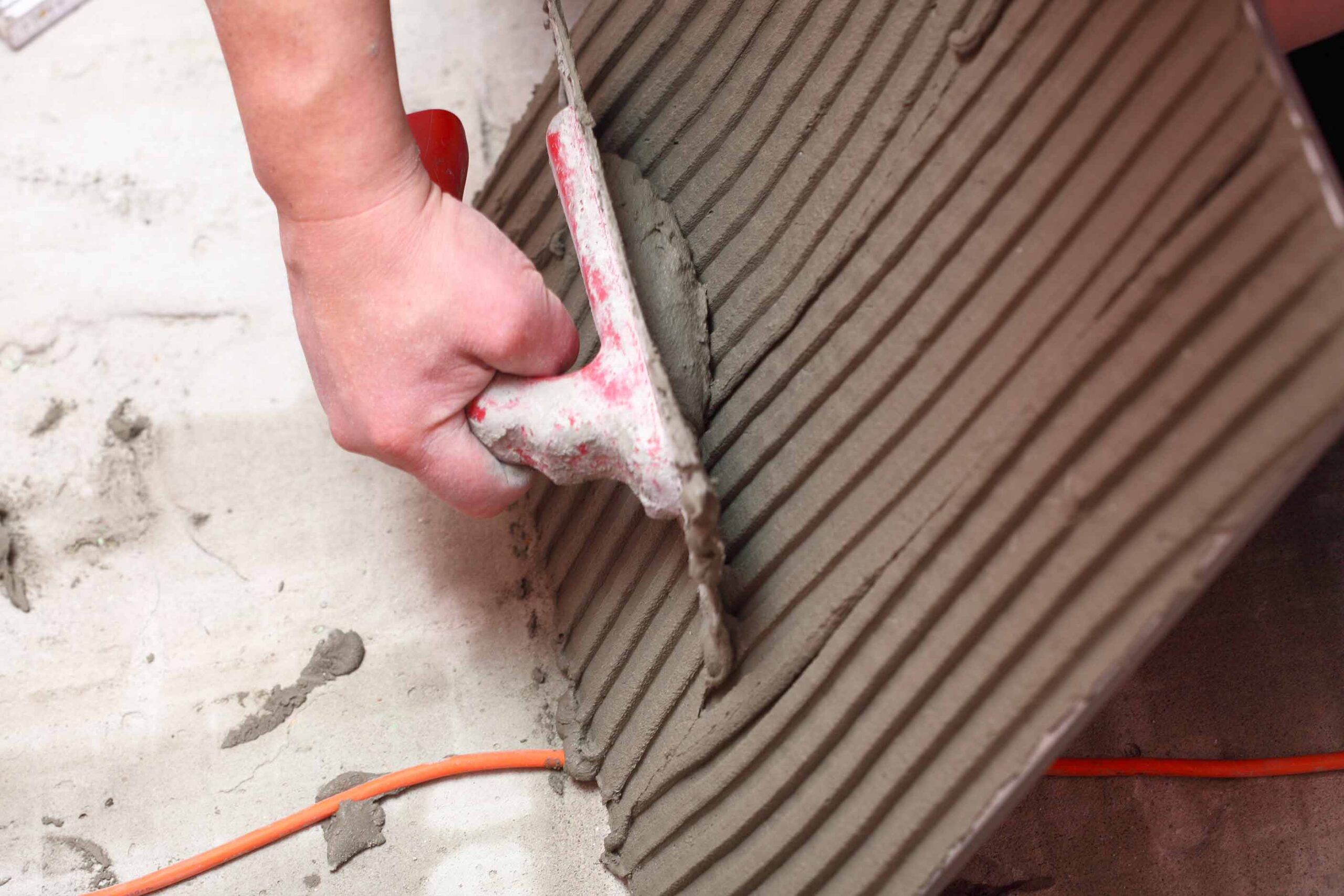
High-quality gypsum-dedicated HPMC exhibits pseudoplasticity (shear thinning). During mixing and troweling, under high shear rates, viscosity decreases, rendering the paste light and effortless to apply (smooth spreading). When troweling stops or when applied to an overhead ceiling, under low shear rates, viscosity rapidly recovers, imparting excellent sag resistance.
Ordinary cellulose often results in “sticky trowel” (adhesion to the float) and difficulty in leveling, whereas specialized HPMC, through optimized molecular-weight distribution, provides superior lubricity and spreadability.
2. Open Time and Reworkability
When working in hot climates or on highly absorbent substrates (e.g., high-absorption brick walls or lightweight partition boards), the edges of conventional products frequently harden prematurely due to rapid moisture loss, causing poor jointing.
Specialized HPMC forms a dense water-retentive film on the surface, slowing the evaporation rate of surface moisture. This extends the tempo aberto, enabling prolonged large-area application and ensuring that the overlap between successive passes does not produce tearing or rough edges.
3. Lubricity and Air-Entraining Effects
Owing to its surface-active nature, HPMC entrains fine air bubbles during mixing (typically balanced with defoamers). Moderate air entrainment acts like “micro-ball bearings” within the paste, significantly enhancing lubricity, allowing the gypsum paste to spread more easily over the wall surface, and yielding a smoother, denser finish.
IV. Selection Guide: How to Identify "Gypsum-Dedicated" HPMC?
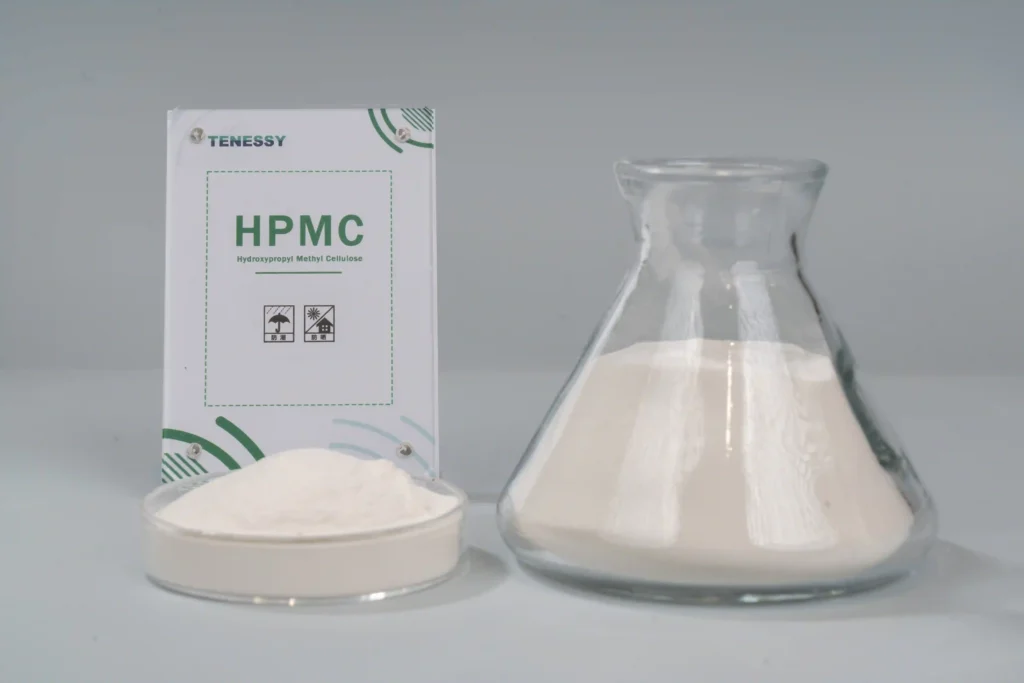
Not all HPMC grades are equally compatible with gypsum. In practical formulation design, TENESSY recommends evaluating the following technical parameters to ensure performance superiority:
| Parameter Dimension | Ordinary/General-Purpose HPMC | Gypsum-Dedicated HPMC | Impact on Performance |
|---|---|---|---|
| Viscosity (mPa·s) | Single or excessively high viscosity | Medium-to-high viscosity (e.g., 40,000–75,000) tailored for different gypsum types | Balances viscosity and flowability to avoid “sticky trowel” |
| Water Retention Rate | Moderate (<98%) | High water retention (≥99%), optimized for hemihydrate gypsum | Retards water loss and ensures interfacial bond strength |
| Temperatura de gelificação | Conventional (58–65°C) | Modified (70–90°C), heat-resistant grade | Adapts to high-temperature summer construction to prevent thermal performance loss |
| Dissolution Rate | Rapid dissolution prone to agglomeration | Delayed dissolution / surface-treated | Enables uniform dispersion during dry mixing with gradual viscosity release upon water addition |
V. Conclusão
In today’s increasingly competitive gypsum product market, simply “adding more” generic HPMC not only raises costs but may also introduce side effects such as “sticky trowel” and “prolonged non-hardening.” The scientifically sound approach is proper selection.
Choosing TENESSIA‘s HPMC specially designed for gypsum-based building materials essentially means adopting an advanced technology rooted in water-structure regulation. By retarding the directional migration of free water, specialized HPMC endows gypsum pastes with exceptional water retention, excellent sag resistance, and smooth, comfortable application feel.
This not only mitigates engineering risks such as cracking and low surface strength in gypsum mortars but also significantly improves construction efficiency. For building-material manufacturers pursuing premium quality, investing in specialized-grade HPMC is the most critical step toward product differentiation and performance upgrading.