English
  Arabic
  German
  French
  Indonesian
  Russian
  Italian
  Czech
Czech  Dutch
Dutch  Finnish
  Turkish
  Greek
Greek  Spanish
  Portuguese
 Quality Hydroxypropyl Methyl Cellulose
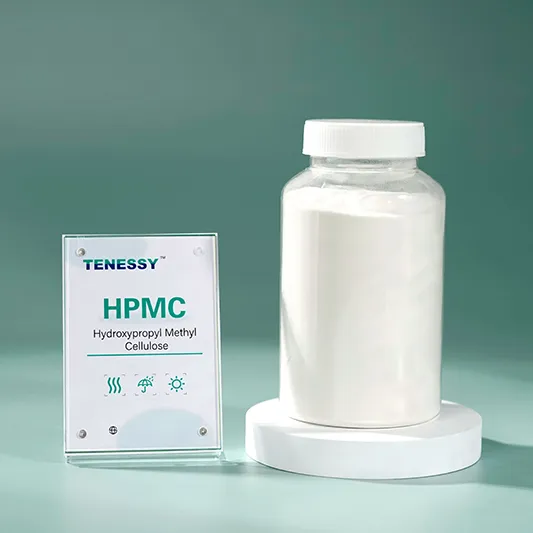
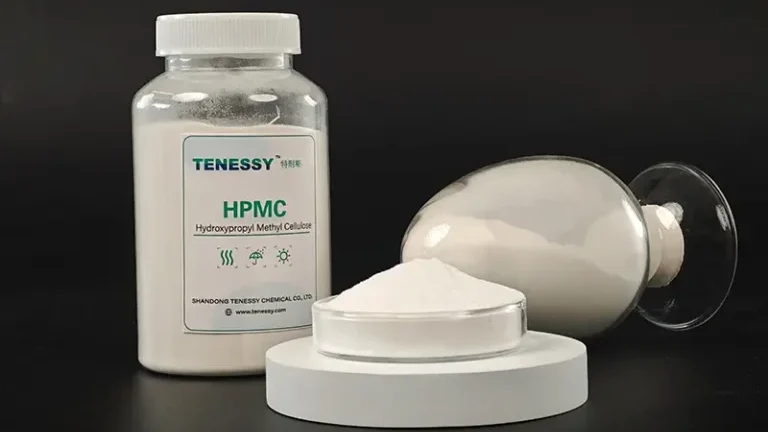
TENESSY HPMC is a non-ionic cellulose ether made from highly pure refined cotton under alkaline conditions. It is an odorless and tasteless white powder that swells into a colloidal solution in cold water. It has the properties of thickening, bonding, dispersing, adsorbing, and gelling.
It is suitable for applications in construction, daily chemicals, coatings, etc.


| Item | Specifications | |
|---|---|---|
| Appearance | White or light yellow powder | White or light yellow powder |
| Hydroxyethoxy(%) | 7.0-12.0 | 7.0-12.0 |
| Methoxy(%) | 28.0-30.0 | 19.0-24.0 |
| Mesh | 98% pass 100 mesh | 98% pass 100 mesh |
| pH Value | 6.0-8.0 | 6.0-8.0 |
| Moisture(%) | ≤5.0 | ≤5.0 |
| Gel Temperature(℃) | 54-64(60℃) | 70-90(75℃) |
| Viscosity | ||
| 10-80,000 mPa.s ( 2% 20℃ Brookfield RV) | 10-80,000 mPa.s ( 2% 20℃ Brookfield RV) | |
| 10-200,000 mPa.s ( 2% 20℃ NDJ-1) | 10-200,000 mPa.s ( 2% 20℃ NDJ-1) | |


Benefits of HPMC
- Non-toxic and safe for use with no health risks.
- HPMC enhances viscosity, thickening, and adhesion.
- HPMC stabilizes formulas, preventing separation or settling.
- HPMC enhances water retention performance.
- HPMC is biodegradable and eco-friendly.
Try Our FREE HPMC Sample and Experience the Difference!
TENESSY HPMC Manufacturer From China
Are you in the construction, daily chemicals, or paint industry? Our HPMC Hydroxypropyl Methyl Cellulose can enhance your products and elevate their performance and quality.
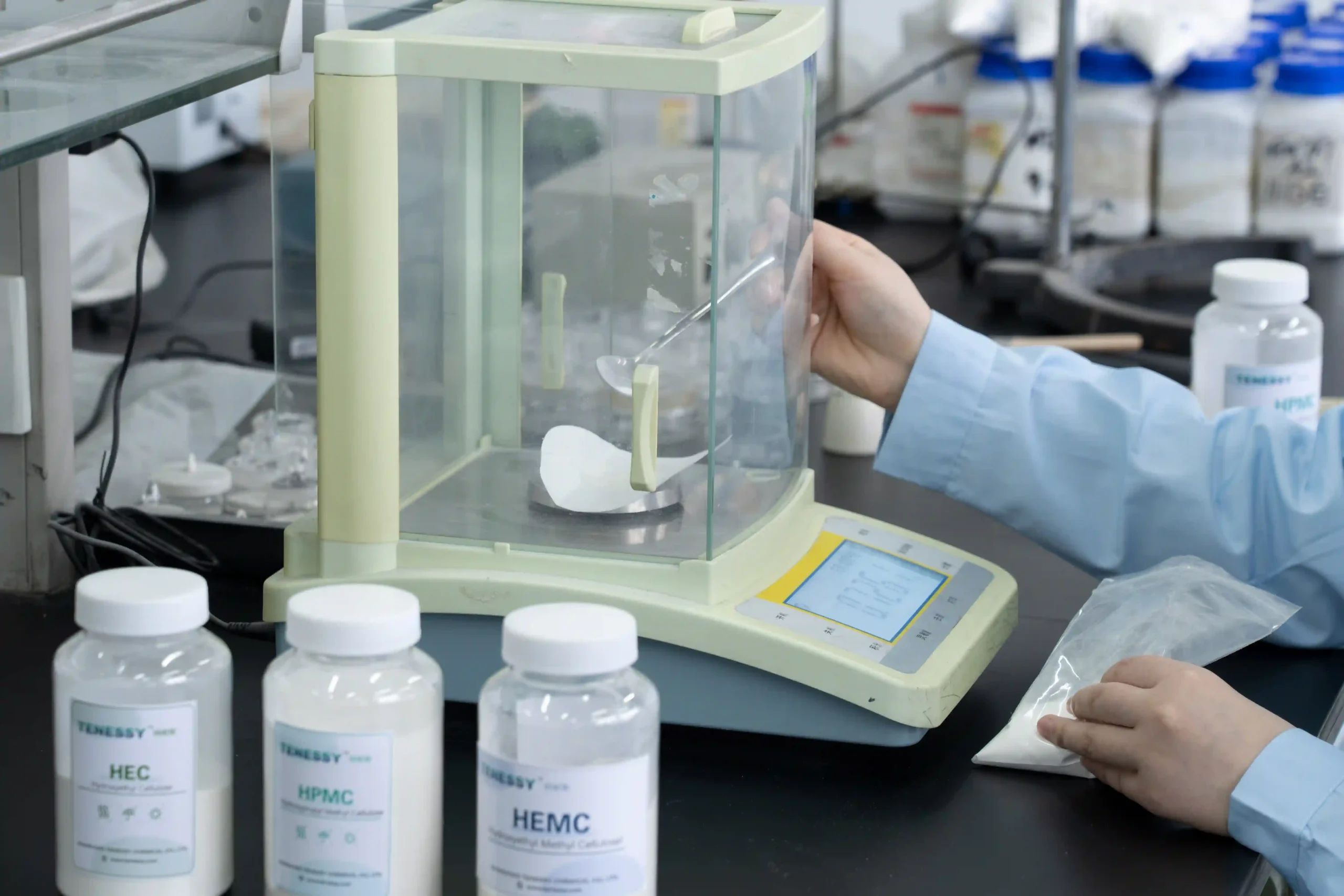
At Tenessy, experience our HPMC product firsthand with a FREE sample!
– Sample Size: 200g or 400g.
– Shipping: Fast via FedEx or DHL.
– Service: Expert formula adjustment support.
Explore More Grades of Hydroxypropyl Methyl Cellulose


HPMC - NH2000

HPMC - NH1500


HPMC - NH200T
Hydroxypropyl Methyl Cellulose NS Series


HPMC Grade Selection Guide
NH Series — Construction Applications
| Grade | Viscosity Range | Primary Applications | Dissolution Type |
|---|---|---|---|
| NH200PC | ~200,000 mPa·s | Ceramic tile adhesive, surface decorative mortar, polyphenyl particle mortar, wall panel | Non-instant |
| NH150PC | ~150,000 mPa·s | Ceramic tile adhesive, waterproof mortar, plastering mortar, wall panel | Non-instant |
| NH100PC | ~100,000 mPa·s | Interior/exterior wall putty, ceramic tile adhesive, bonding mortar | Non-instant |
| NH2000 | ~20,000 mPa·s | Interior/exterior wall putty, gypsum-based mortar | Non-instant |
| NH1500 | ~15,000 mPa·s | Interior/exterior wall putty, gypsum, diatom mud powder coatings | Non-instant |
| NH1200 | ~12,000 mPa·s | Ceramics, cement extrusion | Non-instant |
| NH1000 | ~10,000 mPa·s | Ceramics, cement extrusion, road repair mortar | Non-instant |
| NH400Z | ~4,000 mPa·s | Ceramics, cement extrusion, road repair mortar | Non-instant |
| NH200T | ~2,000 mPa·s | Cement-based self-leveling mortar, road repair mortar | Non-instant |
NS Series — Daily Chemical Applications
| Grade | Viscosity Range | Primary Applications | Dissolution Type |
|---|---|---|---|
| NS200PC | ~200,000 mPa·s | Daily chemical products, styling products, liquid admixtures, construction glue | Surface-treated (instant) |
| NS150PC | ~150,000 mPa·s | Daily chemical products, lotions, gels, disinfectants, conditioners | Surface-treated (instant) |
| NS100PC | ~100,000 mPa·s | Daily chemical products, bath gel, facial cleanser | Surface-treated (instant) |
Uses of Hydroxypropyl Methyl Cellulose
Skim Coat / Wall Putty
Wall putty, or skim coat, is used to prepare and smooth walls before painting.
Drymix Mortar
Including waterproof mortar, bonding mortar, repair mortar, decorative mortar.
Uses of Hydroxypropyl Methyl Cellulose NS Series
Surface-treated non-instant HPMC Hydroxypropyl Methyl Cellulose, with good dispersibility, rapid dissolution in water and no agglomeration, is more suitable for fluid applications like building adhesives and cosmetics.
Daily Chemicals
HPMC is used as a thickener in daily chemicals. Instant HPMC has good dispersibility and high transmittance.
cosmetics
HPMC is widely used in cosmetics such as lotions, masks, and hair care products.
How HPMC Improves Construction Materials
Water Retention
Workability Enhancement
Thickening and Stabilizing
Typical Dosage Rates
| Application | HPMC Dosage (wt%) | Recommended Grades |
|---|---|---|
| Tile adhesive (C1) | 0.3–0.5% | NH200PC, NH150PC |
| Tile adhesive (C2) | 0.4–0.6% | NH200PC |
| Wall putty / skim coat | 0.3–0.5% | NH100PC, NH2000 |
| Self-leveling mortar | 0.1–0.2% | NH200T |
| Gypsum plaster | 0.2–0.4% | NH2000, NH1500 |
| Waterproofing mortar | 0.3–0.5% | NH150PC |
More Hydroxypropyl Methyl Cellulose Uses
Pharmaceuticals
HPMC is used as a sustained-release carrier, tablet binder, and capsule shell material.
HPMC Packaging and Size
We package HPMC in paper bags with a plastic liner for added protection. Keep it sealed, dry, and stored in a cool place away from moisture, sunlight, and fire sources.
25kg Bag
TENESSY HPMC is packed in polypropylene woven bags with polyethylene inner liners , Each bag has a net weight of 25 kilograms.
600kg Pallet
TENESSY HPMC is available in 600 kilograms per pallet. Volume can be customized and delivered as per your request.
Customized Packaging
You can click the button below to reach us. We’ll promptly offer professional solutions tailored to your needs.
HPMC Supplier with Good Reputation
Tenessy has been a trusted HPMC supplier for more than 11 years. The company has introduced advanced production equipment from abroad to ensure the quality stability of the products and the integrity of the supply chain. We insist on providing high-quality products and excellent services, let us customize exclusive products according to your formula.
HPMC Manufacturing and Supply
Production: Highly clean refined cotton is selected as raw material and etherified under alkaline conditions.
Hydroxypropyl Methyl Cellulose Purification: Impurities and contaminants are removed through filtration or washing methods to ensure purity.
Flexible Payment and Sufficient HPMC Supply
Payment Terms: Flexible options, including L/C, T/T, OA, etc.
Minimum Order Quantity: 1 MT
Packaging: 25kg/bag, 600kg/pallet
Annual Capacity: 6,000 Tons
Lead Time: 7-20 working days, depending on order volume and requirements
Handling Large Volume Orders
Tenessy produces 6,000 tons of cellulose ether annually, with 52% HPMC, using advanced techniques and flexible scheduling for large orders.
Global Shipping and Delivery Solutions
Standard HPMC products are in stock, delivered directly from the factory with pre-shipment inspection and on-time shipping via CFR, CIF, or FOB within 7-14 days, depending on location.