Finnish
  English
  Arabic
  German
  French
  Indonesian
  Russian
  Italian
  Czech
Czech  Dutch
Dutch  Turkish
  Greek
Greek  Spanish
  Portuguese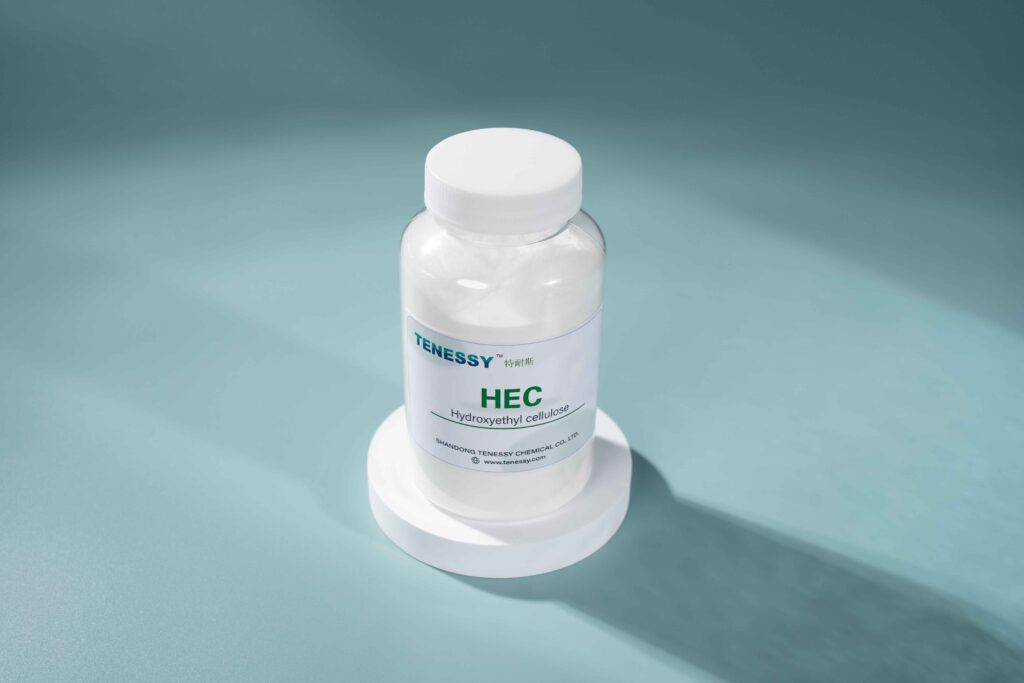
HEC in water-based paint is the workhorse thickener of the paint industry, providing the pseudoplastic flow, sag resistance, and pigment stabilization that latex paints need from a single, non-ionic polymer. This guide explains the thickening mechanism of hydroxyethyl cellulose, how its rheology compares with acrylic thickeners, and how to select viscosity grade and dosage for interior and exterior latex paints that pass brush application, leveling, and scrub-resistance tests.
Johdanto
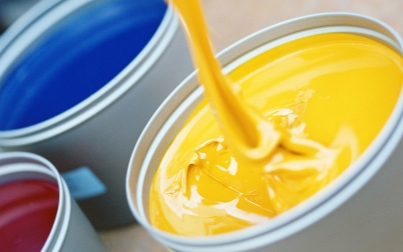
Hydroksietyyliselluloosa (HEC) has been thickening latex paints since the 1960s, and it remains the reference standard for a simple reason: it does the job without side effects. In a water-based paint, HEC dissolves in the aqueous phase and builds a three-dimensional polymer network that raises low-shear viscosity, suspends pigments and fillers, stops settling during storage, prevents sag on vertical walls, and gives the paint body so that a brush or roller carries a consistent wet film.
Hydroksietyyliselluloosa (HEC) in water-based paint is valued for its behavior at the molecular level. The polymer is non-ionic, so its viscosity is almost unaffected by pH, by salts, or by the surfactants and dispersants that are always present in a latex formulation. It thickens the water phase itself rather than the polymer latex particles, which keeps film formation chemistry untouched. This makes HEC the most forgiving thickener available: it works across acrylic, styrene-acrylic, vinyl-acrylic, and pure acrylic binders, in flat, eggshell, satin, and semi-gloss paints.
At TENESSY Chemical, we manufacture HEC from premium cotton-derived alkali cellulose on German process equipment. Our construction and coatings grades range from 15,000 to 100,000 mPa·s (2% solution, Brookfield, 20 °C), with a 1% solution viscosity up to 5,000–6,000 mPa·s for paint applications. Because the viscosity of the finished paint is the single most important QC parameter in a coatings plant, we control product viscosity tightly (typically ±10%) and supply technical data on rheology, moisture, and ash so formulators can reproduce their target Stormer and Brookfield numbers batch after batch.
How HEC Thickens: Mechanism and Rheology
The Thickening Mechanism
Kun Hydroksietyyliselluloosa (HEC) powder hydrates in water, the polymer chains expand and occupy a large hydrodynamic volume. The chains hydrogen-bond with water molecules and, because they are long and flexible, they entangle with each other. At rest, these entanglements create a gel-like network with high apparent viscosity. The mechanism is purely hydrodynamic — no reaction with latex particles, no pH trigger, no association with surfactant micelles. This is why HEC is described as a “water-phase thickener,” in contrast to the associative thickeners that attach to latex and pigment surfaces.
The practical consequence is predictable behavior. Because the network is physical rather than chemical, HEC gives paints a strongly pseudoplastic (shear-thinning) rheology. Under the high shear of a brush stroke or roller application (10,000–40,000 s⁻¹), the entanglements break and viscosity drops to a low value, so the paint spreads easily. When shear stops, the network reforms, viscosity recovers, and the wet film resists sagging and dripping. The recovery time is on the order of tens of milliseconds to a few seconds, depending on molecular weight.
Pseudoplasticity and the Viscosity Curve
A typical HEC-thickened paint shows a viscosity drop of roughly three to four decades between low shear (0.1 s⁻¹) and high shear (10,000 s⁻¹). The exact shape of the curve depends on molecular weight:
- Low molecular weight HEC (e.g., 15,000–30,000 mPa·s grades): shorter chains, weaker network, more Newtonian behavior, better leveling, lower sag resistance, higher dosage needed.
- High molecular weight HEC (e.g., 50,000–100,000 mPa·s grades): long chains, strong entanglements, pronounced shear thinning, excellent sag resistance and body, but more brush drag and less leveling.
The formulator balances these by blending grades or adjusting dosage. A typical interior flat paint contains 0.25–0.45% HEC (on total paint weight, as supplied); an exterior paint with heavy filler loading might use 0.30–0.50%. The target is usually a Stormer viscosity (KU) of 90–110 KU and a Brookfield LVF 60 rpm reading of 1,000–2,500 mPa·s, depending on paint type and application method.
HEC vs. Acrylic (Associative) Thickeners
Acrylic thickeners — both alkali-swellable emulsions (ASE) and hydrophobically modified alkali-swellable emulsions (HASE) — thicken by a completely different route. ASE particles swell when neutralized, increasing the dispersed volume. HASE adds hydrophobic associations that bridge particles. The comparison with HEC:
| Kiinteistö | HEC | ASE/HASE acrylic |
| Thickening locus | Water phase | Particle surfaces / water |
| pH sensitivity | Ei mitään | Strong (requires pH 8–10) |
| Salt/ionic tolerance | Erinomainen | Kohtalainen |
| Shear-thinning (at equal KU) | Korkea | Lower (HASE gives mid-shear build) |
| Leveling | Good at low dosage | Better in HASE |
| Taipumiskestävyys | Erinomainen | Kohtalainen |
| Storage stability of the thickener | Excellent (dry powder) | Requires in-can neutralization |
| Biocide compatibility | Standardi | Standardi |
The key trade-off: HEC gives strong low-shear structure (sag resistance, pigment suspension) with weak mid-shear build; HASE gives flatter rheology with better high-shear (brush) response but needs correct pH control and offers less sag resistance. Many commercial paints use both — HEC for structure and anti-settling, HASE or a small amount of HEUR for leveling and spatter resistance. This hybrid is a best-practice formulation that we recommend to paint manufacturers who struggle with leveling or brush drag.
HEC in Interior and Exterior Wall Paints
Sisustusmaalit
Interior emulsions are water-based paints designed for fast application, easy cleaning, and consistent appearance across a large wall area. HEC contributes three measurable properties:
- Pigment and filler suspension. A paint with 30–45% pigment + filler solids will settle hard if the low-shear viscosity is too low. HEC builds a yield stress that keeps TiO₂, calcium carbonate, and talc suspended for months. The yield stress also prevents syneresis — the water layer that otherwise forms on top of the can.
- Sag control. Applied at 7–10 m²/L, an interior flat paint wet-film thickness is roughly 100–150 µm. Without enough low-shear structure, the film runs and sags within minutes. HEC dosage is typically set so the paint passes a sag test (Leneta sag bar, 75–250 µm wedge) with no sag above the target wet film.
- Application feel. Brush and roller “body” — the resistance the painter feels — is largely set by the mid-shear (1–100 s⁻¹) viscosity. HEC provides the body that painters describe as “buttery,” and it reduces misting and spatter during roller application because the film is cohesive.
One caution for interior paint: HEC is water-sensitive, and residual water-soluble polymer in the dry film reduces wet-scrub resistance if overdosed. The standard cure is to keep HEC at the minimum dosage that passes sag and settling specs, and to formulate with a scrub-resistance test (ASTM D2486, ISO 11998) as the final gate. At 0.25–0.40% HEC, a quality styrene-acrylic or acrylic flat paint still achieves 300–500 scrub cycles to failure, well above the “washable” threshold.
Ulkovärit
Exterior masonry and facade paints face UV, rain, thermal cycling, and alkalinity from fresh cement render. Hydroksietyyliselluloosa (HEC) is used here with three adjustments:
- Higher HEC dosage (0.30–0.50%) to ensure a thick, uniform wet film on rough, porous substrates like render and concrete block. The water-phase network also slows water penetration into the wet film, improving coverage on suction surfaces.
- Fungicide and mildewcide compatibility. HEC’s non-ionic nature does not deactivate film preservatives, and it does not complex with the zinc or copper compounds used in exterior formulations.
- Water-resistance engineering. Because exterior films must last years, the water-soluble content of the dried film matters. The solution used by leading facade paint producers is to replace part of the HEC with a co-thickener system (see below), keeping the water-phase polymer contribution below 0.3–0.4% total.
The Hybrid Approach: HEC + Associative Thickener
The single most useful upgrade for a paint formulator using HEC is to blend it with a hydrophobically modified associative thickener. A typical starting system:
| Komponentti | Typical dosage (% on paint) |
| HEC (high molecular weight, e.g., 50,000 mPa·s) | 0.15–0.25 |
| HASE or HEUR associative thickener | 0.10–0.30 (as supplied) |
| Coalescent + wetting/dispersing package | per formulation |
| Neutralizer (for HASE/ASE only) | to pH 8.5–9.0 |
The Hydroksietyyliselluloosa (HEC) provides storage stability, sag resistance, and anti-settling; the associative thickener restores mid- and high-shear viscosity, improving brush drag, roller spatter, and leveling. This combination is the industry-standard route to a paint that passes both the sag test and the leveling test (Leneta leveling, ASTM D4062) simultaneously — something HEC alone struggles to achieve at high filler loadings.
Recommended Viscosity Grades and Dosage
| Hakemus | HEC grade (2% sol., mPa·s) | Dosage (% on total paint) | Target viscosity |
| Interior flat / matte | 30,000–50,000 | 0.25–0.40 | 90–100 KU; 1,000–1,800 mPa·s (LVF 60) |
| Interior eggshell / satin | 50,000–60,000 | 0.20–0.35 | 95–105 KU |
| Exterior masonry / facade | 30,000–50,000 | 0.30–0.50 | 95–110 KU |
| Primer / sealer | 15,000–30,000 | 0.20–0.35 | 85–95 KU |
| Texture paint / stucco-like | 50,000–100,000 | 0.40–0.60 | 110–125 KU |
Selection rules:
- Higher pigment/filler loading (over 35% solids) → higher dosage, keep molecular weight moderate to avoid over-thickening and gel streaks.
- Higher TiO₂ content (more hiding, higher cost) → lower HEC needed because TiO₂ itself adds body; protect it with good dispersion.
- Spray application → lower viscosity grades and lower dosage to keep the paint atomizable.
- Machine brushing/roller only → mid-range grades are fine; trowel or texture applications need high-viscosity grades.
Always measure viscosity after full hydration (HEC needs 20–60 minutes of stirring or let-down time, or use surface-treated fast-dispersing grades for rapid hydration in production). Then validate with sag, leveling, and scrub tests, because KU and Brookfield numbers do not fully predict wet-film behavior.
How to Choose HEC for Your Paint and Validate Performance
Selection starts from the paint type and its QC targets, not from the datasheet. Follow this sequence:
- Define targets. Stormer KU range, Brookfield viscosity, sag bar value, leveling (ASTM D4062), and scrub resistance (ASTM D2486 or ISO 11998) for the grade of paint you are making.
- Choose the HEC grade. Use the table above as the entry point. If settling or sag is the failure mode, go up in molecular weight first (entanglements), then in dosage. If leveling or brush drag is the failure mode, go down in molecular weight or add an associative co-thickener.
- Optimize hydration. In production, add HEC to the grind or let-down with agitation; surface-treated (semi-granular, fast-wetting) grades disperse in 5–10 minutes and eliminate fish-eyes. Undissolved HEC is the most common cause of “grit” complaints and gel streaks — check the let-down with a Hegman gauge.
- Run the full QC suite, including storage stability (4 weeks at 50 °C) and freeze-thaw cycling if the paint will be distributed in cold regions. HEC does not protect the emulsion from freeze damage, but its network keeps the thawed paint homogeneous.
- Check compatibility with the entire package — colorants, defoamer, coalescent, and biocides. Non-ionic HEC is compatible with all standard paint additives; the only classic error is adding cationic biocides or wetting agents that can flocculate the anionic latex, which is a latex issue, not an HEC issue.
TENESSY supplies HEC in 15,000–100,000 mPa·s grades with surface treatment options, plus full technical datasheets and a formulation review service. We offer free samples of 500–3000 g — enough to make and test 500–1000 kg of paint at typical dosage — and our R&D team will recommend a grade and starting dosage for your specific formulation.
FAQ
Q1: How does HEC thicken water-based paint?
A: HEC chains dissolve in the water phase and physically entangle into a network that raises low-shear viscosity — a purely hydrodynamic mechanism. Under shear the entanglements break (paint thins and spreads); at rest they reform (paint resists sagging and settling). Because the polymer is non-ionic, this mechanism is independent of pH and salt, making HEC viscosity stable across the full range of paint formulations.
Q2: What is the typical dosage of HEC in latex paint?
A: For most interior and exterior latex paints, 0.25–0.50% HEC on total paint weight is the working range. Flat interior paints with 30–35% solids typically need 0.25–0.40%; heavily filled exterior masonry paints 0.30–0.50%; texture coatings 0.40–0.60%. The exact number is set by the target Stormer viscosity (usually 90–110 KU) and confirmed by sag, settling, and scrub tests.
Q3: Is HEC better than acrylic thickeners for paint?
A: They serve different roles. HEC is unbeatable for low-shear structure — sag resistance, pigment suspension, anti-settling — and it is insensitive to pH and salt. Acrylic (HASE/ASE) thickeners build mid- and high-shear viscosity for better brush feel and leveling but require pH control and offer weaker sag control. The best practice in modern paint is to use HEC plus a small amount of HASE or HEUR together, combining structure with leveling.
Q4: Does HEC affect the scrub resistance of the paint film?
A: HEC stays as a water-soluble polymer in the dry film, so overdosing can soften the film and lower wet-scrub resistance. In practice, keeping HEC at the minimum dosage that passes sag and settling specs (typically ≤ 0.45%) preserves scrub performance: quality acrylic paints at that dosage still pass 300–500+ wet-scrub cycles per ASTM D2486. For maximum scrub resistance, replace part of the HEC with an associative co-thickener.
Q5: Why is my HEC-thickened paint full of lumps or grit?
A: That is almost always an undissolved-powder problem, not a product problem. HEC must be added slowly to well-agitated water (or let-down) so each particle hydrates separately; standard grades need 20–60 minutes of mixing. If you want fast production hydration, use a surface-treated fast-dispersing HEC grade, which wets in seconds and hydrates fully in 5–10 minutes. Always verify complete dissolution with a Hegman gauge or a filtered-viscosity check.
Päätelmä
HEC in water-based paint delivers the three things a paint manufacturer cannot compromise on: storage stability without settling, sag-free vertical application, and reproducible viscosity from batch to batch. Its non-ionic, water-phase thickening mechanism is compatible with every mainstream latex binder and all standard paint additives, and its pseudoplastic flow profile is exactly what a brush, roller, or spray gun needs. With grades from 15,000 to 100,000 mPa·s and dosages of 0.25–0.50%, HEC handles interior flats, exterior masonry paints, primers, and texture coatings — and blends perfectly with associative thickeners when leveling needs a boost.
TENESSY Chemical is a leading Chinese manufacturer of HEC with 10,000+ customers in 40+ countries, producing on German equipment with tight viscosity control. Request a free 500–3000 g sample, a grade recommendation, or a formulation review from our coatings R&D team — production lead time is just 7–14 days.
Suositellut tuotteet: HEC (hydroksietyyliselluloosa) Related Reading: HEC vs HPMC: Choosing the Right Cellulose Ether for Coatings | HPMC for Detergent: Thickener and Suspending Agent in Daily Chemicals | CMC (karboksimetyyliselluloosa): Teollisuuden sovellusten opas