English
  Arabic
  German
  French
  Indonesian
  Russian
  Italian
  Czech
Czech  Dutch
Dutch  Finnish
  Turkish
  Greek
Greek  Spanish
  Portuguese
Ⅰ.Introduction
As global construction standards continue to evolve, thermal insulation performance, construction efficiency, and long-term durability have become core evaluation criteria for modern building materials. Thermal insulation mortar, as a key component of exterior wall insulation systems, plays an essential role not only in reducing energy consumption, but also in improving overall building safety and service life.
In practical applications, insulation mortar often faces challenges such as poor workability, segregation of lightweight aggregates, insufficient bonding strength, early-age cracking, and inconsistent quality under different climate conditions. These issues are especially prominent in regions with high temperatures, strong winds, or rapid water evaporation — conditions commonly encountered in many overseas markets.
Based on formulation structure, thermal insulation mortars are generally classified into sand-based and sand-free systems, each with distinct performance characteristics and technical requirements. While the raw materials may appear similar, the functional role of additives differs significantly between the two systems.
To achieve stable, high-performance insulation mortar, manufacturers must carefully select and balance functional additives, rather than relying solely on cement and aggregates. Among these additives, HPMC (Hydroxypropyl Methyl Cellulose), RDP (Redispersible Polymer Powder), and Polypropylene Fiber are widely recognized as key components that directly influence fresh mortar behavior, hardened strength, crack resistance, and long-term durability.
This article provides a clear comparison between sand-based and sand-free thermal insulation mortars and explains how these three additives function individually and synergistically, offering practical guidance for manufacturers aiming to improve product performance and consistency.
Ⅱ.Sand-Based Thermal Insulation Mortar
Characteristics and Application
Sand-based insulation mortar typically contains:
- Cementitious binders
- Graded sand (quartz sand or river sand)
- Lightweight aggregates (such as EPS beads or expanded materials)
This type of mortar offers better mechanical strength and impact resistance, making it suitable for applications where surface robustness and durability are required.
However, due to the presence of sand, sand-based systems face challenges such as:
- Higher water demand
- Risk of segregation
- Shrinkage and cracking during drying
This is where functional additives become essential.
1. Role of HPMC in Sand-Based Insulation Mortar
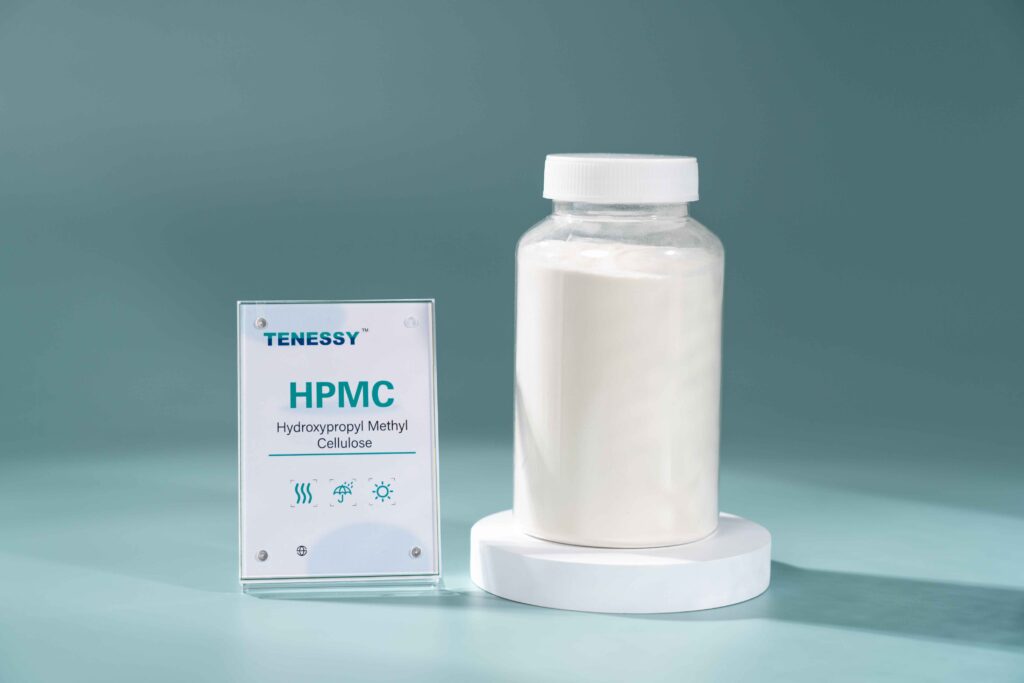
HPMC mainly regulates fresh mortar performance:
- Ensures excellent water retention, preventing rapid moisture loss caused by sand absorption
- Improves workability and consistency, making application smoother and more controllable
- Enhances anti-sagging propertieson vertical surfaces
- Helps achieve uniform distribution of aggregates and insulation filler
- A properly selected HPMC grade allows sand-based insulation mortar to balance fluidity and stability, improving construction efficiency.
2. Role of RDP in Sand-Based Insulation Mortar
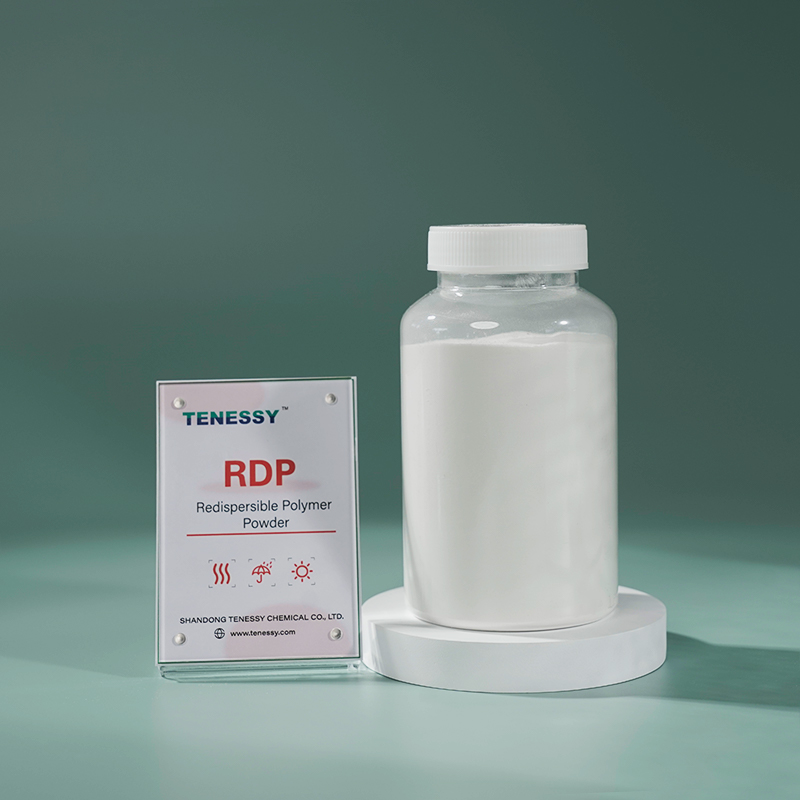
RDP contributes primarily to hardened mortar performance:
- Improves adhesion to substrates, reducing hollowing and delamination
- Enhances flexibility, compensating for shrinkage stress caused by sand content
- Improves crack resistance and durability, especially under temperature changes
With RDP, sand-based insulation mortar gains improved reliability in exterior wall systems.
3. Role of Polypropylene Fiber in Sand-Based Insulation Mortar
Polypropylene fiber acts as internal reinforcement:
- Controls plastic shrinkage and drying shrinkage cracks
- Improves impact resistance and tensile strength
- Enhances overall dimensional stability
- Fiber reinforcement is particularly important for sand-based systems, where shrinkage stress is relatively higher.
Ⅲ. Sand-Free Thermal Insulation Mortar
Characteristics and Application
Sand-free insulation mortar replaces sand entirely with lightweight insulation materials, such as:
- EPS beads
- Expanded perlite or vitrified microbeads
This system is designed for low density and low thermal conductivity, offering superior insulation performance and reduced structural load.
However, sand-free systems are more sensitive to:
- Poor cohesion
- EPS bead floating or segregation
- Weak bonding strength
- Low surface strength
Therefore, additive selection becomes even more critical.
1. Role of HPMC in Sand-Free Insulation Mortar
In sand-free systems, HPMC plays a core stabilizing role:
- Provides strong water retention, ensuring proper cement hydration
- Improves cohesion, preventing EPS beads from floating
- Enhances application smoothness and open time
- Maintains uniform structure during mixing and application
- Choosing the right viscosity and substitution level of HPMC is crucial for avoiding segregation while maintaining good workability.
2. Role of RDP in Sand-Free Insulation Mortar
Because sand-free mortar lacks rigid mineral skeletons, RDP is essential:
- Significantly improves bonding strengthto substrates
- Enhances flexibility and toughness, reducing brittleness
- Improves surface strength and abrasion resistance
- Contributes to long-term durability of the insulation layer
RDP helps sand-free insulation mortar achieve both lightweight structure and reliable mechanical performance.
Ⅳ. Synergistic Effect in Both Systems
Whether sand-based or sand-free, HPMC, RDP, and Polypropylene Fiber work together as a system:
- HPMC ensures stable workability and hydration
- RDP improves adhesion, flexibility, and durability
- Polypropylene fiber enhances crack resistance and internal strength
This synergy results in:
- Easier and more stable construction
- Reduced cracking and delamination
- Longer service life of insulation systems
- More consistent product quality across different climates and substrates
Ⅴ. Supporting Reliable Insulation Mortar Formulations
For insulation mortar manufacturers, success depends not only on formulation design but also on consistent and reliable raw materials.
As a professional supplier of cellulose ethers, redispersible polymer powders, and functional fibers, we support our partners with:
- Stable quality and batch consistency
- Technical guidance for different insulation mortar systems
- Tailored solutions for sand-based and sand-free formulations
- Long-term cooperation focused on performance optimization
Our objective is to help manufacturers produce insulation mortars that are easy to apply, stable in performance, and competitive in the market.
Ⅵ. Conclusion
Both sand-based and sand-free thermal insulation mortars serve important roles in modern insulation systems, each designed to meet different structural and thermal performance requirements. However, regardless of system type, achieving reliable quality and long-term performance depends largely on the proper selection and combination of functional additives.
HPMC, RDP, and Polypropylene Fiber work together to address the most common challenges in insulation mortar applications:
- HPMC ensures stable water retention, workability, and structural uniformity
- RDP enhances bonding strength, flexibility, and durability
- Polypropylene Fiber provides effective internal reinforcement and crack control
When these additives are correctly matched to the formulation design, insulation mortar can achieve:
- Smoother and more efficient on-site application
- Reduced risk of cracking, segregation, and delamination
- Improved adaptability to different climates and construction conditions
- Longer service life and more consistent end performance
For insulation mortar manufacturers, the goal is not only to meet basic technical standards, but to deliver products that perform reliably across diverse markets and real-world construction environments. This requires stable raw materials, formulation know-how, and technical support throughout production and application stages.
By focusing on additive systems rather than individual components, manufacturers can build insulation mortar solutions that are technically sound, economically efficient, and competitive in the global market.



-scaled.jpg)