English
  Arabic
  German
  French
  Indonesian
  Russian
  Italian
  Czech
Czech  Dutch
Dutch  Finnish
  Turkish
  Greek
Greek  Spanish
  Portuguese
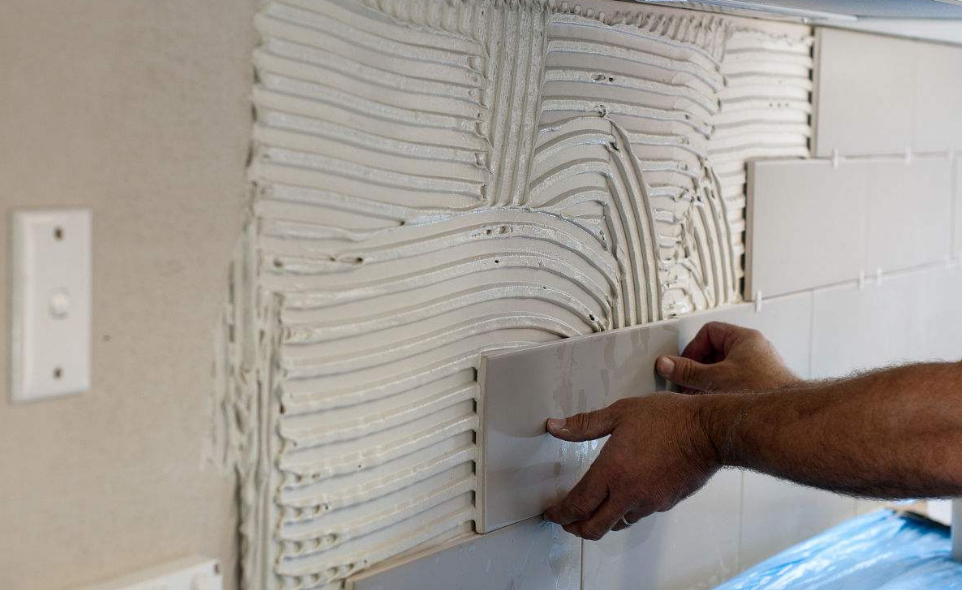
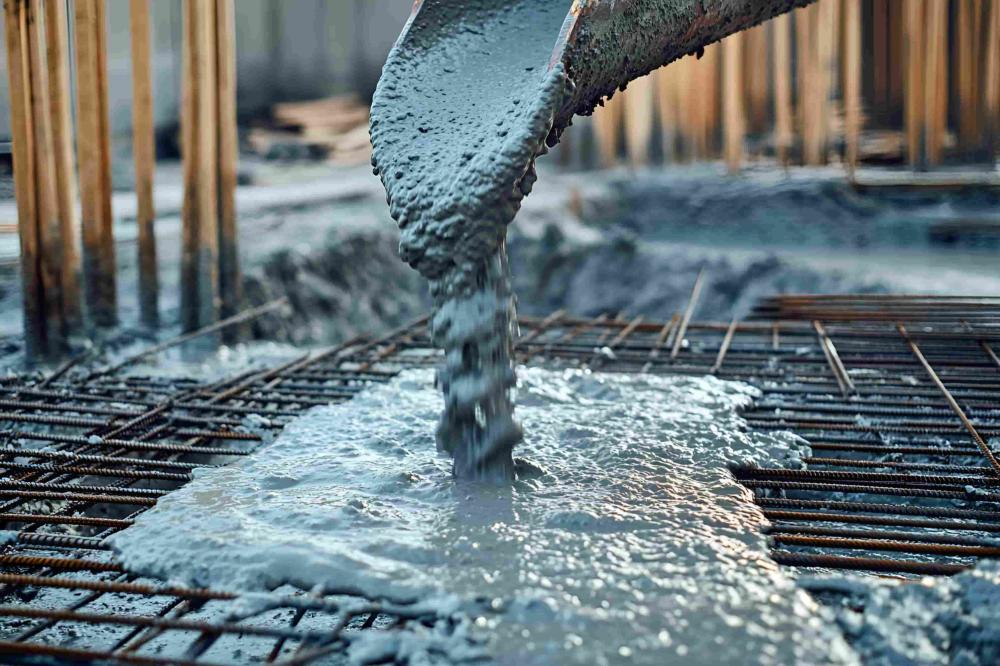
 HPMC in cement plaster is what allows a 15–25 mm coat of render to cling to a vertical wall, stay workable long enough to float and finish, and cure to a hard, crack-resistant surface instead of a sliding, dusty, cracked one. Hydroxypropyl methyl cellulose delivers the two properties that define professional plastering — sag resistance and water retention — and a third that wins applicators over: workability. This guide explains the anti-sagging mechanism, the role of retention in cement hydration and crack prevention, the recommended viscosity and dosage, and how HPMC interacts with air-entraining agents in a balanced render formula.
Introduction
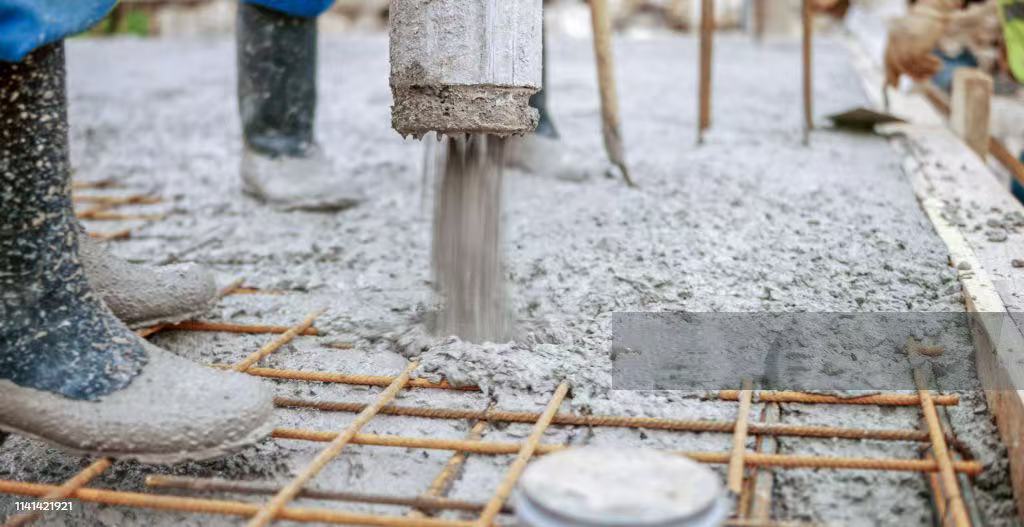
Cement plaster (render in British usage, stucco in American) is the weather-facing or internal finish layer applied to masonry, block, or concrete — typically in two coats of 10–15 mm each, by hand trowel or machine spray. It must do three things at once: stay on the wall (vertical and overhead surfaces), stay workable through a working day, and cure to a durable, crack-resistant shell. All three depend on hydroxypropyl methyl cellulose (HPMC).
The physics is unforgiving. A 15 mm cement-sand coat weighs roughly 20–25 kg/m², and without rheological support it will slump or slide before it sets. The substrate behind it — dry block, brick, or rough concrete — sucks water out of the fresh coat within minutes, which starves the cement of hydration water and produces a weak, dusty render that cracks on the first hot day. At TENESSY Chemical, which supplies HPMC and HEMC to render producers in more than 40 countries, we see the same pattern in underperforming plasters: HPMC present but underdosed or mis-graded, water retention unmeasured, and no allowance for season or substrate. This article is the technical playbook for getting it right.
The Anti-Sagging Mechanism in Vertical Applications
Why does a wet plaster coat stay on a vertical wall instead of slumping? The answer is yield stress — the minimum shear stress a fluid must experience before it begins to flow. HPMC contributes to yield stress in two ways:
1. Gel-network elasticity.** The entangled HPMC polymer network behaves like a weak elastic gel. Under the low shear imposed by gravity (a slowly developing shear at the coat-substrate interface), the network resists deformation elastically — the plaster “holds.” Only when shear exceeds the network’s yield point does flow begin. This is why a well-formulated render can be applied 20 mm thick and still maintain its surface: the gravitational shear stress stays below the gel’s yield stress.
2. Thixotropy — the working secret.** HPMC systems are thixotropic: they thin under the high shear of a trowel or spray nozzle, and rebuild structure at rest. This is exactly the behavior a plasterer wants — fluid enough to spread smoothly and pump easily, structured enough to stay put the moment the trowel lifts away. The rebuild rate is governed by the HPMC grade and concentration; a grade that rebuilds too slowly sags, one that rebuilds too fast is “stiff” and tiring to work.
3. Particle bridging.** The polymer chains bridge cement and sand particles, adding a cohesive component to the yield stress that resists both sag and segregation of the heavier aggregate.
Measured in the lab, sag resistance is evaluated per EN 13060-1 or by the simple wet-coat test: apply a defined thickness to a vertical block, measure downward travel in millimeters. With 75000–100000 mPa·s HPMC at 0.2–0.4%, a 20 mm coat can be held to < 2 mm sag; without HPMC, the same mix flows off the block in seconds.
Water Retention and Cement Hydration

The second pillar is water retention, and its consequence is full cement hydration. A fresh plaster coat has two competing water demands: the substrate’s capillary suction (which can pull water out of the coat within minutes) and the cement’s hydration demand (which continues for hours and days). If suction wins, hydration stalls — the cement near the interface never develops its full gel structure, and the render cures with a weak, porous, “sandy” zone at the bond line.
HPMC shifts the balance. By raising pore-solution viscosity and forming a gel film at the coat-substrate interface, it holds 85–95% of the mixing water in the coat (EN 413-2 filter-paper test). The benefits compound:
– **Full hydration** at the interface → strong bond to the substrate and cohesive matrix throughout.
– **Controlled drying** → plastic shrinkage is spread over the hydration period instead of crashing in the first hours, which is the primary mechanism of early-age crazing.
– **Longer surface life** → the plaster stays “open” for floating and finishing, and the surface skins evenly rather than flashing dry in patches.
The practical quality signal: a correctly formulated render scrapes hard with a trowel after 24 h and sands smoothly, while an under-retained render powders at the surface even when the interior looks set.
Recommended Viscosity and Dosage for Cement Plaster
| Parameter | Recommended range | Notes |
|—|—|—|
| HPMC viscosity (2% solution, 20 °C) | 75000–100000 mPa·s | Standard for hand and machine render |
| Dosage (by weight of dry mix) | 0.2–0.4% | 0.25–0.30% typical starting point |
| Water retention target | ≥ 88% (external render) | Filter-paper method |
| Sag limit (20 mm coat) | ≤ 2 mm | Vertical block test |
| Open time | 30–60 min | Must remain floatable |
**Why 75000–100000 mPa·s?** Below ~40000, yield stress and retention are too low for 15–25 mm coats. Above 100000, the mix becomes stiff and “short,” hard to float to a smooth finish, and increasingly prone to entrapping air. The 75000–100000 window delivers the best combination of sag control, retention, and finishability for hand application. Machine-sprayed renders can drop to 40000–75000 because spray delivery supplies its own kinetic energy and the mortar needs to flow through the pump hose.
**Dosage discipline.** Stay inside 0.2–0.4%. Below 0.2%, sag and dusting reappear. Above 0.4%, expect slower set (retardation compounds), a surface that stays soft and trowel-glossy, and higher cost with no added durability. If you need more sag control at the same cost, raise viscosity before raising dosage.
HPMC and Air-Entraining Agents: The Balance
Renders exposed to freeze-thaw benefit from a controlled air-void system, and this is where HPMC and air-entraining agents (AEA, e.g., sodium alkyl ether sulfates or vinsol-based products) interact in a way that must be understood:
– **HPMC is itself a mild air stabilizer.** It stabilizes the micro-bubbles that form during mixing, which contributes to frost resistance and reduces capillary water absorption.
– **AEA adds the primary void system.** Typical AEA dosing (0.01–0.05%) creates the 5–8% air content in the hardened render that EN 998-1 frost-resistance requirements expect.
– **The interaction:** HPMC’s stabilizing effect can *inflate* the air content when AEA is present — measured air can overshoot 10%, which destroys compressive strength and bond. Conversely, in hot, dry pumping conditions the HPMC network can *suppress* effective aeration by thickening the water phase.
The formulation rule we teach: **set the AEA dose after the HPMC is fixed, and measure air content (pressure method, EN 1015-7) at both 20 °C and your worst-case site temperature.** Target 5–8% air for external renders; if it overshoots, reduce AEA rather than HPMC — HPMC is protecting retention and sag, which you cannot sacrifice. The same reasoning applies when a customer asks whether to add a defoamer: only if air content is structurally too high; otherwise leave the system alone.
Crack Prevention: Drying Control, Not Just Chemistry
Crack resistance in cement plaster is won mostly in the fresh state:
1. **Plastic shrinkage cracking** happens in the first hours if the coat loses water faster than hydration consumes it. HPMC’s retention and film-forming behavior slow surface drying, cutting the number and width of early crazing cracks.
2. **Drying shrinkage at later age** is controlled by mix design (aggregate grading, binder content) and curing practice, with HPMC contributing indirectly by promoting complete hydration (less unhydrated paste to shrink around).
3. **Movement cracking** needs RDP and/or fiber reinforcement — HPMC cannot stop structural movement. For render systems in severe climates, pair HPMC with 1–3% [RDP](https://tenessy.com/products/redispersible-polymer-powder/) for flexural strength and crack-bridging.
The honest statement we give customers: HPMC prevents the cracks it is designed to prevent (drying and plastic-shrinkage cracks). It does not replace polymer or fiber where thermal movement is the driver.
How to Choose and Validate HPMC for Cement Plaster
1. **Define the system.** Hand or machine applied? External (weather-facing) or internal? Two-coat build? This fixes the viscosity window (75000–100000 hand, 40000–75000 spray) and the retention target (≥ 88% external).
2. **Set dosage at 0.25% and run tests.** Measure sag (EN 13060-1), water retention (EN 413-2), and open time. Adjust in 0.05% steps.
3. **Balance AEA with measured air content.** Target 5–8%; re-check in summer conditions.
4. **Seasonal grade.** In hot climates or summer work, consider HEMC (higher gelation temperature, stable retention above 40 °C) or raise dosage — see [HPMC Water Retention Mechanism](https://tenessy.com/hpmc-water-retention-mechanism/) for the full analysis.
5. **Validate with free samples.** TENESSY supplies 500–3000 g free samples with COA. Run your full test battery, compare to your current benchmark, and when production orders start, we ship in 7–14 days with formulation support included.
FAQ
Q1: What viscosity of HPMC is recommended for cement plaster?
A: 75000–100000 mPa·s (2% solution, 20 °C) is the standard for hand-applied cement plaster and render. Machine-sprayed renders can use 40000–75000 mPa·s because pump pressure assists flow. Lower grades fail to hold 15–25 mm coats against sag.
Q2: What is the HPMC dosage in cement plaster?
A: 0.2–0.4% by weight of the dry mix, with 0.25–0.30% as the typical starting point. Stay inside the range: below 0.2% you get sag and dusting; above 0.4% you get retardation, soft glossy surfaces, and wasted cost.
Q3: How does HPMC prevent cement plaster from sagging?
A: HPMC forms an entangled gel network with a yield stress that resists gravitational shear. The network is thixotropic — it thins under trowel shear and rebuilds at rest — so the coat spreads easily but holds its thickness on the wall. Viscosity grade and dosage set how strong that network is.
Q4: Can HPMC reduce cracking in render?
A: Yes for drying-related cracking. HPMC retains water so the coat dries slowly and cement hydrates fully, cutting plastic-shrinkage and crazing cracks. For structural or thermal-movement cracks, add RDP or fiber — HPMC cannot stop cracks caused by substrate movement or extreme thermal cycling.
Q5: Should I use HPMC or HEMC for plaster?
A: Both work; choose by climate. HPMC (gelation temperature ~58–64 °C) is ideal for moderate climates. HEMC has a higher gelation temperature and slightly stronger retention, making it the better choice for hot climates and summer schedules where the mortar works above 40 °C. Many producers run HPMC in winter and HEMC in summer.
Q6: Does HPMC affect the setting time of cement plaster?
A: Yes, mildly. HPMC retards hydration slightly — initial set may extend by roughly 30–90 minutes at working dosages. That is usually an advantage for plastering (longer float time), but in cold weather or when a fast set is required, keep dosage at the tested minimum and consider a setting accelerator.
Conclusion
HPMC in cement plaster delivers the two properties that professional rendering depends on — anti-sagging through gel-network yield stress, and water retention that guarantees full cement hydration — plus the workability and controlled drying that prevent dusting and early cracking. With 75000–100000 mPa·s grades at 0.2–0.4%, air content balanced against AEA at 5–8%, and a seasonal grade strategy (HEMC in heat), a render system performs predictably across climates and substrates. TENESSY Chemical manufactures construction-grade HPMC, HEMC, and RDP on German-engineered lines, ships to 40+ countries, and backs every order with free 500–3000 g samples, COA documentation, and a 7–14 day lead time. Send us your render formula and site conditions — we will help you tune the dose and grade.
**Recommended Products:** [HPMC](https://tenessy.com/products/hpmc-hydroxypropyl-methyl-cellulose/) | [HEMC](https://tenessy.com/products/hemc-hydroxyethyl-methyl-cellulose/) | [RDP](https://tenessy.com/products/redispersible-polymer-powder/)
**Related Reading:** [HPMC Water Retention Mechanism in Cement-Based Materials](https://tenessy.com/hpmc-water-retention-mechanism/) | [HPMC in Dry-Mix Mortar](https://tenessy.com/hpmc-in-dry-mix-mortar/)