Finnish
  English
  Arabic
  German
  French
  Indonesian
  Russian
  Italian
  Czech
Czech  Dutch
Dutch  Turkish
  Greek
Greek  Spanish
  Portuguese
Introduction
In deep oil and gas well cementing operations, low-density cement slurry systems have gained widespread application due to their significant advantages in low-pressure, lost-circulation-prone formations. However, low-density cement slurries, characterized by their inherently high water-to-cement ratios and low solids content, are highly susceptible to poor settling stability and excessive free fluid content—issues that directly impair cementing quality and zonal isolation effectiveness. Hydroksietyyliselluloosa (HEC), as a non-ionic water-soluble polymer, demonstrates exceptional application value in anti-settling solutions for low-density cement slurries, owing to its unique thickening, suspension, and fluid-loss control properties.
I. Root Cause Analysis of Settling Problems in Low-Density Cement Slurries
The settling stability problem in low-density cement slurries stems from inherent contradictions in their formulation design. To achieve the low-density target, high water-to-cement ratios are typically employed in combination with lightweight filling materials (such as cenospheres and microsilica), resulting in a reduced solids volume fraction and an increased liquid phase proportion. Under gravitational forces, denser cement particles and weighting materials tend to settle downward, while lightweight fillers may migrate upward, creating a “settling-free fluid” stratification phenomenon.
This non-uniformity can lead to a series of serious consequences: density variations in the set cement sheath compromise annular sealing quality, with high-density zones exhibiting reduced permeability and low-density zones showing insufficient strength; accumulated free water forms continuous channels or voids that serve as potential pathways for hydrocarbon migration; more severely, bridge-type settling can cause stuck pipe, cementing failures, and other operational incidents. Therefore, in low-density cement slurry formulation design, the synergistic optimization of suspension stability and rheological properties becomes a technical critical success factor.
II. Mechanism of Action and Advantages of Hydroxyethyl Cellulose
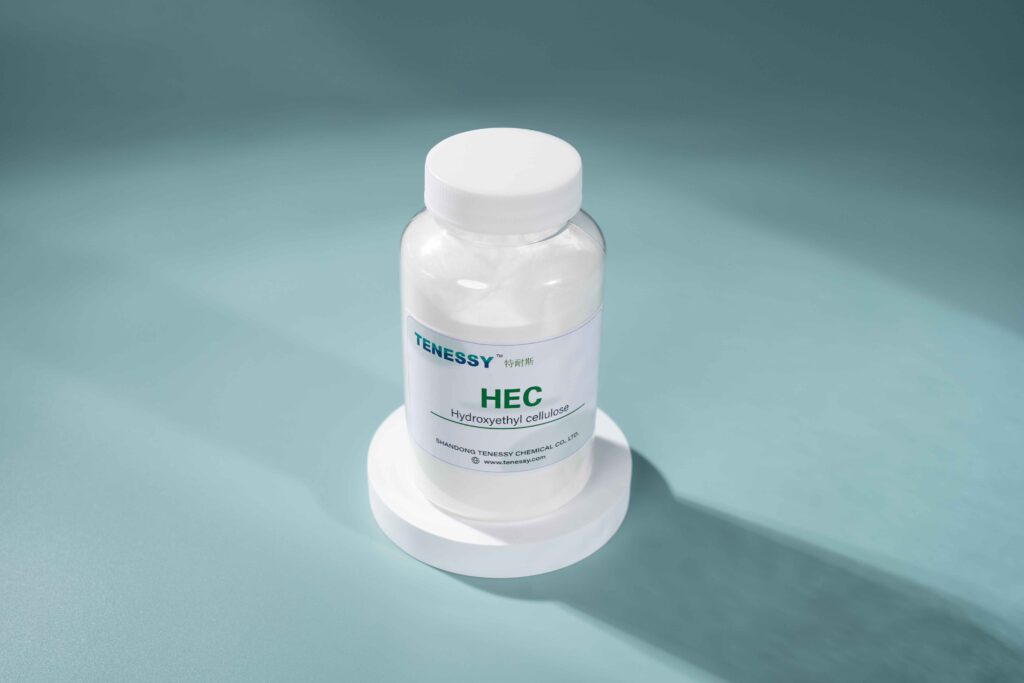
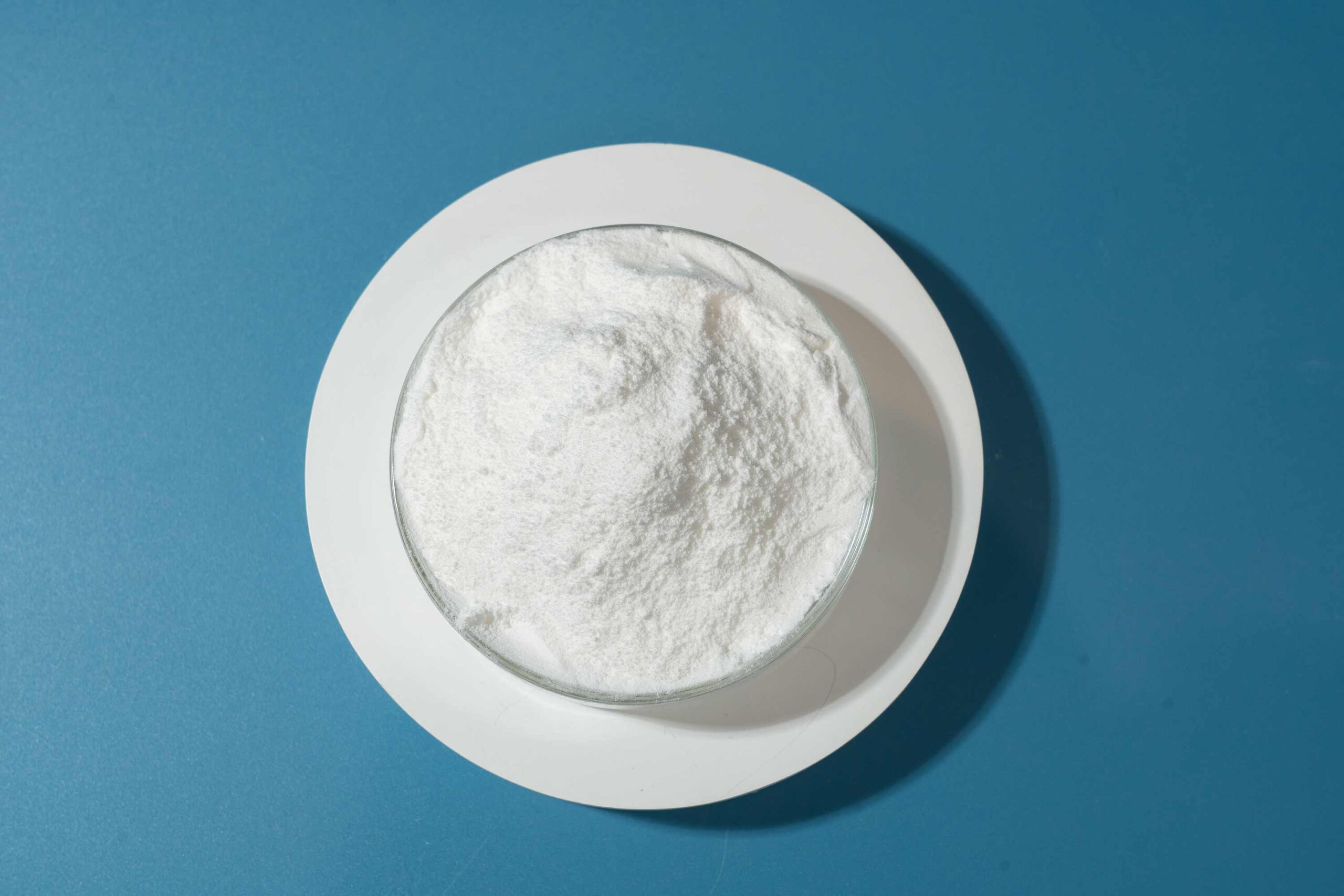
Hydroxyethyl cellulose is a non-ionic water-soluble polymer derived from natural cellulose through alkalization and etherification reactions. The hydroxyl groups and ether linkages along its molecular chains form strong hydrogen bonds with water molecules, imparting distinctive rheological characteristics to its aqueous solutions. In low-density cement slurry systems, HEC exerts its anti-settling effects primarily through the following three mechanisms:
Thickening and Yield Stress Enhancement: HEC molecular chains extend and entangle in aqueous solutions, forming three-dimensional network structures that significantly increase the apparent viscosity and dynamic shear stress of the slurry. Sufficiently high yield stress effectively supports solid particles and inhibits their settling motion.
Adsorption Bridging Effect: The polar groups on HEC molecular chains adsorb onto the surfaces of cement particles and lightweight fillers, connecting dispersed particles into loose flocculated networks through polymer chain bridging, thereby enhancing overall suspension capacity.
Fluid-Loss Control and Filter Cake Improvement: HEC effectively reduces fluid loss from the slurry into the formation, forming a thin, dense filter cake on the wellbore wall. This not only reduces free water generation but also prevents localized density increases caused by fluid loss.
Compared to anionic polymers such as karboksimetyyliselluloosa (CMC), HEC’s non-ionic nature makes it insensitive to calcium ions and salts in the slurry, ensuring more stable performance in high-temperature, high-salinity environments. Additionally, its retarding effect on cement hydration is relatively mild, facilitating compatibility with other admixtures.
III. Key Design Considerations for Low-Density Cement Slurry Formulation
An anti-settling solution based on hydroxyethyl cellulose requires systematic design from a holistic formulation perspective. A typical low-density cement slurry base formulation framework is outlined below:
Cementitious Material System: Grade G oil-well cement serves as the base material, with an appropriate proportion of cenospheres (density 0.40–0.60 g/cm³) as the primary lightweight extender, supplemented with microsilica (8%–15% BWOC) to compensate for strength and improve particle size distribution. The spherical morphology of cenospheres enhances slurry flowability, although their brittleness necessitates gentle mixing procedures.
Water-to-Cement Ratio Control: The water-to-cement ratio for low-density slurries typically ranges from 0.80 to 1.20. The incorporation of HEC allows for comparable flowability at lower water-to-cement ratios, indirectly reducing the total free water volume and mitigating the driving force for settling at the source.
HEC Dosage Optimization: The recommended HEC dosage range is 0.2%–0.6% BWOC. Below 0.2%, the suspension effect is insufficient; above 0.6%, the slurry becomes excessively viscous, compromising pumpability and displacement efficiency. The optimal dosage should be determined through laboratory testing based on actual density requirements and downhole temperature conditions.
Synergistic Use of Dispersants: To counteract the thickening effect of HEC, sulfonated aldehyde-ketone condensate-type dispersants are typically incorporated to improve slurry flowability under shear conditions, achieving the “shear-thinning” characteristic of suspension at rest and fluidity during pumping.
Retarders and Fluid-Loss Control Additives: Depending on the bottom-hole circulating temperature, appropriate dosages of organophosphonate-type retarders and polyvinyl alcohol-type fluid-loss control agents are incorporated to ensure that thickening time aligns with the operational window.
IV. Implementation Strategy for HEC-Based Anti-Settling Solutions
In practical engineering applications, the HEC-based anti-settling solution requires implementation across three dimensions: material selection, slurry preparation, and on-site monitoring.
Material Selection: HEC products with uniform degree of substitution and moderate molecular weight should be selected. Molecular weights that are too low fail to provide sufficient thickening, while those that are too high present dissolution difficulties and a propensity for “fish-eye” formation. HEC grades with a 2% aqueous solution viscosity in the range of 300–600 mPa·s are recommended, balancing thickening effectiveness with dissolution performance.
Slurry Preparation Process: This is a critical step in leveraging HEC’s efficacy. A “dry-mix + wet-mix” two-step method is recommended: first, thoroughly blend HEC with dry materials such as cement and cenospheres to ensure uniform dispersion of polymer particles throughout the solids phase; then, add mix water under high-speed agitation, maintaining mixing until HEC is fully hydrated (typically requiring 10–15 minutes). If field conditions permit, pre-dissolving HEC into a 2%–3% mother solution prior to addition can significantly improve dissolution uniformity.
Performance Evaluation and Monitoring: In addition to routine tests for density, flowability, and thickening time, the following suspension stability evaluations should be prioritized:
Static Settling Differential Test: Measure the density difference between upper and lower sections after 2 hours of static aging; a difference not exceeding 0.05 g/cm³ is considered acceptable.
Free Fluid Content Measurement: Determined according to API specifications; free fluid should be controlled below 1.4%.
Static Yield Stress Measurement: Use a rotational viscometer at low shear rates; dynamic shear stress should be maintained within the 8–15 Pa range.
V. Application Results and Process Optimization Directions
Field application practices demonstrate that low-density cement slurries (density 1.30–1.50 g/cm³) incorporating the HEC suspension anti-settling solution exhibit 24-hour static settling differentials within 0.03 g/cm³ and free fluid contents below 1.0%, with significantly reduced density variations between the top and bottom of the set cement column. Simultaneously, the slurries maintain good pumpability, with flowability values in the 20–24 cm range, meeting cementing operational requirements.
In high-temperature deep-well environments (BHCT > 90°C), thermal stability pretreatment of HEC or compounding with thermal stabilizers is recommended to prevent polymer chain degradation at elevated temperatures. For ultra-low-density systems (< 1.30 g/cm³), HEC alone may be insufficient to meet suspension requirements; in such cases, the introduction of small amounts of welan gum or xanthan gum as auxiliary suspending agents can create synergistic effects with HEC in a composite suspension system.
It is worth noting that the addition of HEC moderately extends the thickening time of the cement slurry; accordingly, hidastin dosage should be adjusted in formulation design to avoid excessive retardation that could impede strength development. For different well conditions, a “density–rheology–suspension” three-dimensional optimization model should be established to determine the optimal compatibility ratios of each component through orthogonal experimental design.
Päätelmä
Hydroxyethyl cellulose, as a suspension stabilizer for low-density cement slurry systems, provides a reliable technical pathway for addressing settling issues through its unique thickening, flocculation, and fluid-loss control capabilities. Successful engineering applications depend not only on rational formulation design but also on comprehensive process control spanning material selection, preparation techniques, and performance evaluation. As the development of deep oil and gas resources imposes increasingly stringent demands on cementing quality, HEC-based suspension anti-settling solutions will play an increasingly vital role in low-density cement slurry design for complex well conditions, driving continuous advancement in cementing technology toward safer and more efficient practices.