English
  Arabic
  German
  French
  Indonesian
  Russian
  Italian
  Czech
Czech  Dutch
Dutch  Finnish
  Turkish
  Greek
Greek  Spanish
  Portuguese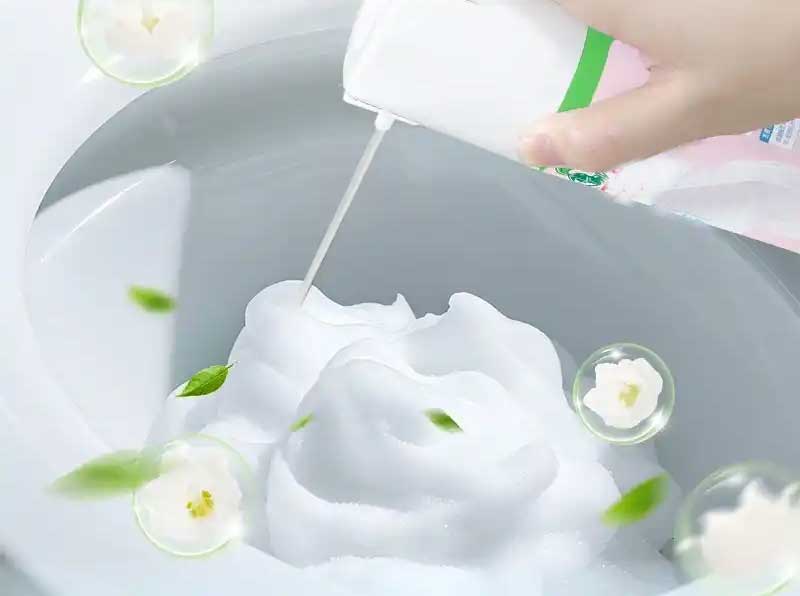
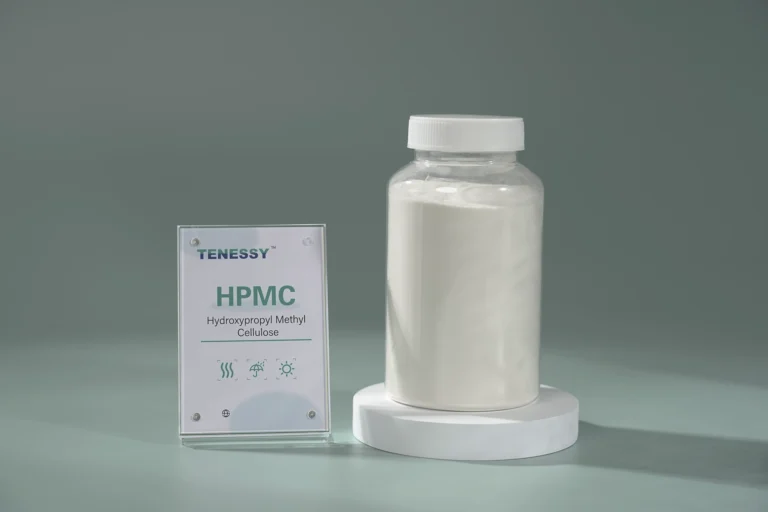
Hydroxypropyl Methyl Cellulose (HPMC) is a key rheology modifier in toilet cleaner formulations, providing the thickening, suspending, and stabilizing properties essential for effective gel-type toilet bowl cleaners. As a non-ionic cellulose ether, HPMC maintains stable performance across a wide pH range — including the strongly acidic conditions (pH 1–3) typical of toilet cleaner products.
At TENESSY, we manufacture specialized HPMC grades optimized for household cleaning applications. Our NS Series (surface-treated HPMC) is specifically designed for daily chemical products, offering excellent dispersibility and rapid dissolution in water without agglomeration.
Why Cellulose Ether Matters in Toilet Cleaners
Toilet bowl cleaners must deliver active ingredients — typically hydrochloric acid, organic acids, or bleaching agents — to curved ceramic surfaces with sufficient contact time to be effective. Without proper thickening, thin liquid formulations run off the bowl surface immediately, reducing cleaning performance and user experience.
HPMC addresses three critical formulation challenges:
- Viscosity control: Creates gel-like consistency that clings to vertical and curved surfaces, extending contact time between the cleaning agent and stains
- Abrasive suspension: Keeps solid particles (such as silica or calcium carbonate abrasives) uniformly dispersed throughout the product, preventing settling during storage
- Acid stability: Maintains thickening efficiency in low-pH environments where many synthetic thickeners degrade
Recommended TENESSY HPMC Grades for Toilet Cleaners
TENESSY offers surface-treated HPMC (NS Series) specifically engineered for daily chemical and fluid applications. These grades disperse rapidly in water and dissolve without lumping — ideal for cleaning product manufacturing.
Grade | Recommended Applications | Key Properties |
Bath gel, facial cleanser, low-viscosity cleaners | Good dispersibility, high transmittance, easy pouring | |
Lotions, gels, disinfectants, conditioners | Medium viscosity, ideal gel consistency for toilet cleaners | |
Styling products, liquid admixtures, construction glue | Higher viscosity, thick gel, maximum cling |
Grade selection guidance: For standard toilet cleaner gels, NS150PC provides the ideal balance of viscosity and acid stability. For thicker cling gels, NS200PC delivers maximum surface adhesion. For thinner pour formulations, NS100PC offers easy pouring while maintaining suspending capability.
Formulation Considerations
pH Compatibility
HPMC demonstrates excellent stability in acidic formulations (pH 1–12), making it suitable for both acid-based and bleach-based toilet cleaners. Unlike anionic thickeners, HPMC’s non-ionic nature means it does not interact with electrolytes or charged surfactants in the formula.
Temperature Stability
Toilet cleaners may be stored in warm bathrooms or transported through hot climates. TENESSY HPMC has a gel temperature of 54–64°C (standard type) or 70–90°C (high-temperature type). For products requiring higher thermal stability, consider our HEMC grades, which offer improved heat resistance.
Cold Water Dispersibility
TENESSY NS Series HPMC is surface-treated (delayed-dissolution type) — it disperses rapidly in cold water without lumping, then dissolves uniformly upon continued stirring. This is particularly valuable for cleaning product manufacturers using cold-mix processes.
Typical Toilet Cleaner Formulation with HPMC
Component | Function | Wt% |
Water | Solvent | QS to 100 |
HPMC NS150PC | Thickener/Suspending agent | 0.5–1.5 |
Hydrochloric acid (37%) | Active cleaning agent | 10–15 |
Linear alkylbenzene sulfonate (LAS) | Surfactant | 1–3 |
Sodium dodecyl sulfate | Foaming agent | 0.5–1.0 |
Fragrance | Scent | 0.2–0.5 |
Acid dye | Colorant | 0.01–0.05 |
Advantages of TENESSY HPMC for Toilet Cleaners
- Consistent batch-to-batch quality backed by ISO 9001 manufacturing
- Low insoluble residue, ensuring clear final products
- NS Series surface-treated grades for rapid dissolution in cold-mix processes
- Global supply capability with 6,000-ton annual production capacity
- Technical support including formulation assistance and viscosity optimization