English
  Arabic
  German
  French
  Indonesian
  Russian
  Italian
  Czech
Czech  Dutch
Dutch  Finnish
  Turkish
  Greek
Greek  Spanish
  Portuguese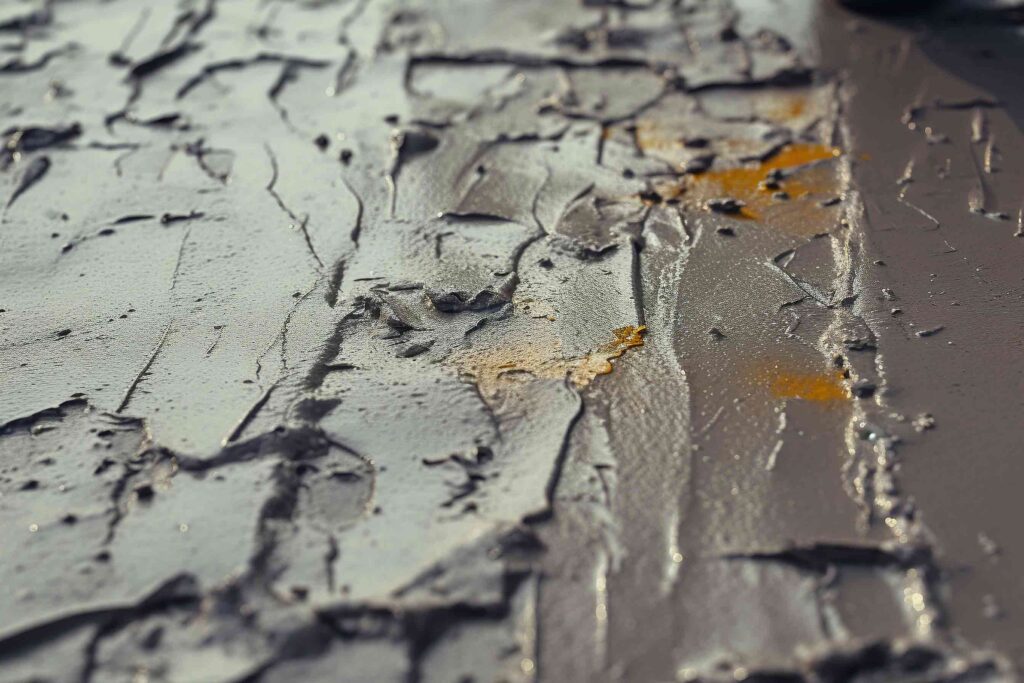
Introduction
Building leakage is a chronic quality defect and a critical threat to occupant satisfaction. In numerous repair cases, the path of water ingress is often not structural cracks, but rather the inherent capillary connectivity, drying shrinkage cracking, or interfacial bond failure within the dry-mix mortar itself. Conventional countermeasures rely on applied waterproof coatings or increased cement content. However, the former adds process steps and cost, while the latter exacerbates shrinkage risks. The core question is: does the mortar possess sufficiently robust intrinsic waterproofing and impermeability?
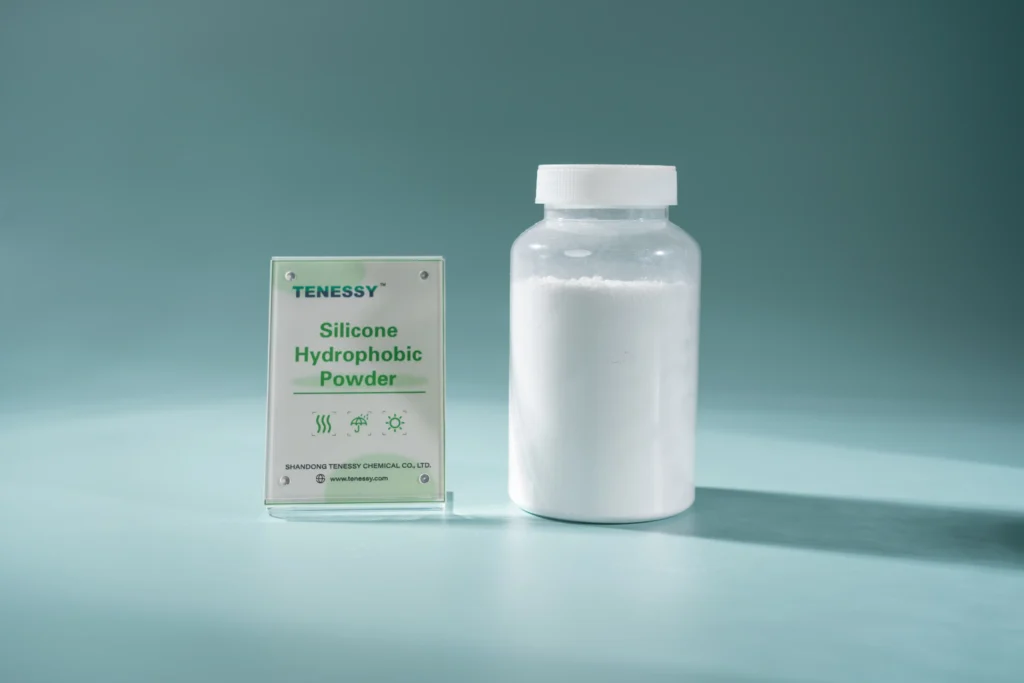
Hydrophobic redispersible polymer powder shifts the waterproofing function from a “surface coating” to an “integrated material property.” It is not a simple additive but a fundamental functional restructuring of the dry-mix mortar at the microstructural level. Drawing on years of practical formulation experience, this article systematically details how hydrophobic powders establish a primary defense against water ingress in masonry, plastering, repair, and decorative mortars, starting from the very composition of the material.
I. Rethinking Hydrophobic Polymer Powdere
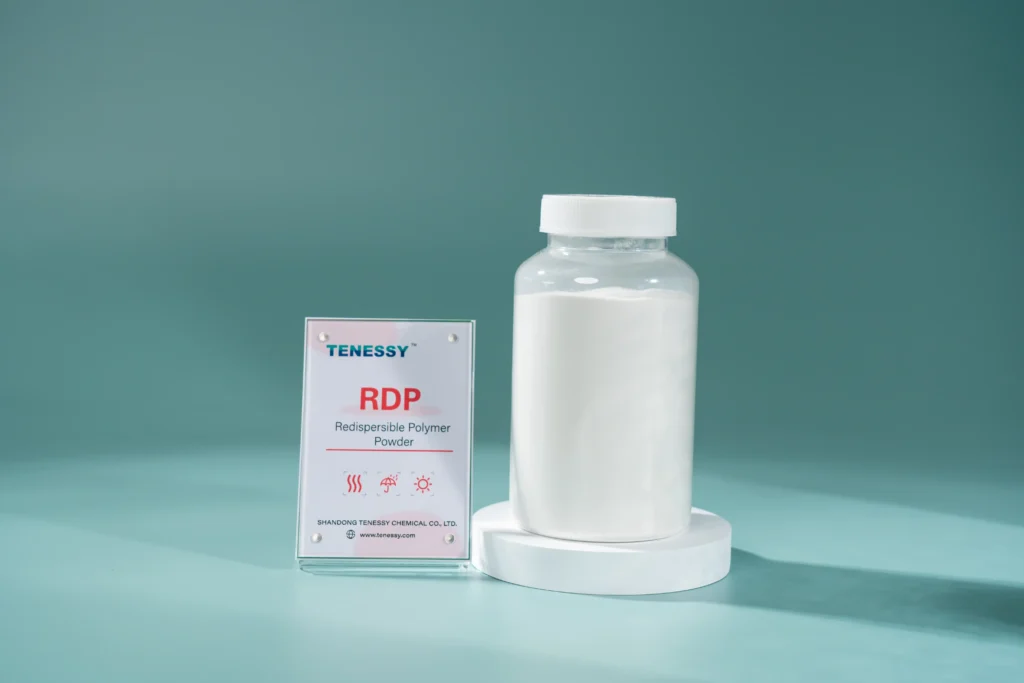
Redispersible polymer powders are widely used in dry-mixed mortars, yet their functional role is often narrowly defined as a “binder enhancer.” In reality, polymer powders are categorized by surface polarity into hydrophilic and hydrophobic types. Conventional VAE powders, due to their protective colloid (polyvinyl alcohol) content, form films that are water-sensitive upon redispersion—they swell and even re-emulsify upon prolonged water exposure, leading to significant performance degradation.
Hydrophobic polymer powder is a functionalized polymer powder modified during polymerization or through post-treatment in the spray-drying process, incorporating silane, stearate, or fluorine-containing hydrophobic monomers. Its defining characteristics include:
Low surface energy film formation: Upon redispersion in water and subsequent water evaporation during curing, the powder particles coalesce into a film with extremely low water wettability, achieving a contact angle of 90°–110°;
Capillary pore wall hydrophobization: The powder particles preferentially concentrate on the capillary pore walls of the cement matrix and around aggregate surfaces. Upon curing, they form a nanoscale hydrophobic coating that effectively blocks capillary rise;
Chemical anchoring reactions: The reactive groups (e.g., -Si(OR)₃) in silane-modified powders undergo hydrolysis and polycondensation in the alkaline cement paste, forming covalent bonds with C-S-H gel. This ensures the hydrophobic effect is permanent, rather than a mere physical “surface oiling.”
II. The Underlying Logic of Waterproofing and Impermeability
From a physicochemical perspective, the hardened dry-mix mortar is a porous medium with pore radii predominantly in the 0.01–10μm range. Water penetration under pressure follows Darcy’s Law, where permeability is proportional to porosity and the square of pore radius. Traditional methods to improve impermeability—reducing the water-to-cement ratio or adding ultrafine mineral admixtures—fundamentally aim to “reduce pore size,” but they do not alter the hydrophilic nature of the pore walls.
The introduction of hydrophobic polymer powder upgrades the waterproofing strategy from “physical densification” to a dual mechanism: “physical densification + interfacial hydrophobicity” .
Polymer network blocking capillary channels: As cement hydrates, the powder gradually forms a film. This three-dimensional polymer network both fills some connected pores and, through its inherent flexibility, cushions drying shrinkage stresses, thereby reducing the formation of micro-cracks.
Surface energy conversion of pore walls: Hydrophobic groups align directionally on the pore wall surfaces, dramatically lowering the solid-liquid interfacial tension. When water pressure is applied, water molecules struggle to spread across the hydrophobic pore walls. The capillary pressure shifts from an “attractive” force to a “resistive” one, significantly increasing the impermeability pressure.
Strengthening the interfacial transition zone (ITZ): The aggregate-paste interface is a weak point for leakage. Hydrophobic powder accumulates as a polymer-rich layer in this region, both lowering the local water-to-cement ratio and blocking the connectivity of micro-voids at the interface—an effect that traditional mineral fillers cannot achieve.
The practical outcome of this mechanism is substantial: even if the mortar develops fine cracks (≤0.2mm), water under no or low pressure struggles to penetrate through, providing a “tolerance margin” for the structure’s self-waterproofing capability.
III. Practical Formulation Design and Process Control Essentials
Integrating hydrophobic polymer powder into dry-mix mortar production is not a simple one-to-one replacement of conventional powder. The following are critical principles derived from years of plant-scale production experience:
1. Dosage Optimization: Finding the "Waterproofing–Strength" Balance
For cement-based systems, the recommended hydrophobic powder dosage is 1.5%–4.5% of the total cementitious material:
Waterproof plastering mortar (P6–P8 grade): 2.0%–3.0% is recommended. At this level, 28-day water absorption can be reduced to 6%–8%, with compressive strength loss limited to within 8%;
Single-component waterproofing mortar (P10 and above): 3.5%–4.5% is recommended. Combined with an appropriate superplasticizer, 28-day impermeability pressure can exceed 1.2MPa;
Decorative mortar and grouts: 2.0%–2.5% is recommended, primarily leveraging its anti-efflorescence and anti-soiling functions.
It is crucial to note that excessive hydrophobic powder (>5%) can increase air entrainment, reducing density and negatively impacting impermeability.
2. Additive Compatibility: Synergy is Key
Mortar waterproofing additives never function in isolation. Hydrophobic powder must be precisely coordinated with the following components:
Cellulose ether: Provides water retention and thickening, ensuring thorough dispersion and hydration of the powder. However, methyl cellulose ethers reduce the system’s surface tension, potentially weakening the hydrophobic effect. Therefore, hydroxyethyl cellulose (HEC) or modified hydroxypropyl methyl cellulose (HPMC) is preferred, with a controlled dosage (≤0.3%);
Superplasticizer: Polycarboxylate-based superplasticizers reduce water demand and increase density, exhibiting a positive synergistic effect with hydrophobic powder. However, compatibility testing with the powder is essential;
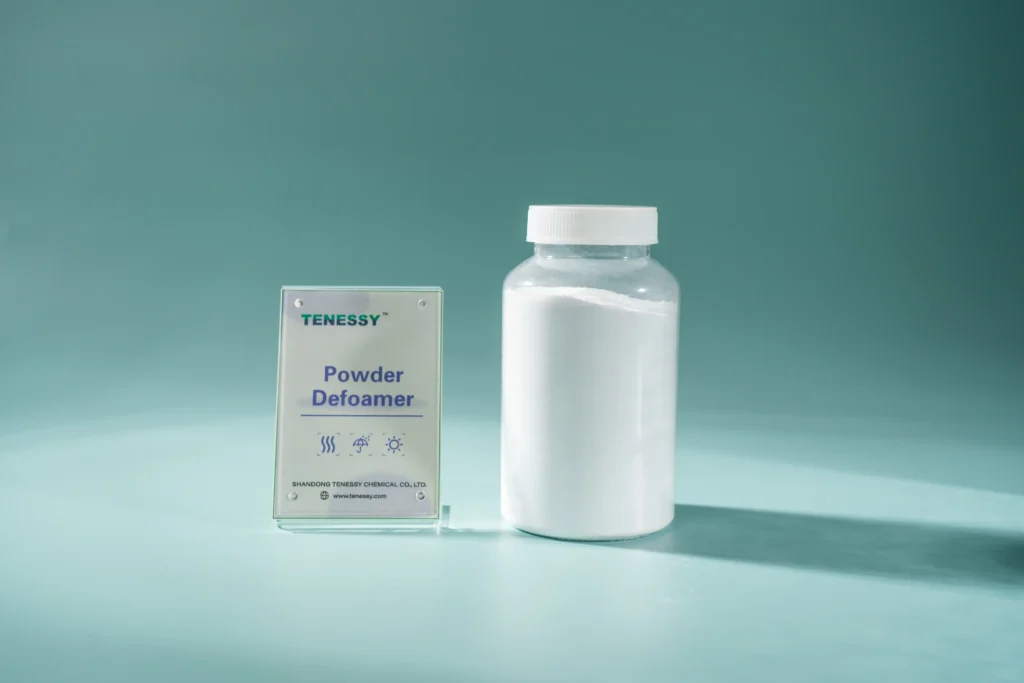
Defoamer: Indispensable. Air bubbles introduced during mixing by the powder and superplasticizer can become “short-circuit” paths for water. A powder defoamer at 0.1%–0.3% is recommended;
Air-entraining agent: Use with caution or avoid entirely. Entrained harmful large pores will counteract the pore-blocking benefits of the hydrophobic powder.
3. Production and Construction Adaptability
Mixing Uniformity: Given the low dosage, a pre-blending process is mandatory. Dry-mix the powder with cement and sand for at least 120 seconds to ensure microscopically uniform distribution and avoid localized agglomeration or depletion;
Water Demand Sensitivity: The hydrophobic system is highly sensitive to water content. A 5% increase in mixing water can reduce the impermeability grade by 1–2 levels. Strict water-to-cement ratio control must be enforced on-site, ideally using automated water metering equipment;
Curing Conditions: Early-stage moisture curing is still essential. Cement hydration requires sufficient water; maintaining a moist environment for the first 3 days allows the hydrophobic film to fully develop its water-repelling effect. Premature water loss will result in poor film formation and inadequate cement hydration.
IV. Typical Applications and Differentiated Performance Requirements
Different dry-mix mortar types have distinct performance expectations regarding hydrophobicity, requiring a tailored formulation approach:
① Exterior Waterproof Plastering Mortar
Key requirements: low water absorption + high bond strength + freeze-thaw resistance. In such formulations, hydrophobic powder should be combined with appropriate fibers (polypropylene or lignocellulose) to enhance crack resistance. Test data shows that after 25 freeze-thaw cycles, the compressive strength loss of hydrophobically modified formulations is reduced by approximately 60% compared to the control.
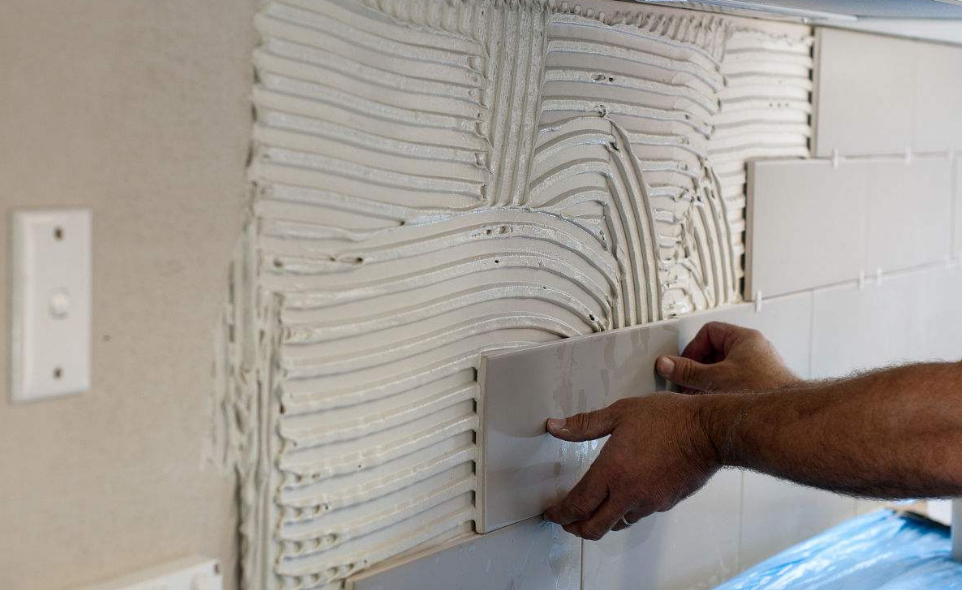
② Tile Adhesives and Grouts (Wet Installation)
Key requirements: efflorescence prevention + water resistance. Efflorescence occurs when soluble salts migrate to the surface with water and crystallize. Hydrophobic powder blocks continuous water pathways, substantially reducing efflorescence potential. In white grouts, hydrophobic modification achieves water absorption ≤3% and significantly improves stain resistance.
③ Repair Mortars (Thin-layer and Structural)
Key requirements: interfacial bond + impermeability synergy. The interface between the repair layer and the old concrete substrate is the weakest point. The polymer film formed at the interface by the hydrophobic powder simultaneously blocks water ingress and buffers shrinkage stress, preventing delamination and detachment.
④ Waterproof Putties and Decorative Mortars
Key requirements: surface hydrophobicity + vapor permeability. Exterior decorative layers need to be “externally waterproof but internally breathable.” Decorative mortars modified with hydrophobic powder can maintain a water vapor transmission coefficient of ≥2.5×10⁻⁶ g/(m·s·Pa), allowing internal moisture to escape effectively and preventing blistering or peeling of the finish layer.
V. Performance Verification and Quality Control Systems
The value of practical applications must be anchored by empirical data. In routine factory inspections and on-site quality checks for dry-mix mortar, the following metrics should be prioritized:
| Test Item | Test Standard | Hydrophobic Modified Pass Line (Reference) |
|---|---|---|
| 24h Water Absorption | JC/T 984 | ≤5% (waterproof type) / ≤8% (plastering type) |
| Impermeability Pressure (28d) | GB/T 18445 | ≥0.8MPa (P8 grade) |
| Tensile Bond Strength (Original) | JC/T 547 | ≥0.7MPa |
| Softening Coefficient | GB/T 4111 | ≥0.85 |
Additionally, contact angle measurement and capillary water absorption rate are two sensitive micro-level indicators reflecting hydrophobic efficacy and stability. These are recommended for inclusion in routine quality control protocols.
A simple qualitative on-site assessment: Apply a water droplet to the hardened mortar surface. If the droplet forms a hemispherical bead and rolls off without wetting the surface, the hydrophobic modification is effective. Conversely, if the droplet spreads and penetrates quickly, it indicates potential issues with powder dosage, dispersion uniformity, or water content control.
Conclusion
Enhancing the waterproofing and impermeability of dry-mix mortar should not rely on post-applied membrane coatings as a “safety net,” but rather on embedding the functional attributes at the formulation design stage. Hydrophobic redispersible polymer powder, through the synergistic action of physical film formation, chemical anchoring, and interfacial modification, endows mortar with long-lasting, reliable self-waterproofing capability without compromising construction convenience. It represents not only a technical option for performance enhancement but also a fundamental shift in product philosophy—from “passive repair” to “active impermeability.”
TENESSY is committed to advancing mortar waterproofing additives. We offer not only high-performance hydrophobic polymer powders but also comprehensive solutions covering formulation design, process adaptation, and construction quality control. Choosing to effect change at the source is the only way to ensure that every batch of dry-mix mortar withstands the dual tests of water and time.