Italian
  English
  Arabic
  German
  French
  Indonesian
  Russian
  Czech
Czech  Dutch
Dutch  Finnish
  Turkish
  Greek
Greek  Spanish
  Portuguese
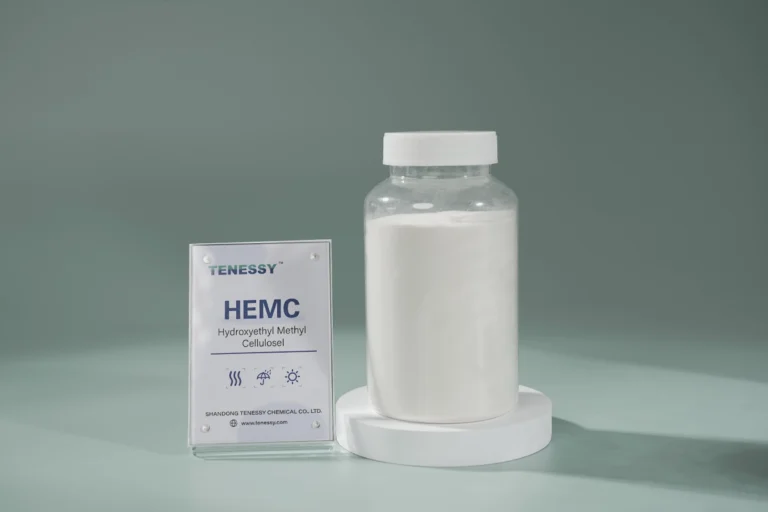
 HEMC (hydroxyethyl methyl cellulose, also abbreviated MHEC) is a cellulose ether widely used in construction for its exceptional water retention, superior heat stability, and extended open time. This guide explains how HEMC in construction delivers measurable performance gains across plastering, tile adhesives, and external insulation systems, and helps formulators choose the right viscosity grade for each mortar system.

Introduzione
HEMC in construction is one of the most reliable ways to upgrade the performance of dry-mix mortars without redesigning the entire formulation. As a methyl cellulose derivative in which part of the hydroxy groups are substituted with both methyl and hydroxyethyl groups, HEMC behaves as a water-soluble, non-ionic polymer that dissolves in cold water to form clear, viscous solutions. Its key jobs in a mortar are simple but critical: hold water in the mix, lubricate the paste for better workability, extend open time, and prevent premature skinning on the surface.
At TENESSY Chemical, we produce HEMC from high-grade cotton linters on German-made reactor equipment, with batch-to-batch viscosity controlled to within ±10% of the specified value. Typical construction grades span 20,000 to 200,000 mPa·s (2% solution, Brookfield, 20 °C). The polymer backbone is identical to HPMC, but the substituent mix — methoxy plus hydroxyethoxy instead of methoxy plus hydroxypropoxy — changes the molecular geometry and polarity in ways that matter on site, especially when ambient temperature climbs. The result is a thickener that keeps a mortar workable for longer, holds water through hot summer days, and stays consistent across the storage and mixing conditions found on real construction sites.
Because the molecule is non-ionic and electrostatically neutral, HEMC is compatible with the full range of cementitious and gypsum systems, with retarders, accelerators, and re-dispersible polymer powders (RDP), and with lime-based renders. This guide covers the chemistry behind those advantages, the main applications where HEMC outperforms other ethers, and practical dosage guidance you can apply directly to a formulation.
HEMC Chemical Structure: What Makes It Different at the Molecular Level
HEMC is manufactured by treating alkaline cellulose with methyl chloride and ethylene oxide. The reaction replaces part of the hydroxyl groups (–OH) on the anhydroglucose units with methoxy (–OCH₃) and hydroxyethyl (–OCH₂CH₂OH) groups. A typical construction-grade HEMC carries a methoxy content of 22–30% and a hydroxyethyl content of 4–9%, with a degree of substitution (DS) of roughly 1.3–1.9.
HEMC vs. HPMC: Hydroxyethyl vs. Hydroxypropyl
The critical difference between HEMC and HPMC is the second substituent. In HPMC the hydroxyl-containing side group is hydroxypropyl (–OCH₂CH(OH)CH₃); in HEMC it is hydroxyethyl (–OCH₂CH₂OH). These two side chains look similar on paper, but the consequences in a wet mortar are significant:
| Property | HEMC (hydroxyethyl) | HPMC (hydroxypropyl) |
|—|—|—|
| Gelation temperature (typical) | 65–75 °C (higher) | 55–65 °C (lower) |
| Water retention at 35 °C, 10 min | 92–96% | 88–93% |
| Open time at 30 °C | Longer | Shorter |
| Thermal gelation reversibility | Reversible | Reversible |
| Salt tolerance | Good | Good |
| Solubility in organic solvents | Better | Moderate |
| Cost | Slightly higher | Standard |
The hydroxyethyl group is smaller and more polar than hydroxypropyl, and it shifts the thermal gelation point upward. Gelation is the temperature at which the polymer chain loses hydration water and precipitates out of solution. Because HEMC’s gel point sits roughly 10 °C higher than HPMC’s, a mortar containing HEMC remains workable and water-retentive at the surface temperatures typical of a summer worksite (35–50 °C), whereas an equivalent HPMC mortar begins to lose viscosity and bleed water sooner. This is the single most important reason experienced formulators reach for HEMC in hot climates and in ETICS/EIFS base-coat mortars that are applied in direct sunlight.
Why Hydroxyethyl Content Controls Performance
Hydroxyethyl content is not just a label; it determines hydration kinetics, film-forming behavior, and interaction with cement pore solution. Higher hydroxyethyl content (up to the practical limit of ~10%) improves:
– Cold-water solubility and the speed of hydration — important when the mortar is mixed on site with water at 5–20 °C.
– Retardation of the polymer’s own hydration, which keeps viscosity development smooth rather than spiky.
– Resistance to enzymatic degradation relative to unmodified cellulose, though HEMC is still susceptible to cellulase attack in warm, damp storage.
For a construction grade, TENESSY controls hydroxyethyl content within a narrow window so that the viscosity, water-retention, and open-time profile is reproducible lot to lot. Reproducibility is what a mortar manufacturer actually sells; nobody wants a tile adhesive that performs differently between batches.
Water Retention and Workability in Hot Environments
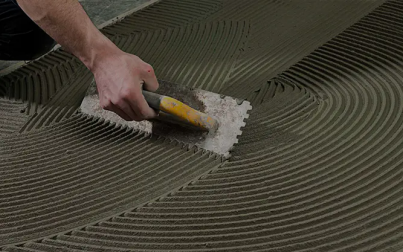
Water retention is the primary performance metric for a mortar cellulose ether, and it is where HEMC earns its reputation. Measured by the filter-paper method (similar to ASTM C1583 water-retention protocol adapted for mortars, and commonly reported per DIN 18555-7 in Europe), a well-formulated HEMC mortar retains 92–96% of its mix water over 10 minutes against a dry substrate.
The mechanism is physical: HEMC molecules adsorb onto cement particles and form a viscous, entangled network in the continuous water phase. This network raises the water’s effective viscosity by orders of magnitude, sharply slowing capillary suction into porous substrates such as AAC blocks, clay brick, and old render. Without this barrier, a typical cement render loses enough water in 2–3 minutes to begin stiffening on the trowel — the classic “short working life” complaint on hot days.
At 35 °C surface temperature, HPMC’s viscosity falls noticeably as the polymer approaches its gel point, but HEMC stays hydrated and continues to hold water. Field data from our European and Middle Eastern customers shows an average 15–30% extension of open time when HEMC replaces HPMC at equal dosage in the same render recipe. That extension translates directly into fewer rejected panels, less re-work, and lower labor cost per square meter.
Workability improvement is the second benefit. HEMC solutions are pseudo-plastic: under the high shear of a mixer blade or trowel they thin out and flow, and when shear stops they re-thicken. This gives mortar a “fatty,” creamy feel that spreads easily but does not slump off a vertical wall. In practice, adding HEMC at 0.15–0.30% of the dry mix weight converts a harsh, sandy render into one that floats smoothly, and reduces the water demand of the mix by 3–6% because less water is needed to achieve trowel-ability.
Main Applications: Plastering, Tile Adhesives, and ETICS
1. Interior and Exterior Plastering Renders
In cement-lime and gypsum plasters, HEMC is dosed at 0.15–0.35% (cement renders) or 0.20–0.50% (gypsum plasters) of dry weight. The ether provides water retention for substrate suction control, improves adhesion, reduces cracking by keeping the cement hydrated long enough for proper curing, and extends the time available for finishing and floating. For gypsum systems, HEMC’s higher gel point is an advantage during summer because gypsum generates little heat but is extremely sensitive to water loss — once the surface dries, hydration stops and surface hardness suffers.
2. Tile Adhesives (C1/C2 Classes per EN 12004)
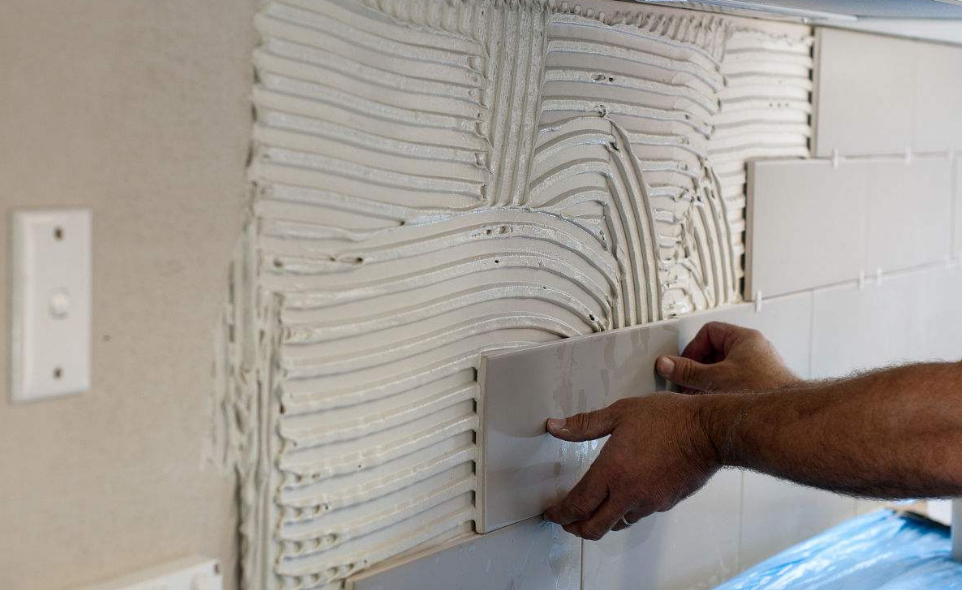
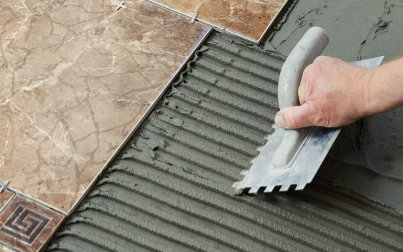
Adesivo per piastrelle is a demanding application because it combines a short assembly window with a requirement for strong initial adhesion and zero slip on vertical surfaces. HEMC is typically used at 0.25–0.45% in C1/C2 cementitious tile adhesives. Its role:
– Extends open time (the window during which a tile can be placed after combing) to 20–30 minutes at 23 °C, and keeps it viable at 35 °C where HPMC-based systems often drop below 15 minutes.
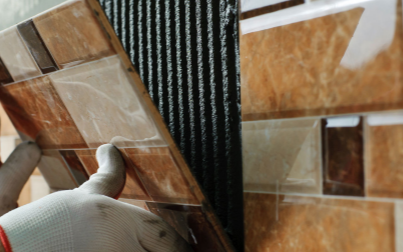
– Provides thixotropic slip resistance — a tile set on a vertical wall stays put, with zero sag after 20 minutes measured per EN 12004.
– Contributes to wetting and adhesion: the viscous gel film improves contact between the adhesive comb ridges and the tile back.
At equal dosage, HEMC delivers slightly higher slip resistance than HPMC at the same viscosity, which lets the formulator use a lower viscosity grade — and therefore less polymer — to meet a given slip class.
3. ETICS/EIFS Base Coat and Adhesive Mortars
External thermal insulation composite systems (ETICS, known as EIFS in North America) place the harshest thermal demand on a cellulose ether: the base coat is applied over EPS/XPS boards in direct sun, often at surface temperatures of 40–50 °C, and must remain workable long enough to embed glass-fiber mesh. HEMC at 0.20–0.40% is the preferred choice here because its higher gelation temperature preserves water retention and open time under radiant heat, while HPMC visibly degrades. Detailed formulation guidance for ETICS is covered in our dedicated article on HEMC in ETICS/EIFS systems.
4. Self-Leveling Compounds and Grouts
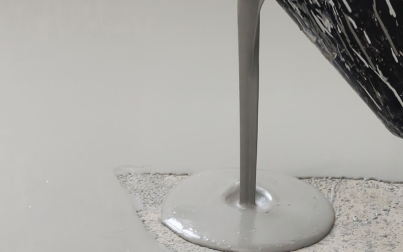
In self-leveling underlayments, HEMC at 0.02–0.08% prevents bleeding and segregation without over-thickening, and it stabilizes the slurry during the leveling phase. In cement and epoxy grouts, 0.20–0.50% improves water retention and tooling behavior. Dosage must be tuned with a flow-test method such as the ASTM C230 flow table or a Hagermann cone (DIN 18555-2) to avoid cutting flow excessively.
Gradi di viscosità consigliati e dosaggio
There is no single “best” viscosity for all mortars — the right grade depends on substrate suction, application method, and the other additives in the system. As a starting point:
| Application | Recommended viscosity (2% sol., mPa·s) | Typical dosage (% of dry mix) |
|—|—|—|
| Cement plaster / render (hand applied) | 40,000–75,000 | 0.15–0.30 |
| Gypsum plaster / joint compound | 40,000–75,000 | 0.20–0.50 |
| Tile adhesive C1/C2 | 75,000–100,000 | 0.25–0.45 |
| ETICS base coat & adhesive | 40,000–75,000 | 0.20–0.40 |
| Self-leveling compound | 20,000–40,000 | 0.02–0.08 |
| Grout (cement-based) | 40,000–60,000 | 0.20–0.50 |
General rules that hold across all these systems:
– Higher substrate suction (porous blocks, hot masonry) favors higher dosage or higher viscosity at the same dosage.
– Machine-applied renders usually need a lower viscosity grade (40,000–60,000) than hand-applied renders, to keep the paste pumpable.
– Every 1% addition of RDP tends to reduce open time slightly; compensate by raising HEMC dosage 0.02–0.05% or switching to a higher-viscosity grade.
– Always verify water retention, open time, and slip in the actual conditions of the job site (temperature, wind, substrate) before freezing a formulation.
TENESSY rifornisce HEMC in viscosity grades from 20,000 to 200,000 mPa·s, with surface-treated versions for rapid dispersion in dry-mix plants and standard powder for post-dissolution. Free samples of 500–3000 g are available for formulation trials, and standard production lead time is 7–14 days.
How to Choose the Right HEMC for Your Mortar
Start from the application, not from the datasheet. Define the performance that must be guaranteed — for example, “open time ≥ 20 minutes at 35 °C on AAC blocks” — and work backwards. Choose viscosity grade by the rule of thumb above, then validate:
1. **Water retention test** — measure with the filter-paper method at the actual ambient temperature; do not trust 20 °C data alone if the site will see 35 °C.
2. **Open-time test per EN 1346** — tile adhesion open time must be tested with the actual tile, comb, and substrate you will supply.
3. **Slip test per EN 1308** — confirm the grade/dosage meets the target slip class.
4. **Storage stability** — verify the mortar does not lose workability between mixing and 60–90 minutes, and that the dry mix does not absorb moisture (HEMC powder is hygroscopic; keep packaging sealed).
Where possible, test the candidate HEMC in the complete system (cement + filler + sand + RDP + retarder) because the ether interacts with every other ingredient. Our technical team provides a free formulation review: send us your current recipe and target specification, and we will recommend a grade, a starting dosage, and a test protocol. For typical trials, a 500 g sample is enough for roughly 200 kg of mortar at 0.25% dosage — sufficient for a full set of lab and small-scale field tests.
Q1: What is the difference between HEMC and MHEC?
A: They are the same polymer. HEMC (hydroxyethyl methyl cellulose) and MHEC (methyl hydroxyethyl cellulose) are two common acronyms for the identical chemical product, differing only in naming convention. Both describe a cellulose ether substituted with methoxy and hydroxyethyl groups. When comparing suppliers, always compare the same datasheet parameters — viscosity (2% solution), methoxy and hydroxyethyl content, water retention, and gelation temperature — regardless of which acronym is used.
Q2: Is HEMC better than HPMC for construction?
A: It depends on the environment. HEMC’s higher gelation temperature (roughly 65–75 °C vs. 55–65 °C for HPMC) gives it superior water retention and longer open time in hot conditions, which is why it is preferred for ETICS base coats, summer renders, and hot-climate tile adhesives. In temperate indoor applications where temperatures stay below 30 °C, HPMC delivers comparable performance at slightly lower cost. The choice should be driven by the working environment and the open-time specification, not by habit.
Q3: What viscosity HEMC should I use for tile adhesive?
A: For C1/C2 cementitious tile adhesives, the standard starting point is 75,000–100,000 mPa·s (2% solution, Brookfield, 20 °C) at 0.25–0.45% of dry weight. If you need stronger slip resistance or are working over very porous substrates, move to 100,000 mPa·s or raise the dosage; if the adhesive is applied by machine, drop to 40,000–60,000 to keep it pumpable. Always verify open time per EN 1346 and slip per EN 1308 at your actual site temperature.
Q4: How does HEMC improve water retention in hot weather?
A: HEMC dissolves into a viscous gel network that physically blocks capillary suction of water into the substrate. Because its thermal gelation temperature is about 10 °C higher than HPMC’s, the polymer stays hydrated and keeps holding water at surface temperatures of 35–50 °C, where HPMC begins to precipitate and lose viscosity. The practical result is 92–96% water retention over 10 minutes at 35 °C (filter-paper method) and an open time extension of 15–30% versus HPMC at equal dosage.
Conclusione
HEMC in construction is the performance-grade answer to the problems that show up on real sites: heat, porous substrates, short working time, and slip on vertical walls. Its higher gelation temperature, excellent water retention, and pseudo-plastic rheology make it the preferred cellulose ether for hot-climate renders, C1/C2 tile adhesives, and ETICS base coats, while remaining fully compatible with gypsum, cement, lime, and RDP-based systems. Choosing the right viscosity grade and dosage — typically 0.15–0.50% of dry mix across applications — turns a marginal mortar into one that is reproducible, workable, and fast to apply.
TENESSY Chemical manufactures HEMC from premium cotton linters on German equipment, with tight viscosity control, 10,000+ customers served, and exports to 40+ countries. Contact our team for a free 500–3000 g sample, a grade recommendation, and a formulation review for your specific mortar system — production lead time is just 7–14 days.
—
**Recommended Products:** [HEMC (Hydroxyethyl Methyl Cellulose)](https://tenessy.com/products/hemc-hydroxyethyl-methyl-cellulose/)
**Related Reading:** [HEMC in ETICS/EIFS: Why It’s Preferred for External Insulation](https://tenessy.com/hemc-in-etics-eifis/) | [HEC in Water-Based Paints: Thickener and Stabilizer Guide](https://tenessy.com/hec-in-water-based-paints/) | [HPMC for Detergent: Thickener and Suspending Agent in Daily Chemicals](https://tenessy.com/hpmc-for-detergent/)