What Is Redispersible Polymer Powder? Complete Guide
Redispersible Polymer Powder (RDP) is a free-flowing white powder produced by spray-drying a polymer emulsion (typically VAE — vinyl acetate-ethylene copolymer) with protective colloids and

Redispersible Polymer Powder (RDP) is a free-flowing white powder produced by spray-drying a polymer emulsion (typically VAE — vinyl acetate-ethylene copolymer) with protective colloids and

The main difference between HPMC and HEMC is thermal stability: HEMC (Hydroxyethyl Methyl Cellulose) withstands higher temperatures before gelling, while HPMC (Hydroxypropyl Methyl Cellulose) gels

HPMC viscosity grades explained: 400 to 200,000 mPa·s. Learn how to choose the right viscosity for tile adhesive, wall putty, mortar, detergents, and coatings. Complete selection guide with dosage charts.

When the application scenario is a high-humidity or long-term immersion environment, ordinary latex powder often falls short. In this case, water-resistant redispersible latex powder becomes the core functional material to ensure the durability and safety of the project.

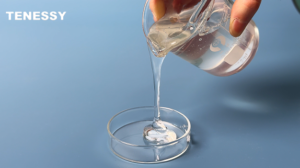
From the perspective of colloid optics, the light transmittance of a liquid system is the macroscopic projection of its internal microstructural uniformity. When light passes through a liquid, if any particles or incompatible domains larger than one-tenth of the wavelength of visible light exist, scattering occurs, resulting in reduced transmittance.

In numerous repair cases, the path of water ingress is often not structural cracks, but rather the inherent capillary connectivity, drying shrinkage cracking, or interfacial bond failure within the dry-mix mortar itself.
Fill in to get a free sample or consult for more information.