English
  Arabic
  German
  French
  Indonesian
  Russian
  Italian
  Czech
Czech  Dutch
Dutch  Finnish
  Turkish
  Greek
Greek  Spanish
  Portuguese
Introduction
From the perspective of colloid optics, the light transmittance of a liquid system is the macroscopic projection of its internal microstructural uniformity. When light passes through a liquid, if any particles or incompatible domains larger than one-tenth of the wavelength of visible light exist, scattering occurs, resulting in reduced transmittance. Therefore, achieving high transparency essentially requires that all components in the formulation—particularly functional macromolecular thickeners—are perfectly dissolved and uniformly dispersed at the molecular scale.
Among the numerous thickener options, cellulose ether has become an essential functional additive in liquid detergent formulations, owing to its excellent thickening efficiency, good salt compatibility, and non-ionic characteristics. However, not all cellulose ethers are capable of meeting the demands of high-transparency formulations. From molecular design to production processes, from dissolution behavior to long-term stability, deviations at any stage can leave “defects” in the final product’s transmittance. This article systematically analyzes the underlying technical requirements for cellulose ether in high-transparency liquid detergents, centered on the core indicator of transparency.
I. The Scientific Connotation and Evaluative Significance of Transparency
The transparency of liquid detergents is typically characterized by light transmittance (T%) or turbidity (NTU). Quality high-transparency products require transmittance levels above 90%, with premium products pursuing levels exceeding 95%. Transmittance and turbidity are inversely correlated: the higher the transmittance, the lower the turbidity, and the more brilliant and transparent the appearance.
The factors affecting detergent transparency are complex and diverse, including the phase behavior of surfactants, electrolyte concentration, the dissolution state of auxiliary agents such as fragrances, and the dissolution quality and molecular morphology of thickeners. Among these, cellulose ether—as one of the highest molecular weight components in the system—directly determines whether the system can maintain optical uniformity through its dissolution integrity, molecular chain conformation, and interaction mode with surfactant micelles.
It is worth emphasizing that transparency is not merely a final product acceptance indicator but also a sensitive diagnostic window for cellulose ether quality. When transparency anomalies occur, they often enable precise identification of the root cause—whether it be raw material purity defects, insufficient reaction uniformity, or degradation and aggregation of the product. A cellulose ether capable of maintaining high transmittance over the long term must necessarily rely on a full-process quality control system from source to finished product.
II. Core Requirements at the Molecular Structure Level

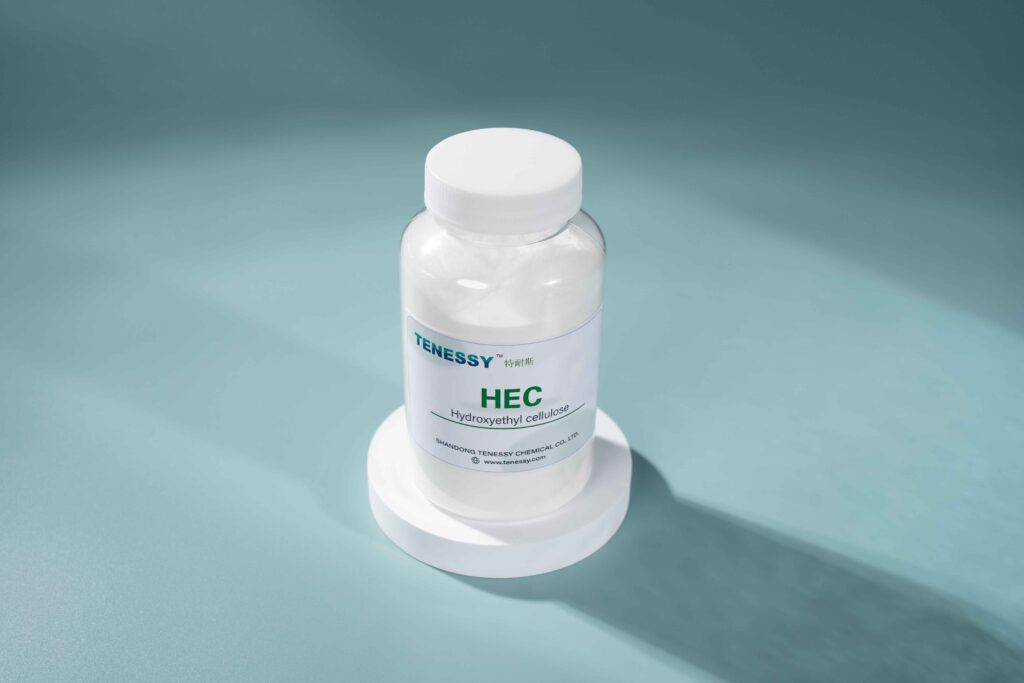
The molecular structure parameters of cellulose ether fundamentally determine its dissolution behavior and optical performance in aqueous solutions.
1. Degree of Substitution and Distribution Uniformity
Hydroxypropyl methylcellulose (HPMC) and hydroxyethyl cellulose (HEC), commonly used in liquid detergents, achieve water solubility through partial substitution of hydroxyl groups on the cellulose backbone with alkyl or hydroxyalkyl groups, which disrupts the highly ordered hydrogen bond network of native cellulose. The degree of substitution (DS) and molar substitution (MS) are core parameters describing the extent of substitution.
If the degree of substitution is too low, an excessive number of unsubstituted hydroxyl groups remain, prone to forming insoluble crystalline regions or fibrous particles that cause light scattering. If the degree of substitution is too high, while water solubility improves, thickening efficiency and compatibility may be compromised. Therefore, high-transparency applications require DS and MS values to fall within a specific range with extremely narrow batch-to-batch fluctuation.
Even more critical is the uniformity of substituent distribution. Even if the average degree of substitution meets the standard, non-uniform distribution of substitution along the molecular chain—some segments highly substituted and others insufficiently substituted—can lead to microscopic phase separation in solution, forming the structural basis for optical inhomogeneity. High-quality processes must ensure highly homogeneous alkalization and etherification reactions.
2. Balancing Molecular Weight and Thickening Efficiency
The molecular weight of cellulose ether determines thickening efficiency: the higher the molecular weight, the greater the viscosity at the same addition level. However, a delicate balance must be struck between high transparency and high viscosity. Extremely high molecular weight products are more prone to forming “fish eyes” or gel particles during dissolution, and the molecular chains are more extended in solution, potentially inducing a “crowding effect” with surfactant micelles and triggering micellar morphology transitions. Therefore, molecular weight selection must balance “sufficient thickening contribution” against “maintaining optical uniformity.”
3. Compatibility Advantages of Non-Ionic Character
Non-ionic cellulose ethers do not undergo charge screening-induced phase separation in the presence of electrolytes and exhibit good compatibility with various types of surfactants. The hydrophobic substituent groups on the molecular chains can engage in moderate association with surfactant micelles, helping to stabilize micelle dimensions. However, when hydrophobic interactions become excessively strengthened, they may induce bridging flocculation or precipitation, leading to deteriorating transparency.
III. Key Control Points in the Production Process
While molecular structure lays the foundation for transparency performance, production process control determines whether this performance can be stably expressed as product quality across every batch.
1. Raw Material Purity and Alkalization/Etherification Uniformity
Refined cotton linter is the starting raw material for cellulose ether production. Its cellulose content, ash content, and lignin residue directly affect the impurity profile of the final product. Trace lignin residues may undergo side reactions to generate colored or hydrophobic impurities, which can significantly affect transmittance even at low concentrations. High-transparency applications require α-cellulose content above 95% and ash content below 0.1%.
The alkalization process disrupts the crystalline structure of native cellulose, creating accessibility for subsequent etherification reactions. Non-uniform alkalization leads to locally insufficient substitution, forming insoluble “defect points” in the aqueous solution. During the etherification stage, precise control of reaction temperature, pressure, time, and solvent system determines the reaction rate and selectivity. The moisture content of the reaction system is particularly sensitive—excessively high moisture promotes side reactions, while excessively low moisture affects alkalization efficiency.
2. Purification Washing and Post-Treatment
Residual salts, organic solvents, and low/high molecular weight fractions in the crude cellulose ether must be removed through multi-stage solvent washing and purification processes. Salt impurities add to the electrolyte burden of the formulation, disturbing surfactant phase behavior; high molecular weight “super-concentrated” fractions may serve as precursors to microscopic gel particles. Optimized purification processes can elevate the transmittance of aqueous solutions from around 80% to above 90%.
During drying, excessively high temperatures may induce thermal degradation or aggregation of molecular chains; pulverization affects particle morphology and dissolution rate. For instant-dissolving grades, appropriate particle size not only affects dissolution rate but also indirectly influences dissolution quality—excessively large particles tend to form “fish eye” encapsulation films, while excessively small particles increase dust issues.
IV. Formulation Adaptation and Process Synergy
Achieving high transparency with cellulose ether requires systematic synergy between formulation and process.
1. The pH-Electrolyte-Surfactant Interplay
The pH of liquid detergents typically ranges from 6.0 to 9.5. Non-ionic cellulose ethers are minimally affected by pH in terms of intrinsic solubility; however, pH indirectly modulates the colloidal stability of the entire system by influencing surfactant protonation states, fragrance hydrolysis rates, and preservative activity. Cellulose ethers exhibit excellent salt tolerance, but caution is required regarding the critical concentration of “salting-out” effects—when electrolytes accumulate to a threshold, the hydration layer of molecular chains is compressed, potentially causing chain collapse and precipitation, which elevates turbidity.
2. Engineering Control of Dissolution Processes
Improper dissolution operations are a common cause of transparency defects. When cellulose ether is added all at once to cold water with insufficient agitation, the particle surface rapidly forms a high-viscosity gel film that encapsulates the inner dry powder, creating “fish eyes”—which are extremely difficult to eliminate once formed.
Recommended process routes include the hot water dispersion method (dispersing in 60-80°C hot water followed by cooling to dissolve) and the high-shear dispersion method. In large-scale production, a combination of in-line dispersion systems with circulating cooling processes ensures both dissolution quality and production efficiency.
Conclusion
The technical requirements for cellulose ether in high-transparency liquid detergents far exceed the traditional notion of a mere “thickener.” They represent a systematic test of comprehensive capabilities spanning raw material selection, molecular design, and process control. From purity assurance at the raw material stage, to precise modulation of substitution degree and distribution uniformity at the molecular structure level, to homogeneous alkalization/etherification control and multi-stage purification in production, to pH-electrolyte-surfactant synergy and scientific dissolution processes in formulation application—each link’s meticulous optimization ultimately converges into that crystal-clear beam of light visible to the consumer.
Industry practice demonstrates that high-quality cellulose ether produced under full-chain control solutions can achieve aqueous solution transmittance stably above 90%, with final formulated liquid detergents exceeding 95%. As daily chemical products continue to trend toward premiumization, transparency has evolved from a cosmetic indicator to a strategic yardstick for overall product quality.