English
  Arabic
  German
  French
  Indonesian
  Russian
  Italian
  Czech
Czech  Dutch
Dutch  Finnish
  Turkish
  Greek
Greek  Spanish
  Portuguese
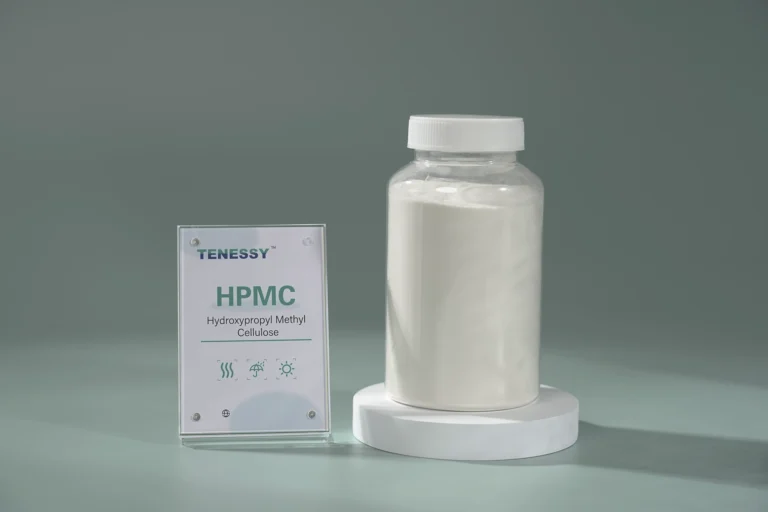
 TENESSY HPMC viscosity ranges from 10 to 80,000 mPa·s (2%, 20°C, Brookfield RV) or 10 to 200,000 mPa·s (2%, 20°C, NDJ-1), with 12 specific grades across two series — NH Series (construction) and NS Series (daily chemicals). Choosing the right grade depends on your application: NH Series for construction applications like tile adhesive, wall putty, and self-leveling mortar; NS Series for daily chemical products like detergents, cosmetics, and cleaners.

This guide explains HPMC viscosity measurement, TENESSY grade selection by application, and formulation considerations to help you choose the optimal grade for your product.
How HPMC Viscosity Is Measured
TENESSY HPMC viscosity is measured using two methods:
Method 1 — Brookfield RV Viscometer:
- Concentration: 2% HPMC in water (weight/weight)
- Temperature: 20°C
- Range: 10–80,000 mPa·s
Method 2 — NDJ-1 Viscometer:
- Concentration: 2% HPMC in water (weight/weight)
- Temperature: 20°C
- Range: 10–200,000 mPa·s
Important: Different viscometers produce different readings for the same solution. Always compare viscosities measured under the same conditions with the same instrument type. TENESSY provides standardized viscosity specifications on every Certificate of Analysis.
TENESSY HPMC Grade Overview
TENESSY manufactures HPMC in two series, each designed for specific application domains:
NH Series — Construction Grades (Non-instant)
NH Series HPMC is non-instant type, more suitable for mortar applications. Mortar containing large particles such as sand and gravel can be better dissolved by stirring.
Grade | Designated Applications |
Ceramic tile adhesive, surface decorative mortar, polyphenyl particle mortar, wall panel | |
Ceramic tile adhesive, waterproof mortar, plastering mortar, wall panel | |
Interior/exterior wall putty powder, ceramic tile adhesive, bonding mortar | |
NH2000 | Interior/exterior wall putty powder, gypsum-based mortar |
NH1500 | Interior/exterior wall putty powder, gypsum, diatom mud powder coatings |
NH1200 | Ceramics, cement extrusion |
NH1000 | Ceramics, cement extrusion, road repair mortar |
NH400Z | Ceramics, cement extrusion, road repair mortar |
NH200T | Cement-based self-leveling mortar, road repair mortar |
NS Series — Daily Chemical Grades (Surface-treated)
NS Series is surface-treated HPMC with good dispersibility, rapid dissolution in water, and no agglomeration. More suitable for fluid applications like building adhesives and cosmetics.
Grade | Designated Applications |
Daily chemical products, styling products, liquid admixtures, construction glue | |
Daily chemical products, lotions, gels, disinfectants, conditioners | |
Daily chemical products, bath gel, facial cleanser |
HPMC Technical Specifications
Parameter | Specification |
Appearance | White or light yellow powder |
Viscosity | 10–80,000 mPa·s (2%, 20°C, Brookfield RV) / 10–200,000 mPa·s (2%, 20°C, NDJ-1) |
Hydroxyethoxy | 7.0–12.0% |
Methoxy | 28.0–30.0% / 19.0–24.0% |
Mesh | 98% pass 100 mesh |
pH Value | 6.0–8.0 |
Moisture | ≤5.0% |
Gel Temperature | 54–64°C (60°C) / 70–90°C (75°C) |
CAS Number | 9004-65-3 |
Application-Specific Grade Selection Guide
Tile Adhesive
Tile Type | Recommended Grade | Rationale |
Standard ceramic tile adhesive | Both designated for ceramic tile adhesive; NH200PC also for surface decorative mortar | |
Waterproof mortar tile adhesive | Specifically designated for waterproof mortar | |
Bonding mortar | Designated for bonding mortar |
Wall Putty and Skim Coat
Application | Recommended Grade | Rationale |
Interior/exterior wall putty | NH100PC, NH2000, NH1500 | All three grades designated for putty powder |
Gypsum-based mortar | NH2000 | Specifically designated for gypsum-based mortar |
Diatom mud powder coatings | NH1500 | Specifically designated for diatom mud powder coatings |
Self-Leveling and Specialized Applications
Application | Recommended Grade | Rationale |
Cement-based self-leveling | NH200T | Specifically designated for self-leveling mortar |
Road repair mortar | NH1000, NH400Z, NH200T | Multiple grades designated for road repair |
Ceramics and cement extrusion | NH1200, NH1000, NH400Z | Designated for ceramics and cement extrusion |
Wall panels | Both designated for wall panel applications |
Daily Chemicals and Cleaners
Product Type | Recommended Grade | Rationale |
Bath gel, facial cleanser | Specifically designated for bath gel and facial cleanser | |
Lotions, gels, disinfectants, conditioners | Specifically designated for these product types | |
Styling products, liquid admixtures | Specifically designated for styling products | |
Construction glue | Also designated for construction glue |
Explore: Daily Chemical Applications →
NH vs NS Series: Which to Choose?
Factor | NH Series (Non-instant) | NS Series (Surface-treated) |
Dissolution type | Non-instant — dissolves through stirring | Surface-treated — rapid dispersion, delayed dissolution |
Best for | Mortar, putty, construction materials | Fluid applications, cosmetics, liquid detergents |
Mixing with aggregates | Excellent — works well with sand/gravel mortars | Not typically used in mortar |
Cold water dispersibility | Requires stirring to dissolve | Disperses rapidly without lumping |
Agglomeration risk | Higher if not properly mixed | Low — designed to prevent lumping |
Rule of thumb: Choose NH Series for construction and building applications. Choose NS Series for daily chemical, cosmetic, and liquid product applications. The surface treatment on NS Series ensures rapid dissolution in cold water without agglomeration — critical for liquid product manufacturing.