English
  Arabic
  German
  French
  Indonesian
  Russian
  Italian
  Czech
Czech  Dutch
Dutch  Finnish
  Turkish
  Greek
Greek  Spanish
  Portuguese
 Redispersible Polymer Powder (RDP) is a free-flowing white powder produced by spray-drying a polymer emulsion (typically VAE — vinyl acetate-ethylene copolymer) with protective colloids and additives. When mixed with water, RDP redisperses into a polymer emulsion that improves adhesion, flexibility, crack resistance, and water repellency in cement-based and gypsum-based building materials.
TENESSY manufactures five RDP grades — RDP-5580, RDP-5575, RDP-5560, RDP-5518, and RDP-5516 — each engineered for specific construction mortar applications.
How RDP Is Made
The production of redispersible polymer powder involves several key steps:
- Emulsion polymerization: Vinyl acetate and ethylene monomers are polymerized in water with emulsifiers and initiators to create a stable polymer emulsion (latex)
- Addition of protective colloids: Polyvinyl alcohol (PVA) or other protective colloids are added to stabilize the emulsion and enable redispersion
- Spray drying: The liquid emulsion is sprayed into a hot-air chamber, evaporating the water and leaving dry polymer powder particles
- Addition of anti-caking agents: Fine mineral powders (such as silica or calcium carbonate) are added to prevent the powder from clumping during storage
- Sieving and packaging: The finished powder is sieved to uniform particle size and packaged in moisture-resistant bags
TENESSY RDP Technical Specifications
Parameter | Specification |
Appearance | White powder |
Bulk Density | 400–600 g/l |
Particle Size | ≥80 |
pH Value | 6.0–8.0 |
Solid Content | ≥98% |
TENESSY RDP Grade Guide
TENESSY offers five RDP grades, each designed for specific application requirements:
Grade | Designated Applications |
Plastering/anti-crack mortar, wall panels, surface decoration mortar | |
RDP-5575 | Contact TENESSY for application details |
Bonding mortar, interior/exterior wall putty powder, ceramic tile adhesive, wall panels, cement-based mortars | |
Bonding mortar, interior/exterior wall putty powder, tile adhesive, repair mortar, sealant, self-leveling mortar | |
Bonding mortar, interior/exterior wall putty powder, ceramic tile adhesive, wall panels, cement-based mortars |
Grade selection guidance:
- For anti-crack and plastering mortar → RDP-5580
- For tile adhesive and general bonding mortar → RDP-5560 or RDP-5516
- For repair mortar, sealant, and self-leveling → RDP-5518 (the most versatile grade)
- For wall putty powder → RDP-5560, RDP-5518, or RDP-5516

How RDP Works in Mortar
When RDP is added to a dry-mix mortar formulation and mixed with water on-site, two critical processes occur:
Film Formation
The polymer particles in RDP coalesce into a continuous, flexible polymer film throughout the mortar matrix. This film interweaves with the cement hydrate structure, creating a polymer-modified composite with enhanced properties:
- Improved adhesion: The polymer film bonds to both the substrate and the cement matrix, dramatically increasing bond strength
- Increased flexibility: The flexible polymer phase allows the mortar to accommodate minor substrate movement and thermal expansion without cracking
- Reduced brittleness: Polymer modification converts brittle cement mortar into a more resilient, impact-resistant material
Water Retention and Workability
RDP, like cellulose ether, contributes to water retention in the fresh mortar. This ensures proper cement hydration and extends open time — the period during which tiles can be adjusted after placement.
Key Properties RDP Improves in Mortar
Property | Without RDP | With RDP (1–3%) | Improvement |
Adhesive bond strength | 0.3–0.5 MPa | 1.0–2.0 MPa | +200–300% |
Flexibility (deformation) | Low (brittle) | High (flexible) | Significant |
Crack resistance | Poor | Good–Excellent | Major |
Impact resistance | Low | Medium–High | Significant |
Water repellency | Low | Medium–High | Moderate |
Open time | 10–15 min | 20–30 min | +50–100% |
Workability | Fair | Good–Excellent | Significant |
RDP Dosage Guide by Application
Application | Recommended TENESSY Grade | Typical RDP Dosage | Primary Benefit |
Standard tile adhesive (C1) | RDP-5560 or RDP-5516 | 1.0–2.0% | Adhesion, open time |
Premium tile adhesive (C2) | RDP-5518 | 2.0–4.0% | High adhesion, flexibility |
Large-format tile adhesive | RDP-5518 | 3.0–5.0% | Sag resistance, adhesion |
Self-leveling compound | RDP-5518 | 2.0–4.0% | Flow, crack resistance |
ETICS adhesive & base coat | RDP-5580 | 3.0–5.0% | Adhesion, impact, crack |
Waterproofing membrane | RDP-5580 | 5.0–10.0% | Flexibility, waterproofing |
Repair mortar | RDP-5518 | 2.0–5.0% | Bond, shrinkage, impact |
Plastering/anti-crack mortar | RDP-5580 | 2.0–4.0% | Crack resistance, flexibility |
Skim coat / finishing | RDP-5560 or RDP-5516 | 1.0–2.0% | Adhesion, smoothness |
Wall putty powder | RDP-5560, RDP-5518, or RDP-5516 | 1.0–3.0% | Adhesion, workability |
Gypsum joint filler | RDP-5518 | 1.0–3.0% | Flexibility, crack resistance |
Sealant | RDP-5518 | 2.0–4.0% | Flexibility, adhesion |
Note: Dosage is expressed as percentage of total dry mix weight. Over-dosage (>10%) can reduce compressive strength and increase cost without proportional benefit.
RDP vs Cellulose Ether: Complementary, Not Competing
A common question is whether RDP replaces cellulose ether in mortar formulations. The answer is no — they serve different but complementary functions:
Function | RDP | Cellulose Ether (HPMC/HEMC) |
Adhesion improvement | ✅ Primary | Minimal |
Flexibility / crack resistance | ✅ Primary | Minimal |
Water retention | Moderate | ✅ Primary |
Thickening / anti-sag | Moderate | ✅ Primary |
Workability improvement | ✅ Significant | ✅ Significant |
Cost | High (expensive) | Lower |
Best practice: Use both RDP and cellulose ether together. RDP provides adhesion and flexibility; cellulose ether provides water retention and thickening. A typical tile adhesive formulation contains 0.3–0.5% HPMC (such as TENESSY NH200PC) + 1–3% RDP (such as RDP-5560).
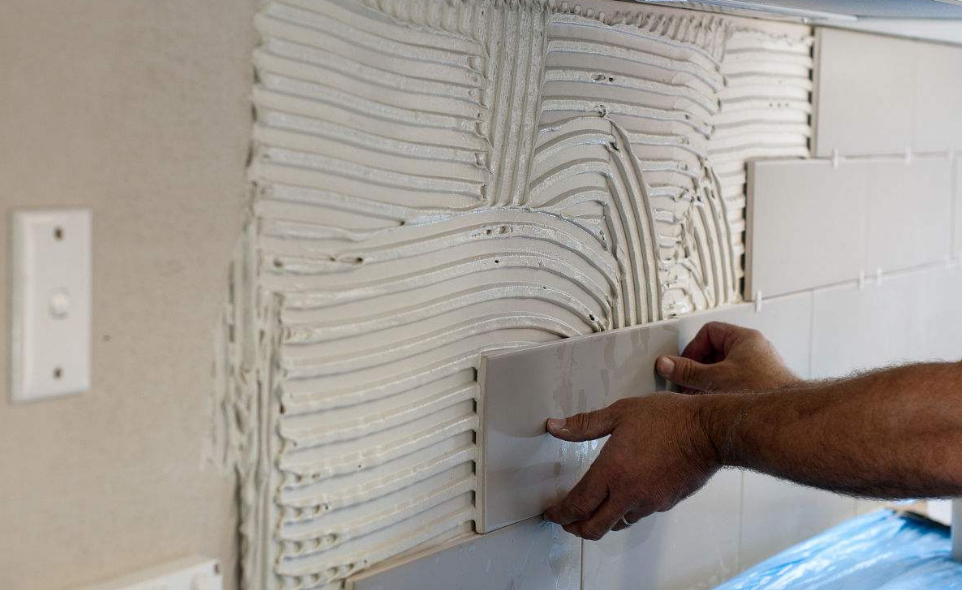
RDP in Tile Adhesive: Why It’s Essential
Tile adhesive is the largest application for RDP. Modern tile adhesives must meet stringent standards (EN 12004, ISO 13007) that require:
- High bond strength under both dry and wet conditions
- Flexibility to accommodate thermal expansion and substrate movement
- Long open time for large-area tile installation
- Non-slip (anti-sag) properties for wall tile installation
RDP is the additive that makes these properties achievable. Without RDP, cement-based tile adhesive would be brittle, poorly bonded, and unsuitable for demanding applications like exterior tiling, large-format porcelain, and swimming pool surrounds.
Recommended TENESSY grades for tile adhesive: RDP-5560 and RDP-5516 for standard tile adhesive; RDP-5518 for premium tile adhesive requiring repair and self-leveling capabilities.
Quality Considerations When Choosing RDP
Quality Factor | TENESSY Specification | Why It Matters |
Solid content | ≥ 98% | Lower = more water = shorter shelf life |
Bulk density | 400–600 g/l | Affects dosing accuracy |
Particle size | ≥80 | Affects redispersion speed |
pH | 6.0–8.0 | Compatibility with cement systems |
Packaging | Moisture-resistant bags | RDP absorbs moisture — must stay dry |
Storage and Handling
RDP is hygroscopic (absorbs moisture from air) and must be stored properly:
- Store in original sealed bags in dry, cool, well-ventilated conditions
- Protect from rain during transportation
- Avoid temperatures above 30°C
- Use opened bags as soon as possible; reseal to avoid moisture
- Stack on pallets, not directly on floor
- Shelf life: 12 months from production date (unopened)